
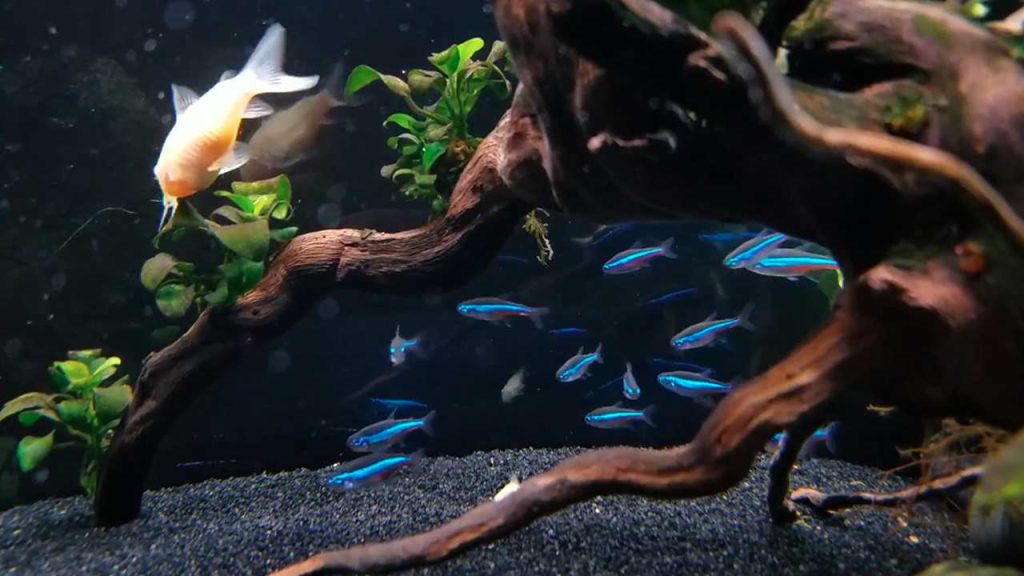
An aquarium for a novice is not just a glass container full of water for me, but a tiny living ecosystem.
For a novice aquarist, I usually recommend a freshwater aquarium of 20 gallons when the space and budget permit. A 20-gallon tank provides more space for a beginner aquarist to make a balanced community than a tiny desktop tank but is easy to maintain at the same time. Generally, a larger body of water requires much smaller changes than the one of a small tank, which gives more possibilities to notice problems.
This guide for novice aquarists gives information on what to do during your initial steps in the process and also why such things need to be done. Below you can find information about tank size, its placement, filtration, heating, the start of the aquarium, testing water, beginner fish, live plants, feeding, cleaning, community management, and mistakes you should not make from the first day.
The Best Starting Point for a Beginner Aquarium
Normally, a successful beginner aquarium begins even before the aquarium itself is bought.
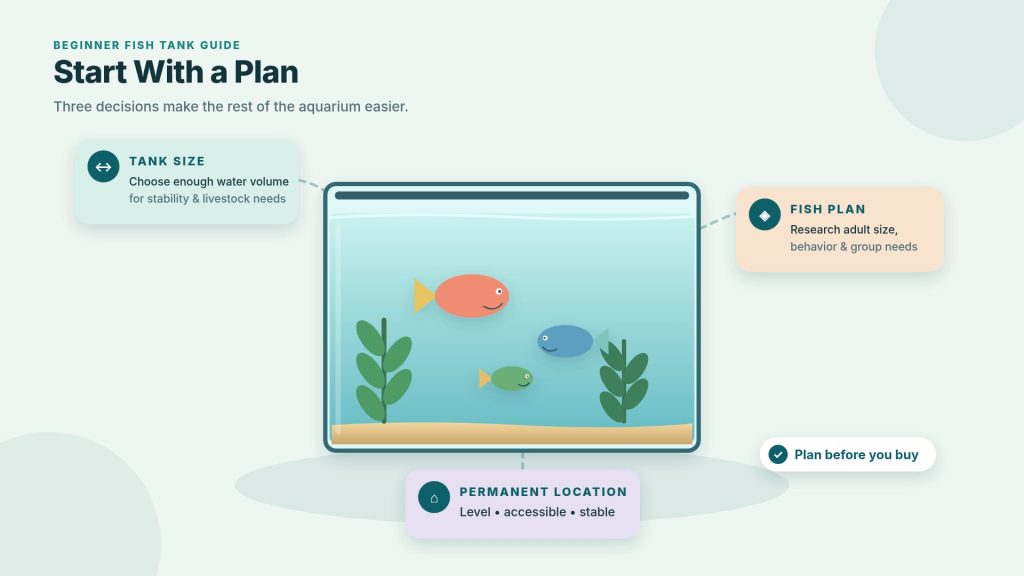
In the beginning, I recommend that you decide on three parameters:
- Aquarium size you can maintain comfortably.
- Fish you would like to keep at the end.
- Constant place of fish tank.
All these decisions are interrelated.
The fish size and behavior affect aquarium size. Thus, tank size directly influences requirements for stand, filter capacity, heater, and maintenance. The place itself affects temperature stability, algae development, access to electricity, and convenience of water changing.
Anyone looking into the prospect of putting up an aquarium should realize that its planning phase is likely to save far more trouble than purchasing the expensive equipment at a later stage.
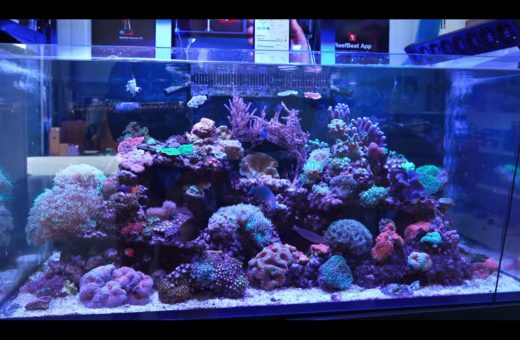
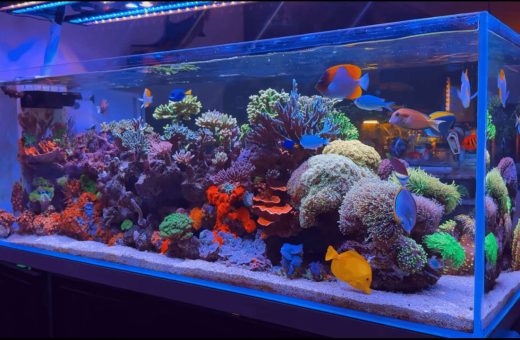
I would also suggest starting off with freshwater tanks for beginners. While saltwater tanks can be exceptional systems, they usually take much more equipment and salinity monitoring; also, in the case of saltwater aquariums, the management of living creatures necessitates thorough advance planning. A freshwater environment provides a fish novice with ample opportunity to learn the basics of water quality and behavior of fish before he or she starts introducing complexities.
Beginner Fish Tank Size and Placement
One of the most common mistakes novice aquarists make is the assumption that keeping an aquarium that is small is always simple.
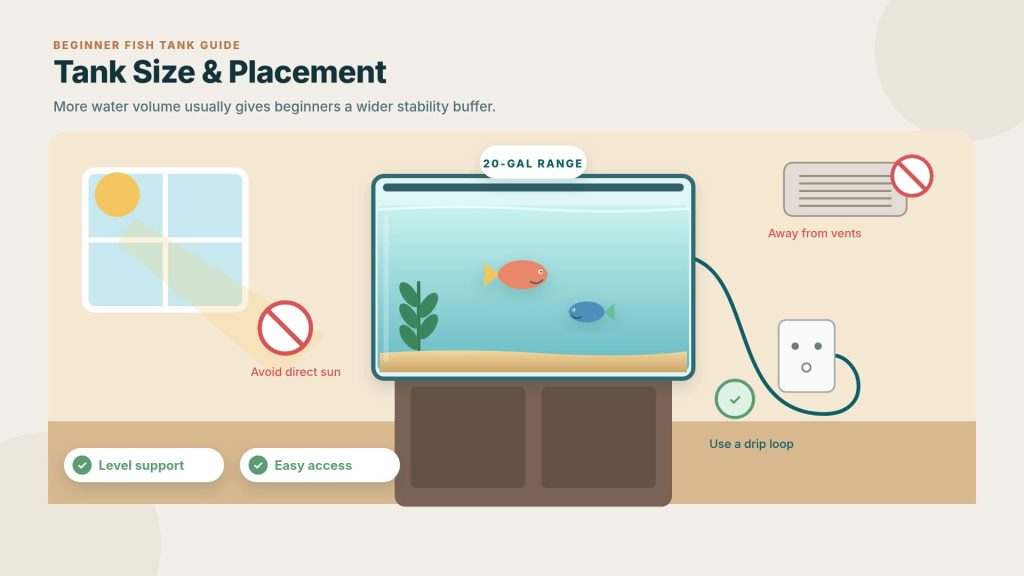
It may seem that small tanks are simple to operate, but their small water volume means that the conditions in them can change rapidly. A reasonably sized tank gives a newcomer a larger range to work with.
When it comes to choosing aquariums for beginners, I personally like the 20-gallon aquariums because they allow for decent swimming space and more versatility.
A 10-gallon tank can still function adequately, although fish choices become more limited. Five-gallon tanks require even greater care concerning species selection and stability. Tank size must always be determined based on the size of the adult fish.
After choosing a suitable tank, the location becomes important.
I look for locations that have the following:
- Protection from rapid temperature changes
- A flat, level, structurally appropriate surface
- A nearby electrical outlet
- Space behind the tank for filters and cords
- Easy access for maintenance
- No strong direct sunlight
- No nearby heating or cooling vents
- Minimal risk of being bumped
Aquariums should be set up on surfaces capable of supporting such weight. Both the water and the glass, in addition to the substrate, rocks, equipment, and decor, make even a small aquarium quite heavy. New information on setting up aquariums cautions against direct sunlight, unstable surfaces, draughts, and heat sources in the vicinity.
I usually make drip loops in the wires so that water cannot run down the wire toward the power point.
Essential Equipment for Fish Tank Beginners
A beginner aquarist does not need every accessory you can find online but must invest in good equipment that does its job properly.
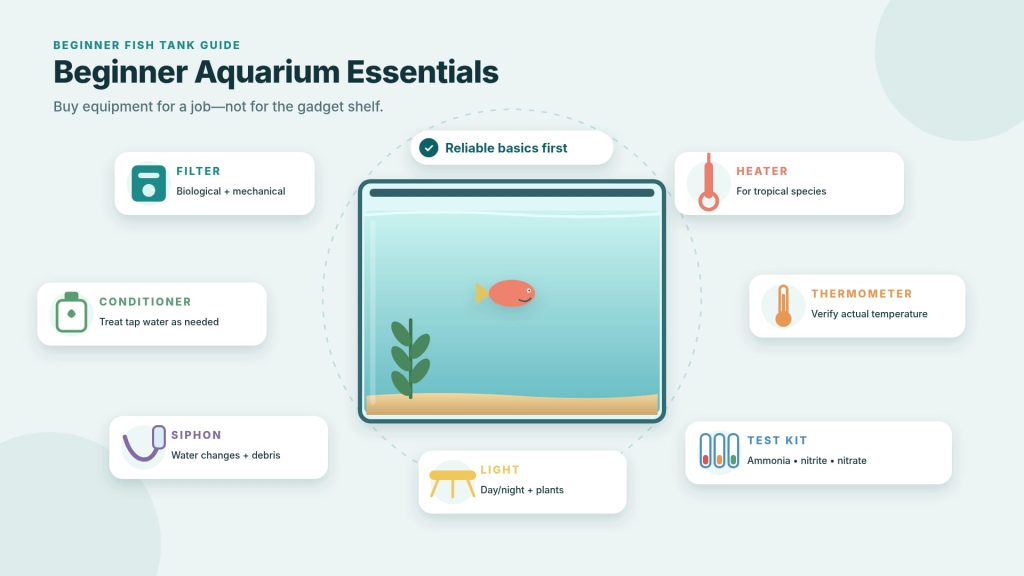
My basic beginner setup includes:
| Equipment | Main Purpose |
| Aquarium | Supplies enough water volume and swimming area |
| Aquarium stand | Keeps the tank filled properly |
| Lid or hood | Helps minimize evaporation and inhibits any kind of escape |
| Filter | Achieves mechanical and biological filtration |
| Heater | Controls temperature for tropical fishes |
| Thermometer | Provides true readings of water temperature |
| Light | Provides day/night cycle and takes care of plants |
| Water conditioner | Treats tap water if necessary |
| Water test kit | Monitors main characteristics of water |
| Substrate | Creates tank bottom and keeps aquascape |
| Siphon | Gets rid of water and dirt while maintaining the aquarium |
| Dedicated bucket | Keeps aquarium-keeping tools apart from one another |
| Fish net | Assists in fish moving when it is really needed |
| Food | Offers species-right food |
The standard aquarium equipment consists of a filter, heater, thermometer, light, conditioner, test kits, substrate, cleaning equipment, and decoration.
Filtration
The filter is the most important piece of equipment while setting up the aquarium for a novice.
When people think of filters, they often associate them with the notion of catching dirt. While it is true that mechanical filtration works effectively, biological filtration is equally important.
The filter media gives the bacteria a place to live and thrive, processing the fish waste as well as the waste left over from food and decomposing plants.
It is preferable when the filters are easy to use, so hang-on-back, sponge, and the right-size internal filters can serve this purpose.
It should be mentioned that the best filter is not the one that is very expensive but the one that provides good circulation as well as biological capacity without the strong current.
Heating and Temperature
A stable temperature is necessary for most freshwater fish. Hence, a heater and a thermometer are important elements of my essential list for beginners in aquariums.
I will not use a set temperature and make every single fish adapt to it; I will choose species that are able to live together and set a temperature that meets the requirements of all of them at once.
This is crucial because there is no one ideal temperature for all freshwater fishes.
Lighting
Lighting needs to ensure a rhythm between day and night and shouldn’t be on all the time.
In standard setups without plants, a moderate amount of the light will suffice; however, aquariums with plants might require some adjustments according to the type of the plants, light intensity, nutrients, and algae growth.
Timers are ones of my favorite additions because it is much easier to achieve consistency than to remember to turn the lights on and off manually every day.
Beginner Fish Tank Setup Step by Step
Making sure to take platforming steps is an effective way to make creating a fish tank simpler for novices.
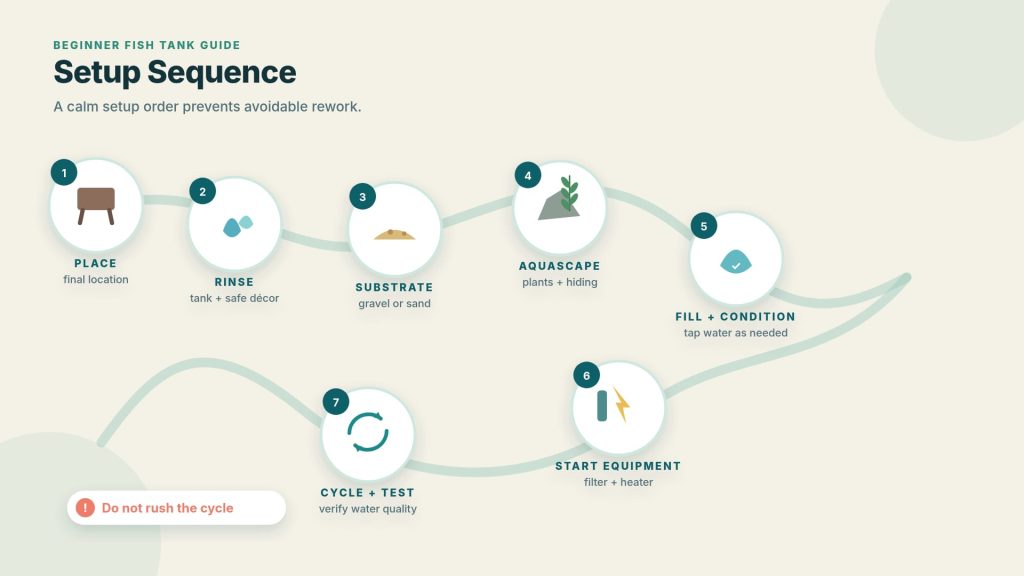
1. Position the Aquarium
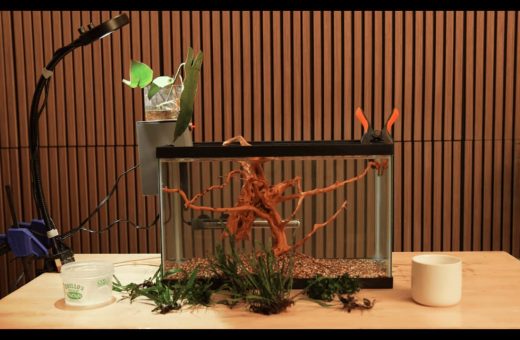
Before any other stages in the aquarium setup process, I always put the empty aquarium and the stand in their preferred places.
Once water, substrate, and rocks have been added into the tank, it is not possible to move it any longer.
2. Rinse the Tank and Materials
I wash standard aquarium-friendly materials like gravel, rocks, and decor using fresh water when necessary.
I do not use soap and detergent inside of aquariums, as residues from them can harm aquatic organisms.
Some special types of substrates for aquariums have unique uses; hence, I follow instructions from the producer without rinsing the substrate automatically.
3. Add Substrate
The most common choices of substrates for a beginner are gravel and sand.
Substrates should be matched with the livestock and plants. The bottom feeders need smoother substrates, and the rooted ones should be planted in proper substrate or supported with nutrient materials for their roots.
4. Build the Aquascape
At this phase, beginner fish tank ideas are beneficial.
My aquascaping combines:
- Open swimming areas
- Sheltered spaces
- Plants
- Rocks or wood where appropriate
- Visual depth
- Easy access for cleaning
Decor should be advantageous to fish and the viewer of the aquarium.
A nice-looking aquarium that does not allow timid fish to hide is a poor design.
5. Install the Equipment
I set up filters, heaters, thermometers, lights, and additional aerators in line with the instruction manual.
6. Fill and Condition the Water
Tap water is usually treated before being put into an aquarium. The proper conditioning agent is applied in line with the instruction manual to eliminate chlorine or chloramines.
I take care not to have major temperature fluctuations when filling up the aquarium.
7. Start the Filter and Heater
The moment the aquarium is filled correctly and equipment is installed, I start the system and check its workings.
At this point, the aquarium looks ready.
However, from a biological point of view, it is usually not.
Now we are entering the phase where aquarium basics of beginners matter most.
Aquarium Cycling and the Nitrogen Cycle
If there is only one thing that I could teach in an aquarium beginners’ guide, it would definitely be the nitrogen cycle.
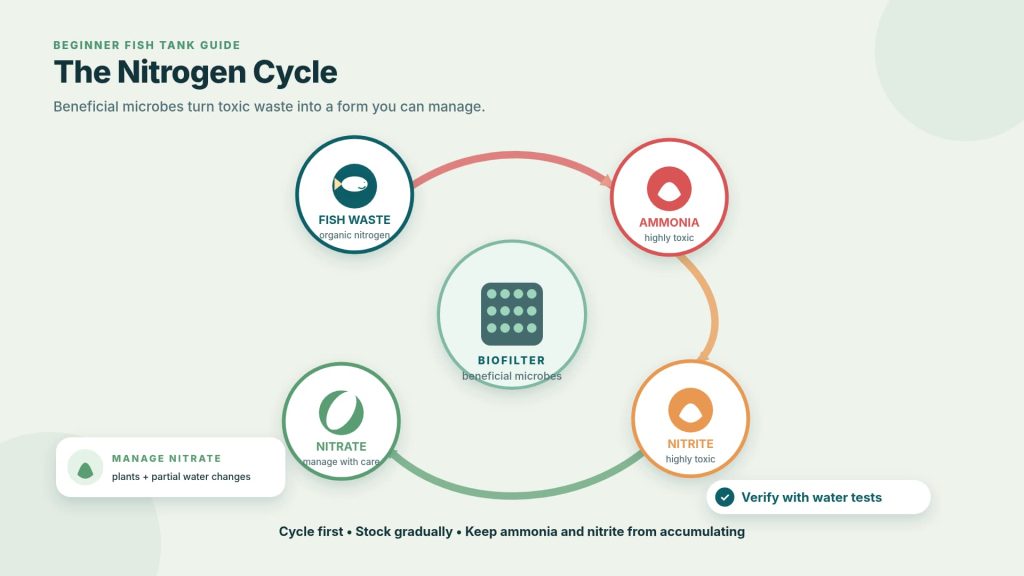
Fish excrete waste, and the leftovers from food decay into organic matter. This creates ammonia that is harmful for fish.
In an established aquarium, beneficial bacteria such as nitrosomonas oxidize ammonia into nitrite, and this conversion continues until the nitrite is turned into nitrate. Ammonia and nitrite need to be monitored because they can be toxic for fish.
This kind of biological filtration is not established in a matter of just days because the pump has been functioning for a couple of days.
Thus, I always choose to cycle my tanks without fish whenever it makes sense. It enables biological filtration to get established without exposing fish to harmful ammonia and nitrite.
New current veterinary literature on beginners’ pumping suggests that cycling means building biofiltration without fish going into the tank and checking for ammonia, nitrite, and nitrate levels during the process of cycling.
Water Testing During Cycling
When starting a freshwater aquarium, I find the following readings helpful:
- Ammonia
- Nitrite
- Nitrate
- pH
- Temperature
Hardness and alkalinity are often important factors depending on the species kept and the source water used.
Water clarity is not reliable in terms of water safety. Just because water appears crystal clear does not mean that it is free of substances that cannot be seen. Testing is the method that can take all the guesswork out of the water situation.
I do not rely on set days to determine the successful establishment of biological filtration in the aquarium.
A properly cycled tank does not accumulate ammonia or nitrite, and the level of nitrate is maintained through stocking methods, plant growth, feeding methods, and regular water changes.
Here is my best piece of advice: let testing tell you when your aquarium is ready, not the passing of time.
Choosing Fish for a Beginner Aquarium
After the aquarium is set up, it is the best part.
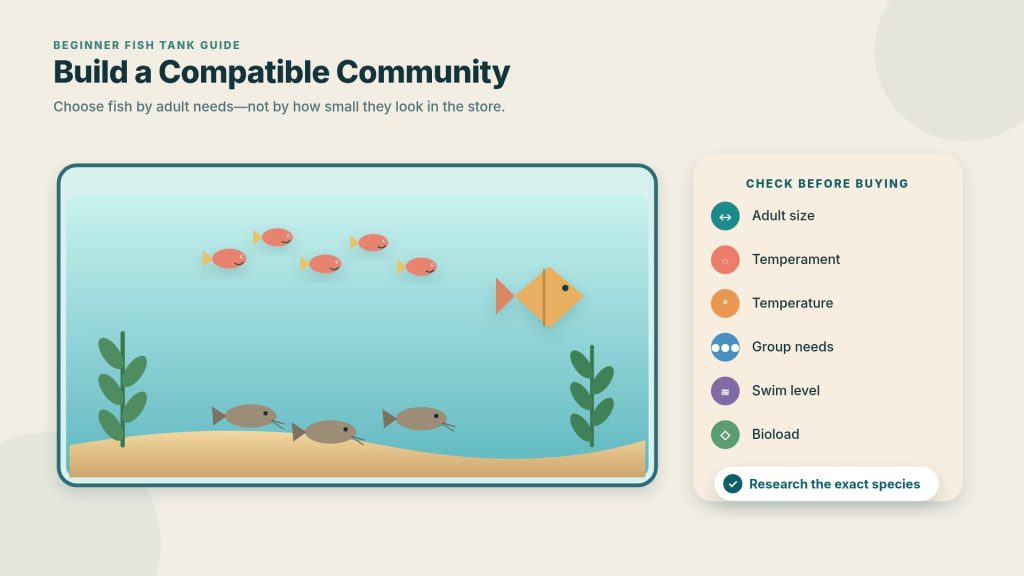
One of the biggest mistakes beginners make when designing their fish tank is selecting the fish based solely on how pretty they are without thinking about how they will get on with each other.
In order to design a good community fish tank, there are some points I take into account, including:
- Adult size
- Minimum practical tank space
- Temperament
- Schooling or shoaling behavior
- Preferred water temperature
- pH and hardness compatibility
- Swimming level
- Diet
- Activity level
- Territorial behavior
- Bioload
- Compatibility with plants and invertebrates
A peaceful community is created using fish with similar needs, not just with fish labeled as “community.”
The modern approach to community aquariums also focuses on choosing peaceful fish, keeping their demands in mind, introducing them into the aquarium gradually, and ensuring that they behave properly.
A Simple Beginner Community Structure
Instead of selecting one fish of many species, I like to use a combination of several species in my aquarium design.
- For example, a community fish tank for beginners may include:
- One species of schooling fish that fit the size of the tank
- One species that lives on the bottom and is compatible
- One species that can act as a centerpiece fish
- Some simple plants.
This way it becomes easier to maintain the aquarium and achieve the social needs of each fish.
Certain species of fish such as rasboras, some tetras, danios, small Corydoras species, platies, and other kinds of pleasant freshwater fish are often taken up in beginner aquaria, but none of those fish should be acquired merely for being included in the list of species for beginners.
The species should be researched properly beforehand.
Even species that look closely connected can exhibit different adult sizes, temperature ranges, activity levels, and behavior.
Live Plants in Aquariums for Beginners
I strongly encourage beginners to consider live plants.
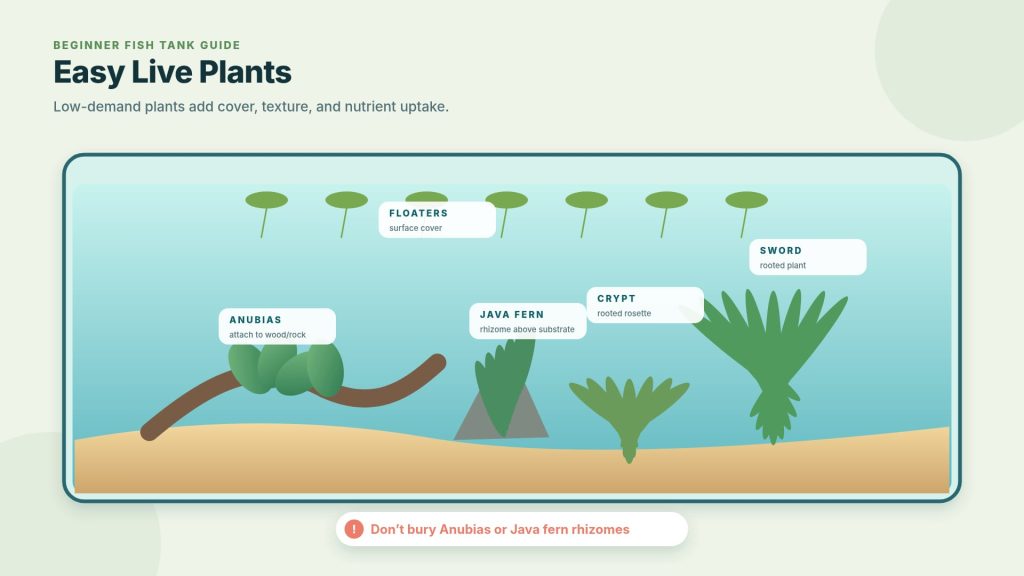
A simple aquarium for beginners does not need to be a high-tech aquarium equipped with the CO₂ injection system and demanding plants inhabiting the substrate.
Using simple plant species can help create a more beautiful and natural aquarium.
You can pay attention to such plants as:
- Anubias
- Java fern
- Java moss
- Cryptocoryne species
- Some Amazon sword varieties
- Floating plants suited to the tank
The choice of plants should also correspond with the light, substrate, fish behavior, and nutrients available.
One of the mistakes I do not make is thinking that all aquarium plants need to be planted deep in gravel. To begin with, some plants, such as Anubias and Java fern, have a rhizome that should not be planted as if it were a normal plant.
Live plants are not an alternative to filtration or cleaning but can be part of a balanced biological system.
They can also change ordinary fish tank ideas from decorating a box to creating a living underwater landscape.
Feeding Without Polluting the Tank
Overfeeding is one of the simplest ways for beginners at fish tanks to have water quality issues.
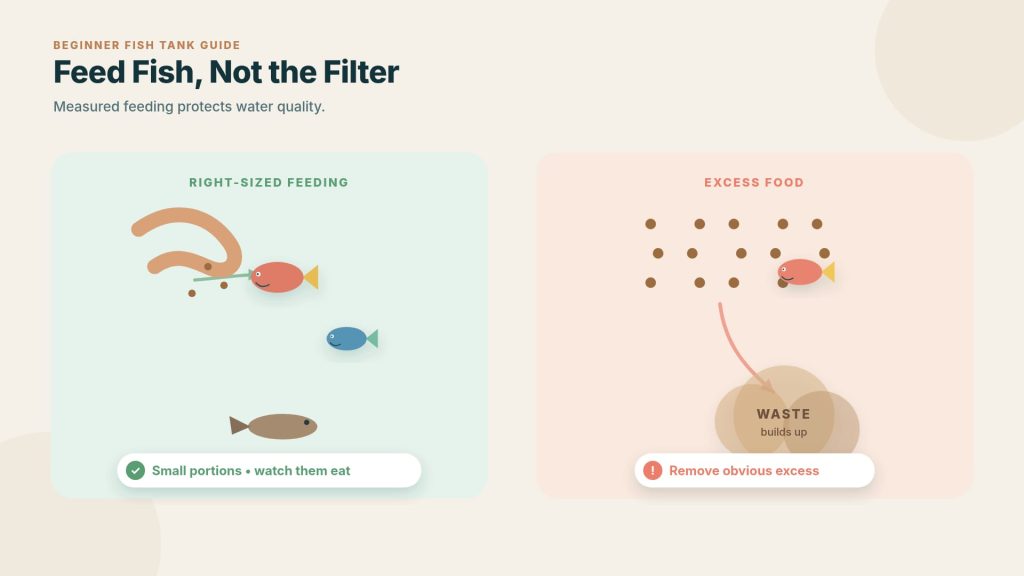
More food in the fish tank does not mean better health for the fish.
Extra food decomposes, adding waste into the water and making extra work for the biological filter.
I base the amount of food I give the fish on what is needed for a specific species rather than using the same number of flakes or pellets for each fish tank.
Here are my fundamental aquarium tips for novice aquarists:
- Measure out portions to feed your fish.
- Ensure that the fish actually consume what you feed to them.
- Choose the right food for each type of feeder you have in your aquarium.
- Eliminate any leftovers whenever possible.
- Change the amount of food you give to your fish if they are not eating what you previously used to serve them.
- Avoid using feeding as a form of entertainment.
Time for feeding is also the time for observation. At feeding time, one can observe all kinds of unusual behavior, signs of depression, injuries, and aggressiveness, and notice the fact that the fish swim alone and avoid community life.
Routine Maintenance for a Beginner Fish Tank
It is recommended to perform the process of aquarium maintenance regularly, but in moderation.
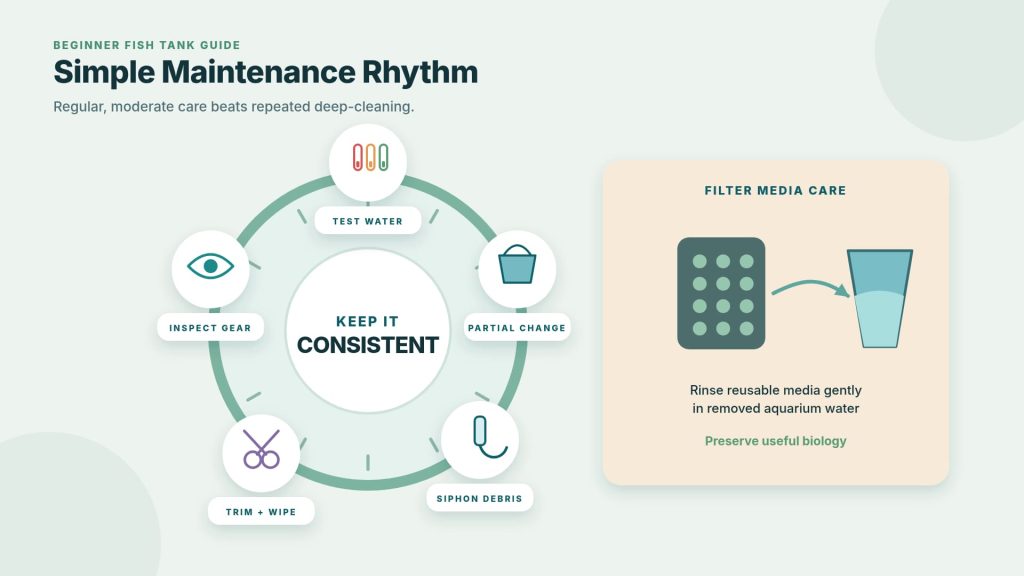
It is not advisable to crush the aquarium or try to blitz it. The biological communities of aquarium organisms build their microhabitats throughout the tank and filter systems.
For beginner aquarists, routine maintenance of a fish tank consists of:
- Testing water when appropriate
- Performing partial water changes
- Removing visible debris
- Siphoning accessible substrate
- Cleaning algae from viewing panels
- Trimming plants
- Inspecting equipment
- Checking temperature
- Cleaning filter media when flow decreases or debris builds up
The standard cleaning procedures, including partial water changes, state that fish should not be removed from the tank each time the aquarium is cleaned.
Protecting Beneficial Filter Bacteria
I don’t just change out all biological filter materials because they are dirty-looking.
When it is time to clean filter materials that you can reuse, a simple rinse can usually do it, provided that you do the cleaning in removed aquarium water and not scrub them clean.
The idea is to clean every bit of debris without losing the effectiveness of the biological filter.
Common Beginner Aquarium Mistakes
The best advice for aquarists is often to learn to avoid making mistakes!
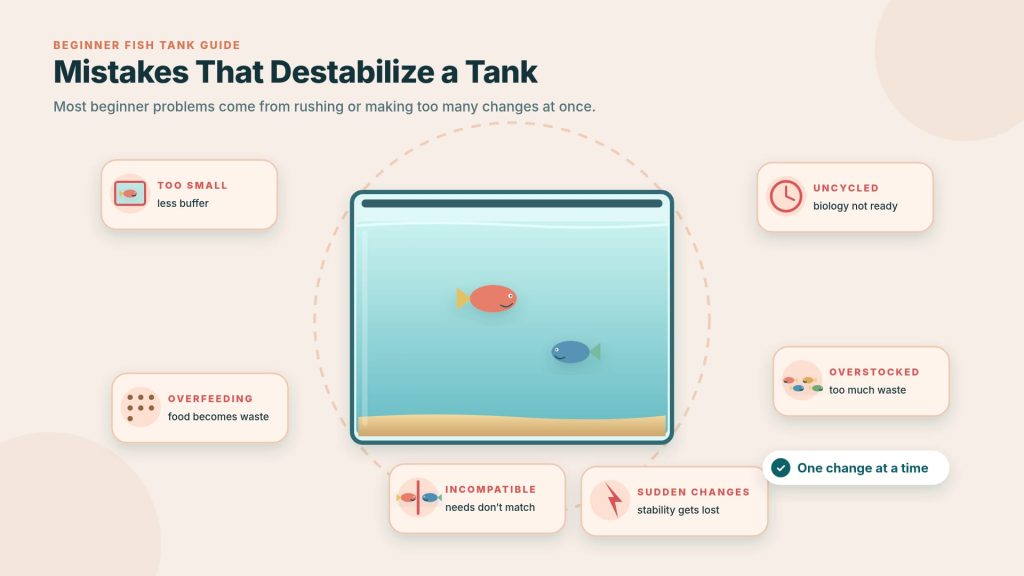
Starting With an Extremely Small Tank
Smaller tanks must be chosen carefully to avoid making an error in your choice. Pick your tank, not just the smallest one on the shelf, but depending on the needs of the species you want to keep, the available space, and your maintenance skills.
Adding Fish Before Cycling
Merely filling the tank with clear water does not mean it is biologically mature.
It is vital to test whether biological filtration is established and working before starting normal stocking.
Adding Too Many Fish at Once
Even if cycling is over, I prefer stocking gradually.
By adding new livestock step-by-step I give my aquarium the required time for adjusting and get to know how good its water quality is.
Choosing Fish Before Researching Adult Size
The little fish in the shop could grow up into large adults.
For that reason, I always consider the expected adult sizes and behaviors when making my purchase decisions.
Using the One-Inch-Per-Gallon Rule as a Guarantee
I don’t use that old trick.
Even if the fish are two inches long and share the same species, they are yet different in terms of their behavioral, physical, and physiological needs.
Mixing Incompatible Species
Fish perceived to be non-aggressive could have different heating and social needs that may render them incompatible with other species.
Thus, I always research the compatibility of fish before buying.
Overfeeding
When feeding fish too much, one should remember the big problem of excess waste.
Instead of trying to watch the feeding process unfold, it is better to feed the fish using this concept.
Replacing Filter Media Too Often
When cleaning an aquarium, it is worth knowing how to avoid throwing away the well-established biological media and thus eliminating an important population of beneficial bacteria.
It is also advisable to clean the aquarium smartly instead of just replacing everything.
Making Large Changes Without a Reason
Aquariums work best when they are stable.
When changing several things at once, it is harder to evaluate what was wrong with an aquarium.
Ignoring Water Tests
While the chemistry might be headed in the wrong direction, the aquarium can always appear perfect.
Instead of judging based solely on looks, testing makes it possible to make well-informed judgments.
Beginner Fish Tank Ideas That Stay Easy to Maintain
An aquarium for a beginner can indeed look great.
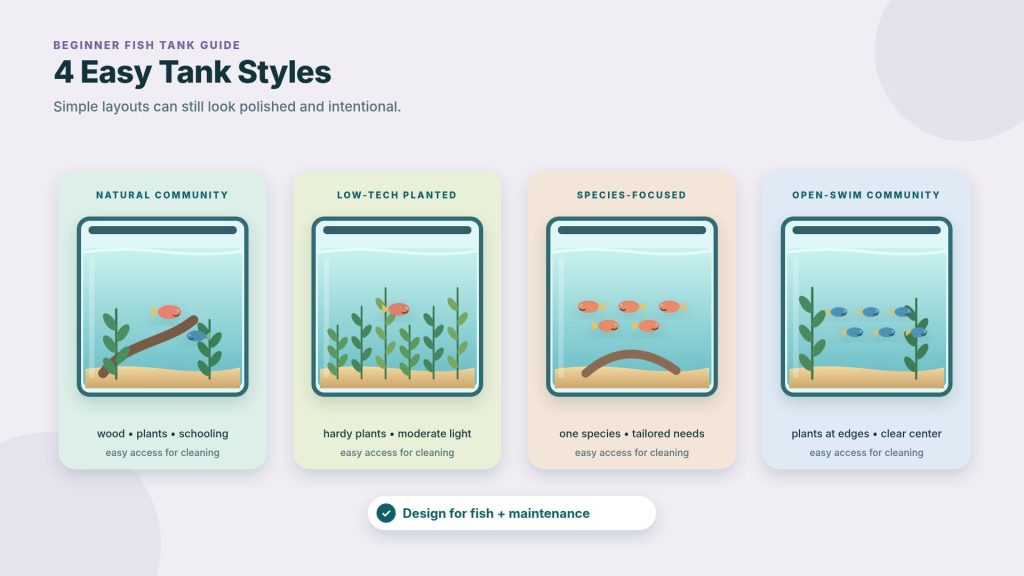
I favor designs that present a simpler cleaning routine instead of a design that creates a large number of difficult-to-clean spots.
Natural Planted Community
Choose an aquarium that is moderately sized with simple plants, natural-looking rock/wood decorations, and a fish that schools well.
It is one of my favorite designs for a beginner aquarist because it creates the impression of having many varieties of fish without having many different species.
Simple Low-Tech Planted Tank
Select the right plants that grow slowly, pay attention to lighting conditions, and go for simple designs.
This design works well for first-timers since it allows having live plants without the need for immediate knowledge of advanced aquaristics tricks.
Species-Focused Aquarium
You should create an aquarium for one type of animal instead of creating a tank suitable for different species.
Tanks designed for a particular animal type work better since parameters like water temperature, food type, number of plants, etc., become less difficult to manage.
Open-Space Community Layout
When creating such tanks, it’s a good idea to use plants and artificial rocks at the back and at the sides of the tanks and to create an open space in the center.
This is because fish forming schools appear to be much more beautiful when they can swim together.
My Beginner Aquarium Success Formula
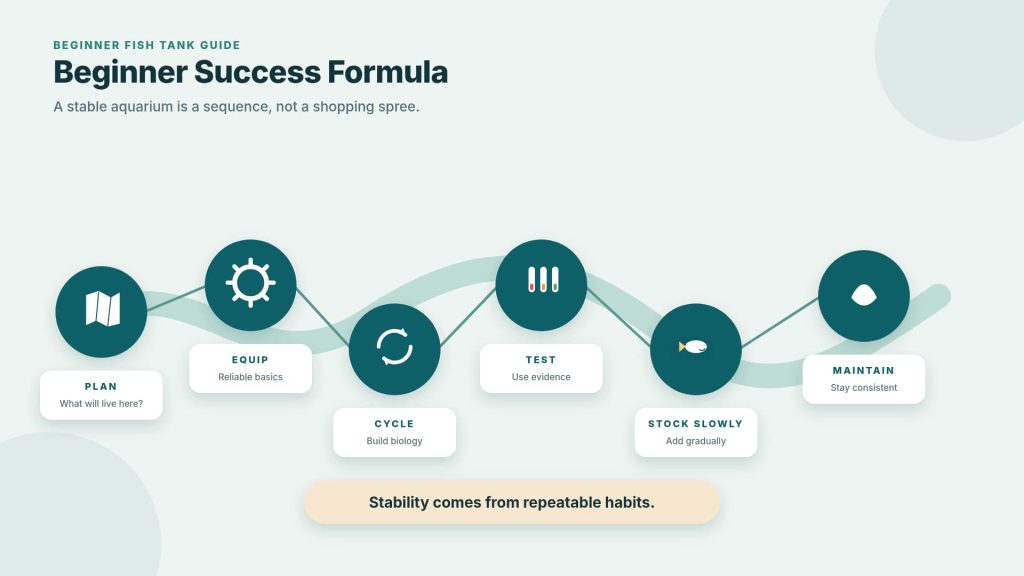
My main idea is that creating aquariums for beginners can be reduced to several simple steps:
Plan first → choose the right tank → install dependable equipment → condition the water → establish biological filtration → test the water → choose compatible fish → stock gradually → feed carefully → maintain consistently.
None of the steps is complicated by itself.
The issue usually arises when people try to accelerate one or more steps.
It follows that creating a successful aquarium as a beginner isn’t just about spending a lot on gear but rather creating stability.
If you happen to remember just five tips for beginners regarding aquariums, let them be the ones listed below:
- Make sure you have a large enough volume of water to make some mistakes.
- Make sure you cycle the aquarium before regular stocking.
- Test the water instead of guessing.
- Choose fish according to their future requirements and compatibility.
- Make sure you keep your routine maintenance simple.
Once these habits become part of your life, you can expect that the aquarium hobby will be much more fun.
A well-designed beginner aquarium will not feel like a disaster waiting to happen but will instead be a predictable ecosystem that you’ll know better over time.
Quick answers
Frequently asked questions
What is the most appropriate fish tank size for beginners?
For most first-time freshwater aquarists, I consider that a 20-gallon tank is a reasonable choice, given that it can provide more stability than smaller tanks and better options for stocking as well. Of course, the final size must depend on the particular needs of the species you plan to keep.
Is a 10-gallon tank suitable for beginners?
Sure, a 10-gallon tank can be ok, but the fish selection must be narrower. Water conditions are going to change more rapidly and require additional maintenance.
Is freshwater easier than saltwater for beginners?
I always recommend freshwater because this is the best and the easiest way to get familiar with aquarium keeping. Saltwater may work for those who are willing to put some effort into aquarium keeping, but this type of tank requires more equipment, salinity, livestock, and testing.
How long may it take for a novice aquarium to complete the cycling process?
There is no specific number of days that may be used to determine when cycling is finished. This usually takes weeks to achieve but may be considered complete only when it has been tested that the biological filter is functioning properly and able to break down waste in such amounts that ammonia and nitrite do not appear in the water.
Should fish be put into the aquarium when it has just been filled?
Generally speaking, no. Filling the aquarium with water, preparing it, and turning on the filter does not mean an already functioning biological filter has been built up. I believe it is better to wait till cycling is complete before putting fish into the aquarium.
What must be available in a starter aquarium?
Included in my list of must-haves are an appropriately sized aquarium and its stand, filter, heater (in case it is needed), thermometer, lighting, conditioner, water test kit, substrate, siphon, bucket for maintenance, and specific fish food.
Should every beginner fish tank have a heated device?
Not all aquariums need to be heated. The type of heater depends on the type of fish and the room temperature. Furthermore, most marine fish require a controlled and constant temperature.
Is an air pump necessary for beginner aquariums?
Not necessarily. Most filter types generate enough surface disturbance to adapt to the necessary gas exchange. The air pump and air stone may be worth it depending on the filter type, temperature, stocking, fish requirements, and the aquarium setup.
Are live plants beneficial for those who are new to aquariums?
Yes. I like suggesting easy-to-grow plants because they provide shelter and help improve the visual aspect of the aquarium. It is better to choose hardy and low-maintenance plants than try a complex setup for a planted aquarium.
How often do you need to clean a fish tank if you are just starting out?
The frequency of maintenance will depend on the fish species you have, how much food you give to your fish, plant growth, and water-testing results. I would prefer that people take regular partial water changes and only clean the aquarium when needed rather than making cleaning a routine practice.
Do we have to take fish out of the tank when doing water changes?
In most cases, there is no need to take fish out of the aquarium when doing a simple water change. Trying to catch them can cause them a lot of stress.
Can you use tap water for filling a fish tank?
It is possible to use tap water for filling a fish tank given that the water chemistry is appropriate for the fish being kept, but you will always need an appropriate water conditioner if tap water contains chlorine or chloramine.
What are the best types of fish for a novice community tank?
Some good options would be peaceful rasboras, certain tetras, danios, smaller types of Corydoras, and livebearers like platies. I check every particular species for its adult size, social needs, temperature, behavior, and compatibility before I add it to the community tank.
How much fish should a novice put in a fishtank?
It's impossible to give an exact number. Instead of the number of gallons of the aquarium, I look at the size of adult fish, shape, activity level, social behaviors, tank size, type of filtration, territorial behavior, and waste production to calculate the fish stocking.
What is the biggest aquarium fish care piece of advice for a beginner?
Set the aquarium up to sustain stable water conditions and not just hurry up and fill it with fish. If the water filter is already active and biologically ready, the fish are compatible with each other, and feeding and maintaining them is controlled, all beginner fish-taming problems can be easily avoided.

About the author
Olivia Brooks
I am Olivia Brooks, an expert in freshwater aquariums. Being a fish enthusiast myself, I have learned a lot about how to keep aquariums healthy and very pleasant. At Stardexa, I offer clear and easy-to-read tips on many subjects related to freshwater fish and aquaristics in general. This is what helps fish keepers of all experience levels make better decisions.
Reader Fishkeeping Feedback
Comments, questions, and aquarium reviews
Share your aquarium experience, ask a fish care question, or write a helpful note about tank setup, water quality, filters, algae control, or maintenance for other readers.
No aquarium reviews yet. Be the first to share a helpful review on content or fishkeeping question, setup tip, or care experience.