Beginners Aquarium
Best Aquarium Fish for Beginners: Easy, Hardy Species
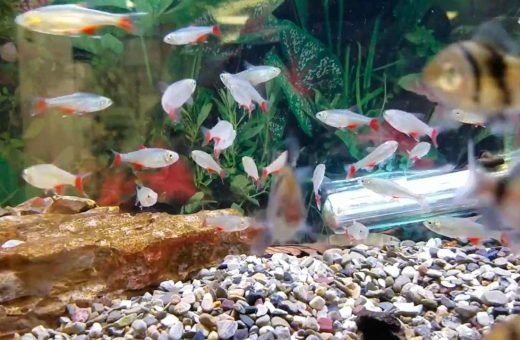
For a novice fish keeper, it is usually better to start with hardy freshwater fish species rather than sensitive species that need specific water conditions. Fish species such…

Search Aquarium Guides
Aquarium Keyword
When starting an aquarium, it is much easier to choose fish that are compatible with your level of experience, the size of your aquarium, and the water conditions in the aquarium, as well as the maintenance work required by your chosen fish. The guides for beginner aquarists aim to help someone new to the aquarium hobby make a sensible fish selection without (guessing) making it into a lottery. Regardless of whether you want to have a peaceful freshwater aquarium, colorful tropical fish, your first saltwater aquarium, or simply explore cold-water species, you can find useful information about selecting fish that will be easy to take care of, their compatibility with one another, and their future health.
For a novice fish keeper, it is usually better to start with hardy freshwater fish species rather than sensitive species that need specific water conditions. Fish species such…
Choosing the best fish for the aquarium for beginners should not only be about the species that can endure some mishaps now and then. Ideal beginner aquarium fish need to have parenting requirements that a novice aquarist will understand and stick to.
Thus, attributes like toughness, character, feeding requirements, size as an adult, social behavior, and necessary water conditions play an important role. A lot of popular beginner aquarium fishes are flexible and easy to find, but every species has its own needs. Such fish can be appropriate for every beginner aquarium but not so suitable for another one due to aquarium dimensions, temperature, tank mates, and water chemistry.
That said, our guides help narrow down the variety of species of fishes in order to provide you with a chance to create an aquarium that will fit the needs instead of being chosen only by appearance.
Freshwater aquariums are very popular because they provide numerous options in terms of fish, aquariums, and community style. There are various types of freshwater species available to beginners, such as guppies, platies, danios, rasboras, tetras, Corydoras, and bettas—although compatibility varies.
We provide readers with more information than just pretty fish. Our freshwater fish for beginners guides are designed to teach you aspects such as behavior, schooling or social needs, size as adults, necessary nutrients, and tank compatibility, as well as how suitable each fish’s habitat is.
In this way you will be able to better compare what it means to have a single-species aquarium, a peaceful community aquarium, or a well-thought-out beginners’ tank combination.
Tropical aquariums give the opportunity to add some of the most attractive and sought-after fish to your collection. Since tropical fish often need a well-heated environment, beginners should focus not only on temperature control but also on factors such as the type of filtration, tank size, the fish’s behavior, and compatibility with other species.
Our guides for beginner tropical aquarists include concise recommendations and suggestions. You will find information on beginner types of tropical fish, simple principles for setting up the tank, appropriate community combinations, and important daily care activities before selecting the fish to keep.
To create a successful tropical tank, it is vital not to hurry in filling the aquarium but rather to create stable conditions and gradually add the right animals.
A marine aquarium can be the next step for novice fishkeepers who are willing to put in the additional effort to sample water and manage the systems. Beginner marine aquarium fish are typically assessed according to the ease of care, their personality, and whether they can be fed reliably.
Popular choices include clownfish, gobies, and other fish species, but the specific needs of the individual fish will always determine which fish will be chosen.
The article will also provide novice fishkeepers with a comprehensive idea about the difference between fish-only systems and beginner reef tanks where the presence of corals and invertebrates will also matter.
Cold-water aquariums do not necessarily involve tropical aquariums, with the exception that there are species of fish that prefer to swim in cold water.
Cold-water tanks require proper filtration, swimming space and upkeep of the water parameters as well as specific care for each species. An absence of a heater does not exempt an aquarium from maintenance. Even though cold-water fish are perhaps best known via the goldfish, there are other fish which can do well as cold-water specimens depending on the aquarium size and conditions.
The cold-water aquarium fish for beginners guide knows about the reasons for that difference so that the new aquarists make their choices based on actual maintenance needs instead of their assumptions.
The selection of beginner fish should take place in conjunction with the planning of the aquarium itself. The capacity of the tank, the filter, the nitrogen cycle, the temperature, the chemistry of the water, the bottom substrate, the decorations, the plants, and the swimming space play an important role in the selection of suitable fish.
The new aquarium should be equipped with biological filtration capable of processing fish excretions. Beneficial bacteria should settle down during the nitrogen cycle and convert harmful ammonia and nitrites into less poisonous substances. It is essential to test the water in the aquarium in order to decide when the conditions in the tank are suitable for fish.
It is also advisable for beginners to avoid overstocking the aquarium in the beginning. The process of gradually adding fish gives the biological filtration system better chances to adjust to the increasing waste load of the aquarium.
The success of a great community aquarium relies not solely on the variety of species kept but more on compatibility too. Fish must be taken into account based on character, size when adult, preferred temperature, water needs, movement rate, relationships, and feeding behavior.
Certain fish species bond with each other in groups, while others may become territorial. Some species grow to be huge, while others might need to occupy more space; it’s not predictable based on juvenile size.
Researching the particularities of adult existence for each species prior to purchasing will allow entrepreneurs to avoid overcrowding and incompatible mating. It is worth noting when selecting aquaria that age and behavior of fishes must be taken into consideration, not only juvenile size.
Even beginner-friendly fish require considerable maintenance for survival. Good water-quality control, properly provided nutrients, regular water exchange, filter cleaning, and constant watching of fish behavior are necessary for a good aquarium atmosphere.
Despite the appearance of crystal-clear water, it does not mean that it is always of good quality. It is impossible to find problems with water one can see with the naked eye. Water testing is the best way to know about the water situation in the aquarium.
Feeding also has to be in line with the type of fish and the number of fish in the aquarium, as excessive food can decrease water quality, and wrong feeding results in bad health of fish as well.
In our collection of beginner aquarium fish, we’ve compiled a series of practical guides—be it about freshwater fish, tropical aquariums, saltwater fish that are reef-friendly, suitable cold-water tanks, combinations of fishes for the aquarium, aquariums in use, or routine care.
The purpose is simple – to educate you about the fish before bringing them home.
You can use these guides to compare different beginner fish suitable for aquariums. Obtain knowledge of the needs of different fish species; prepare for tank communities of compatible fish; and ease maintenance, first of all. By studying well and carefully stocking and maintaining stable water conditions in the tank, you can make the first fish tank an enjoyable experience of the hobby.
Enter your subscribed email. We will send a 6-digit code to log you in.
New here?
Add your name and email. We will send a verification code before creating your subscriber profile.
Already subscribed?
Profile
Choose what notifications you want to receive from this website.
Your logged-in subscriber comments are connected with your saved profile.
Update your name, profile image, bio, or account status.
No comments yet. After you submit a comment while logged in, it will appear here.