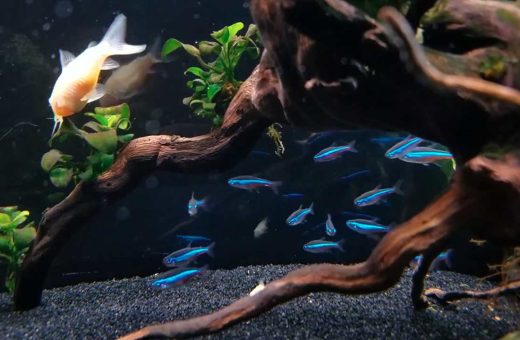
Beginners Aquarium
Beginner Fish Tank Guide: Everything You Need to Start
An aquarium for a novice is not just a glass container full of water for me, but a tiny living ecosystem. For a novice aquarist, I usually recommend…

Search Aquarium Guides
Author archive
I am Olivia Brooks, an expert in freshwater aquariums. Being a fish enthusiast myself, I have learned a lot about how to keep aquariums healthy and very pleasant. At Stardexa, I offer clear and easy-to-read tips on many subjects related to freshwater fish and aquaristics in general. This is what helps fish keepers of all experience levels make better decisions.
Author guides
4 guides
An aquarium for a novice is not just a glass container full of water for me, but a tiny living ecosystem. For a novice aquarist, I usually recommend…
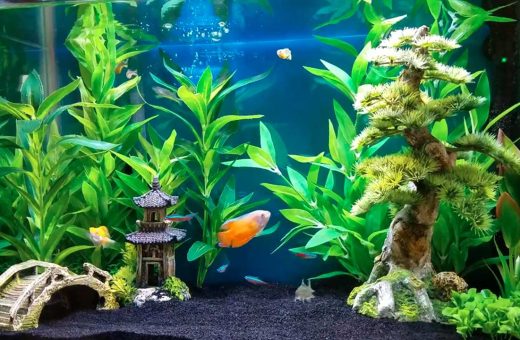
For beginners, Anubias, Java fern, Java moss, Cryptocoryne wendtii, Amazon sword, Vallisneria, hornwort, water wisteria, Bacopa caroliniana, and dwarf sagittaria are excellent plants to use in the first…
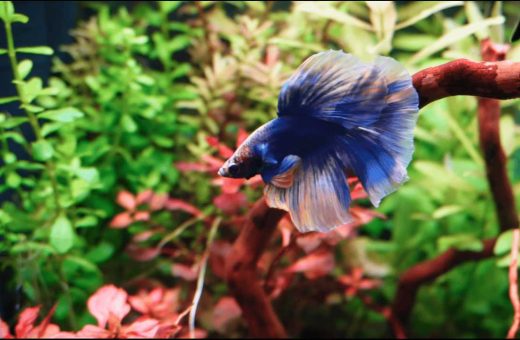
How to Set Up a Freshwater Aquarium for Beginners To start a freshwater aquarium for beginners, begin with selecting an appropriate tank size and then placing the aquarium…
Beginner Aquarium Tank Size at a Glance A long aquarium that is 20 gallons in size is recommended by many experts to be among the best options for…
For over 9 years, I have been in love with freshwater aquariums, and it has become clear to me that successful fishkeeping is not about special fishkeeping tricks or hints. It is about understanding fish needs, creating an appropriate environment for them, keeping an eye on the water conditions, and establishing a systematic approach to fish maintenance.
It is this pragmatic attitude that I employ in my writing at Stardexa.
When I write guides about how to maintain a freshwater aquarium, I strive to provide information in an easily understandable way and avoid complex terms and inconsistent recommendations. The information can help anyone who is setting up their very first fish tank or trying to figure out how to maintain their current tank.
I take great pleasure in helping beginners since I recognize how many questions arise at the very beginning of the aquarium experience. What fish can coexist? How big should an aquarium be? Which filtration system is appropriate? How frequently should the water be changed? How much food to give? Why does a new aquarium behave differently than an old one?
All these are practical questions, and I think that they need practical answers.
Throughout my more than nine years of experience with freshwater aquariums, I have gained a wide variety of knowledge and skills on fishkeeping through my research, reading, observation, and experience.
One of the major lessons I have learned is that an aquarium should be perceived as a full ecosystem and not just as a simple container with fish. Fish selection, stocking density, filtration, feeding, aquarium care, water quality, and behaviour of species are all interrelated.
Therefore, I seldom think of aquarium decisions separately.
Whenever I talk about a certain kind of freshwater fish, I want to give my audience more information than just its looks. I tend to analyse all parameters that the fish will require, including its living conditions, nature, compatible fish for the tank, feeding patterns, adult size, and its appropriateness for a beginner or a community tank.
I had also learned through my experiences the importance of consistency. An aquarium care routine that is simplistic and understandable for an aquarist is usually much more effective than a complex aquarium maintenance procedure that one finds difficult to follow.
The articles I write for Stardexa are mainly focused on freshwater aquarium maintenance issues that are commonly faced by aquarists at home.
I also cover the issues of fish selection, aquarium design and construction, community tank arrangement, tank mate comparison, filter selection, feeding schedule setup, water change performance, etc.
Some of the topics I keep revisiting in my writings are:
I try to link those topics rather than consider them completely independent problems. For instance, the fish compatibility issue is closely connected with the matter of tank size, their temperament, swimming space available there, feeding competition, and other conditions suitable for the species.
This approach allows the readers to view the problems as they really are.
One of my all-time favorite subjects for writing purposes consists of community aquariums due to the fact that finding the right fish to live together in one aquarium cannot simply be accomplished by listing various species and defining them as peaceful.
My focus is specifically on important practical aspects of freshwater fish compatibility, which include aspects such as behavior, the size of adults as they grow, behavior, activity level, social character, habitat preference, and feeding habits, as well as aquarium size.
My goal is not simply to tell them what type of fish can be kept together but also to provide an explanation or justification regarding their choice.
This works great when it comes to helping beginners in making their first steps in the world of aquaristics, as the ability to assess tankmates results in knowledge not only applicable in that case only.
Proper maintenance of a freshwater fish tank relies greatly upon routine tasks.
For this reason, one can often find my texts devoted to the subject of filters, changing water, testing water, feeding fish, cleaning an aquarium, and other maintenance procedures.
My ultimate goal is to make readers grasp why they should perform these duties.
Rather than just advising them to keep their aquariums, I attempt to give an explanation of the things to observe and the practices to consider.
Maintaining filtration and quality of water are the two important topics in responsible fishkeeping. Furthermore, veterinary practitioners and those dealing with fish welfare stress the importance of the functioning of a filter and regular monitoring of water quality as the basis of success in fish keeping.
Moreover, I encourage my readers to think of maintaining an aquarium when choosing fish. The aquarium should correspond to the wants of its owner regarding the level of care the latter is ready to provide.
One important aspect of my job is to help beginner aquarium owners steer clear of problems that can be avoided.
Many starting aquarium owners feel that they should learn all there is to know about keeping fish. I tend to divide this big challenge into smaller dilemmas such as choosing the correct aquarium, learning how aquarium environments operate, researching fish prior to their purchase, avoiding overstocking, setting up feeding patterns, taking care of filtration, and being regular in aquarium maintenance.
I advise people not just to buy fish based on their looks.
A small fish in a shop may have quite different needs in the future. Two species that are great-looking may exhibit incompatible behavior. An overloaded aquarium will require much more care than a lightly stocked one.
Searching for this information before introducing fish to the aquarium is much easier than trying to fix the situation later.
The goal of my writing is to make it as straightforward as possible.
Though in aquariums there are some scientific ideas involved, a beginner guide for those who have no experience as aquarists should not confuse someone, making them feel like they need to obtain a diploma in aquatic biology to understand their aquarium.
In case technical terms actually matter, I make sure to explain those within a context. If a simple explanation will suffice, I stick to that.
My goal is for a reader to understand what they should do, what they need to check and what will influence their decision after reading one of my articles.
Therefore, I pay attention to useful information instead of writing non-informative articles that contain content that is not useful for a reader.
I like the beauty of freshwater aquariums, but we must never put the aesthetic beauty of the tank over the welfare of the fish.
In my articles on fish selection, tank mates, feeding, aquarium setup, and aquarium maintenance, I always prioritise the needs and welfare of the fish.
Different species of freshwater fish have different needs in terms of their behaviour and environment, so compatibility must be determined based on the species, type of water, and behaviour instead of appearance only.
Feeding is another typical example since more food is not necessarily good caring. Responsible feeding takes into account the fish’s capacity to eat and how much leftover food can affect the ecosystem of the aquarium.
This is the kind of practical connection I would like to convey to my readers.
At Stardexa, I aim to simplify fishkeeping for those interested in freshwater fish.
I have spent more than nine years on subjects related to aquariums, and I always believe every new fish species or aquarium provides various learning opportunities, and that is exactly what makes aquarium keeping different.
I just use my experience to convert the questions into guides that anyone can follow.
If you have used my article to figure out which fish to buy for your aquarium or properly set up a new aquarium, or to make your maintenance easier, or to understand your filter better, or to feed your fish more carefully, or to avoid typical mistakes made by beginners, it means I have achieved my goal.
Good writing on aquarium keeping does not stress the difficulty of fishkeeping. It gives readers the necessary and trustworthy information so that they understand their aquariums and take care of their fish properly.
Contact At: [email protected]
Enter your subscribed email. We will send a 6-digit code to log you in.
New here?
Add your name and email. We will send a verification code before creating your subscriber profile.
Already subscribed?
Profile
Choose what notifications you want to receive from this website.
Your logged-in subscriber comments are connected with your saved profile.
Pending comments can be edited or deleted here. Approved comments are locked.
Update your name, profile image, bio, or account status.
Privacy preferences
We use essential cookies to keep this website working. With your permission, we may also use analytics and marketing cookies to improve content and support the site.
Required for core site features, security, accessibility, and consent storage. These cannot be switched off.
Helps us understand which guides are useful so we can improve the website.
Allows ad, conversion, and partner scripts that may personalize or measure advertising.
Remembers optional choices that improve your browsing experience.
No comments yet. After you submit a comment while logged in, it will appear here.