Filters & Filtration
Aquarium Filter Guide: Types, Setup and Care
An aquarium filter runs the aquarium water through one or several kinds of media. The result is the filtration of any visible contaminants, the creation of conditions suitable…

Search Aquarium Guides
Aquarium archive
The use of a reliable filtration system is essential for the maintenance of the water quality as well as helping the beneficial microorganisms to have appropriate conditions to perform their job. The collection includes information about the types of aquarium filtration, aquarium filtration systems, filter media, and their design as well as their installation. Our guides include information regarding sponge filters’ selection and also canister and hang-on-back filter comparisons as well as the design of the other equipment for the existing aquarium water filtration system.
An aquarium filter runs the aquarium water through one or several kinds of media. The result is the filtration of any visible contaminants, the creation of conditions suitable…
Aquarium filtration is a system that goes beyond the removal of visible impurities from the aquarium water. A good filtration system makes it possible to move the water and to process it with the help of filter substances that not only trap solids but also create conditions for bacteria to do their work.
Aquarium filtration is generally broken down into 3 stages: mechanical, biological, and chemical filtration. Mechanical filtration refers to filtering the solids such as uneaten food, fish waste, or decomposed plants. The biological filtration provides a place for good bacteria to carry out their nitrogen cycle in which ammonia and nitrite become nitrate. Finally, chemical filtration uses media like charcoal or special resins to absorb specific substances and eliminate certain smells.
A filter that is best for an aquarium is not necessarily the most elaborate one. The best filter for you should depend on the size of your aquarium, the species kept in it, the level of stocking, and the amount of maintenance you can provide.
Different types of fish tank filters are appropriate for different aquariums. Some filters to consider are sponge filters, which are basic filter systems that run off air. They are useful because they have a very gentle flow, and the uptake is in a place that protects them, which makes them perfect for shrimp aquariums, breeding, fry, bettas, and small aquariums.
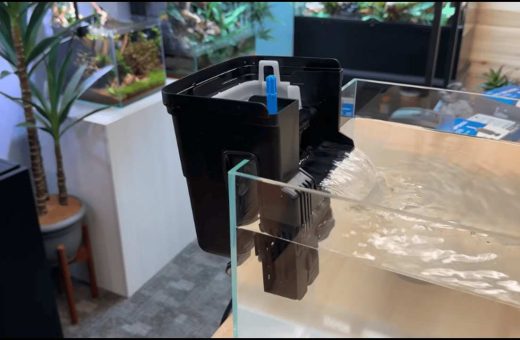
Another kind of filter is the Hang-on-Back (HOB) filter, which is a waterproof fish tank filter that hangs on the lip of the tank from where it sucks water through filtering material before shooting it back into the tank. This type of filter is convenient to use because they are adaptable to many small- to medium-sized tanks.
Canister filters are another viable option for aquariums. They are different from other types of filters, as they are placed outside the tank and therefore offer more space for filtration purposes. They provide mechanical and biological filtration for bigger fish tanks and highly populated aquariums.
There are also several types of aquarium filters, such as internal filters, undergravel aquarium filtration, sump systems, etc., that help in the filtration of fish tanks. Good aquarium filters are those that are best suited for the specific requirements of a fish tank, and the one with the highest flow rating might not be the best one.
The filtration systems in aquariums decide what happens after water has come into the filtration system. A coarse sponge captures larger particles, while fine pads or filter floss collects small, suspended particles. A biological filtration system will use porous ceramic media to foster beneficial bacteria growth on a surface area.
Chemical media have specific usages. Carbon filtration can be used in aquariums to eliminate discoloration, foul smells, and specific dissolved substances, while special media can target specific water quality problems. One has to remember that chemical media needs to be there to help the proper function of biological filtration—not to substitute it.
The order of media is also important. In many models of filters, first come coarse mechanical media, then fine pads and biological media so that the debris will be caught in the beginning and it will have a proper flow during operation. It is necessary to remember that every filter has its own path for water to follow.
Begin filter sizing by determining the aquarium size and checking the manufacturer’s specification for the tank’s flow rate, which is usually stated in gallons per hour. Next, determine the bioload and fish species. A tank that is lightly stocked with plants will have different filtering requirements compared to other aquariums, such as a guppy tank, cichlid tank, or turtle tank, or even a heavily populated community tank.
Flow rate is just as important as its capacity. Some species of fish, such as fry, bettas, shrimp, and long-finned fish, can often benefit from low or moderate flow levels. A sponge pre-filter can be used to reduce the chance of inadvertently harming the small fish.
In large tanks more than one filter is usually better instead of using a single filter. In the case of nano aquariums or fish tanks of approximately 10 gallons in size, small systems with adjustable flow might be useful for filtration, keeping water currents low at the same time.
Freshwater aquariums primarily rely on biological filtration as their main filtration process, with mechanical filtration being an auxiliary process that provides physical removal of any unwanted debris. An aquarium that is set up in a planted manner will, however, also benefit from plant growth as a way of facilitating nutrient management.
Similarly, saltwater aquarium filtration can also utilize similar filters and filter media. Marine aquariums and reef aquariums cannot fail to have a few additions, such as built-in sump systems, protein skimmers, and filter socks, among others. The filtration method that will be effective for an aquarist will depend on such factors as the aquarium volume, the stock to keep in the aquarium, and the nutrient objectives.
An aquarium filter works best where water is allowed to flow freely. Therefore, any indication of restricted flow, unusual noise, clogged media, and any signs of debris buildup indicate the need to perform maintenance on the filtration system.
Treat already used biological filters with extreme caution. Do not change all of them at once without valid justification. If media must be cleaned and reused, a good rinse in removed water can clean dirt and preserve the bacteria.
Check all components of the filter (intakes, impellers, hoses, seals, air lines, and return) as necessary. Regular maintenance and upkeep tend to be more effective compared to replacing equipment regularly.
Effective filtration ensures the optimum water flow, the right amount of media given the biological filtration process, the safety of fish, and reasonable upkeep. Take advantage of these aquarium filter guides, which allow better comparison of filter types, learning about filtration media, designing freshwater or marine filtration systems, troubleshooting flow-related issues, and, ultimately, selecting the best filter maintenance protocol for your aquarium.
Pick the filtration system that you understand very well, make sure it is well-sized for your aquarium, and adjust it based on water quality results and needs of fish rather than just guessing.
Enter your subscribed email. We will send a 6-digit code to log you in.
New here?
Add your name and email. We will send a verification code before creating your subscriber profile.
Already subscribed?
Profile
Choose what notifications you want to receive from this website.
Your logged-in subscriber comments are connected with your saved profile.
Update your name, profile image, bio, or account status.
No comments yet. After you submit a comment while logged in, it will appear here.