
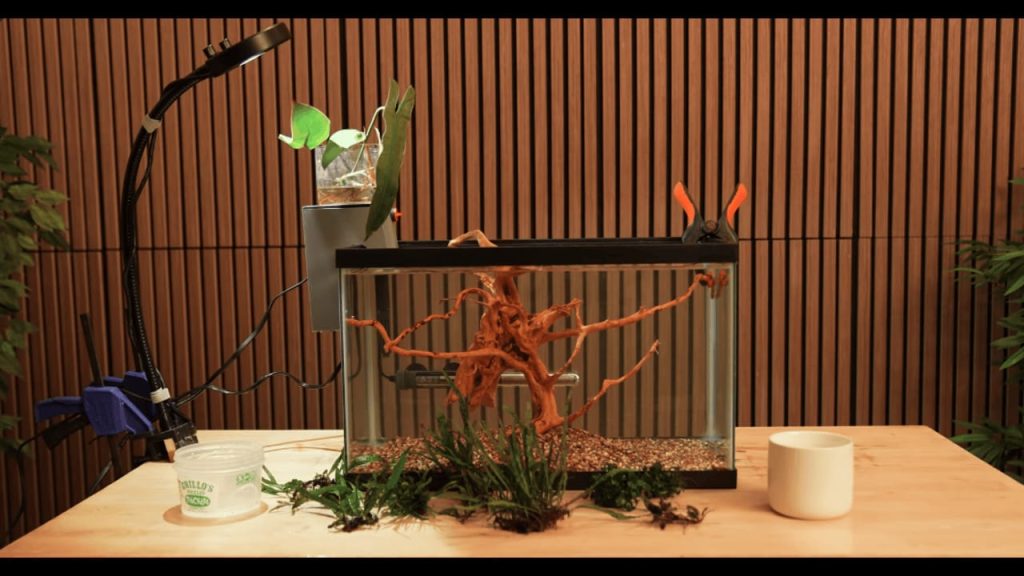
My Standard for a Beginner Aquarium Kit
In my opinion, aquarium kits should be judged according to their usefulness rather than the number of accessories advertised in the package. The package contents may include an aquarium, a plastic plant, a small net, some food, and a variety of lights, all of which are good. However, the absence of the right equipment makes these items useless.
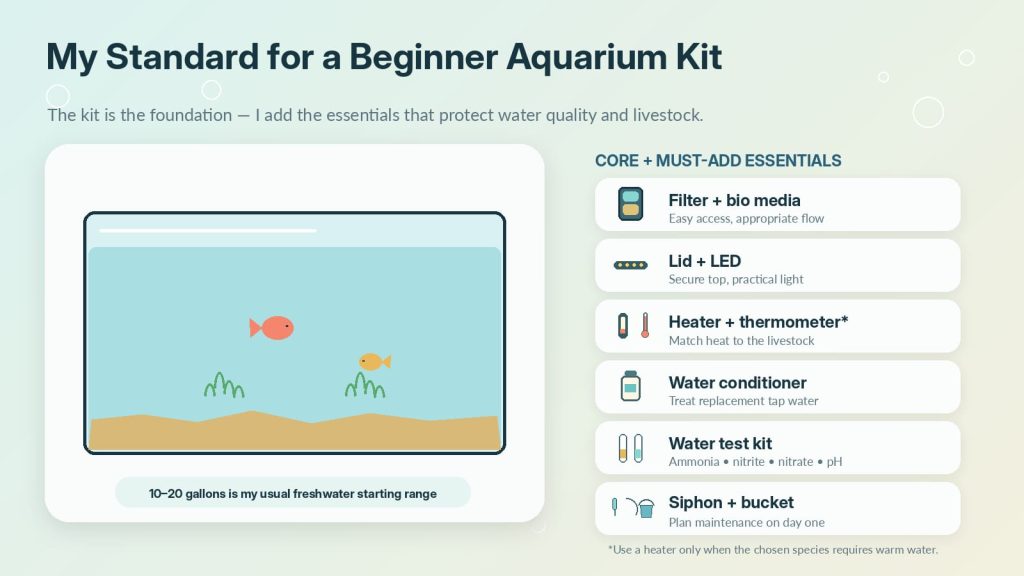
The best aquarium kit for beginners is the setup that helps me create a solid foundation rather than provides me with lots of stuff to throw away. My practical starter kit looks like this:
- A 10- to 20-gallon aquarium
- A secure lid or hood
- A filter sized for the tank and intended livestock
- Useful mechanical and biological filter media
- An LED aquarium light
- A heater for tropical species
- A separate thermometer
- Water conditioner for tap water
- An aquarium test kit for ammonia, nitrite, nitrate, and pH
- Safe substrate and decor
- A gravel vacuum or siphon
- A dedicated aquarium bucket
- A fish net
- Species-appropriate food
- A level, properly rated stand or supporting surface
That is why I consider an aquarium starter kit to be the heart of the entire aquarium.
Tank Size Sets Up the Whole Experience
Many beginners are tempted by small aquariums because they seem cheap and easy to take care of. In practice, however, it’s small aquariums that give you less space for error. A bit of extra feeding, forgetting to change water, or a sudden temperature change can have quick consequences in a nano aquarium.
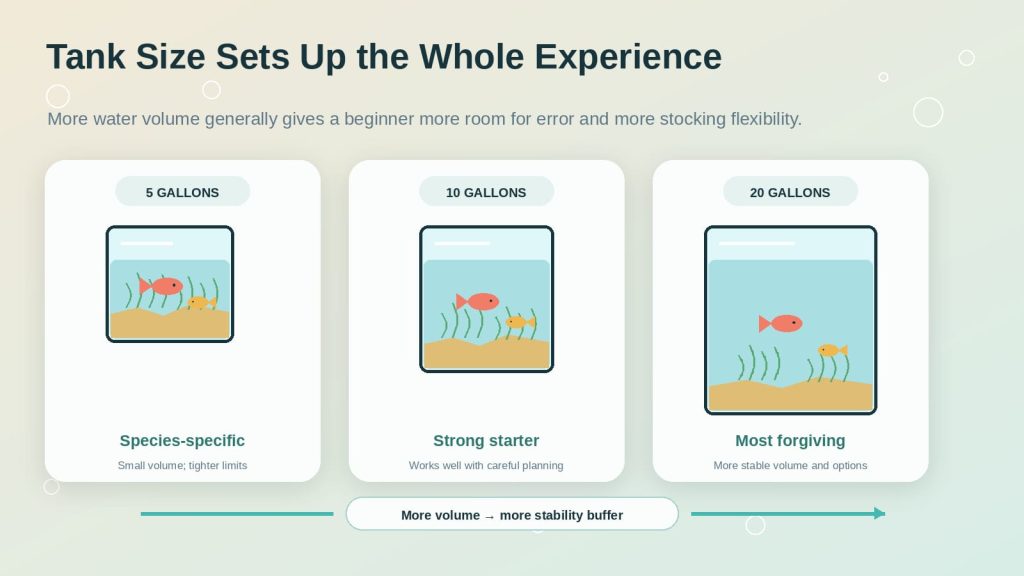
For a general freshwater aquarium, I generally prefer a 20-gallon aquarium kit if the space allows. A 20-gallon aquarium provides more options for stocking fish, more area for planting aquatic plants, and more water volume, which is easier to manage with regard to water quality.
However, a 10-gallon aquarium kit could still be a great starter tank. A 10-gallon aquarium might work well for some small fish species, a well-planned betta aquarium, shrimp, or other fish stocking depending on the species. Make sure to select fish types that could fit properly and comfortably in this size aquarium rather than to buy the tank first and then to find suitable fish.
A 5-gallon tank is suitable for more specific aquariums, but I don’t consider this to be a general beginner size. I also don’t believe in the old principle of one inch of fish per gallon. Species also vary in their adult size, shape, level of activity, amount of waste produced, social behavior, and swimming pattern, and that’s important.
10-Gallon and 20-Gallon Kits Side by Side
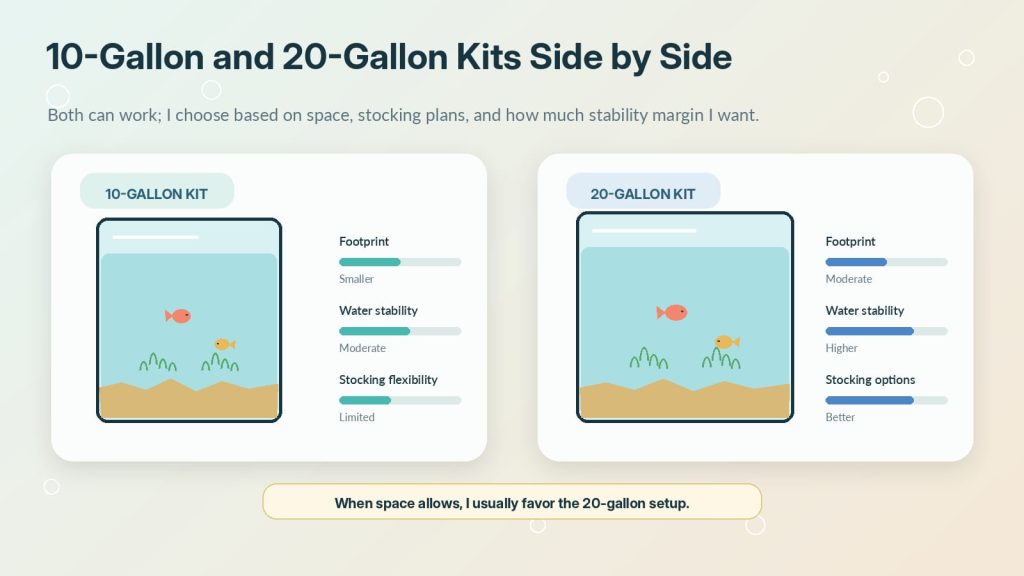
| Feature | 10-Gallon Kit | 20-Gallon Kit |
| Space needed | Lower | Moderate |
| Water stability | Good with careful maintenance | More forgiving |
| Stocking flexibility | Limited | Better |
| Aquascaping room | Moderate | Better |
| Equipment cost | Lower | Moderately higher |
| Best fit | Small, simple setups | Most first community tanks |
When faced with the choice between a basic aquarium starter set of 10 gallons and an impressive one of 20 gallons, I tend to go for the latter whenever I can find the right place for it, arrange a stand that is suitable for it, and fit it in within my budgetary limits.
Filtration Matters More Than Decorative Extras
Filtering is not just a tool for trapping all debris. The filter is also a habitat for many helpful bacteria, which is an important thing to consider when selecting a filter for an aquarium.
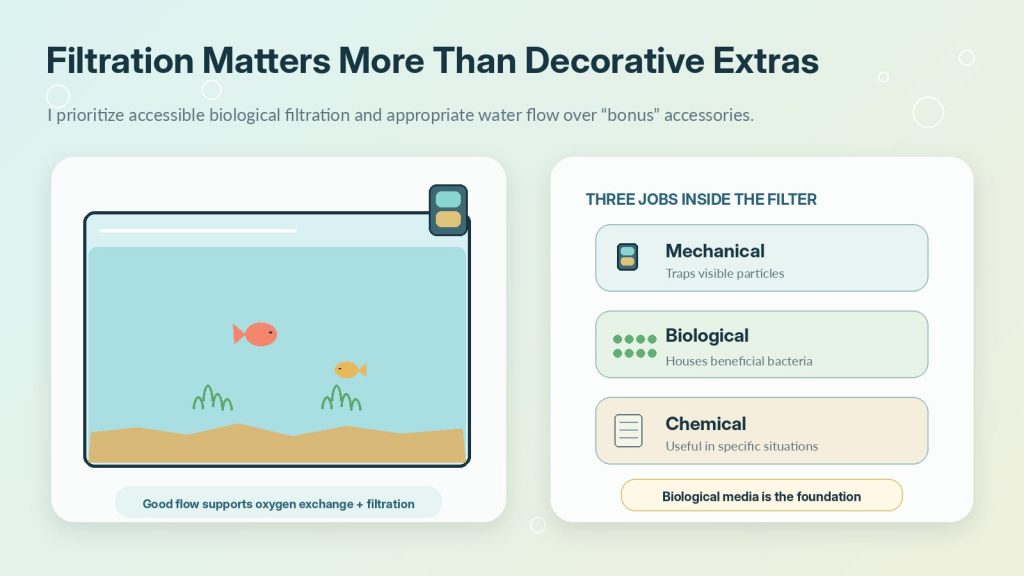
In the fish kit designed for beginners, I prefer the filters that are easy to reach, easy to maintain, and safe enough for the fish. The hang-on-back, internal, and sponge filters are effective if they are well-sized and properly maintained.
There are three major functions performed by the filter. The first one is mechanical filtration. The next one is biological filtration that provides a possibility for bacteria to do their job. The last one is chemical filtration, which may be less important in many cases.
Rather than discarding the entire biological media bed on a strict timetable, I would prefer to keep the established biological media. The flow also counts. A strong filter does not necessarily mean that it is better; there are some species, such as betas, shrimp, long-finned fish, and small fish, which might suffer from excessive flow.
Heat, Lighting, and Water Treatment
Many tropical fish require being heated, although not each and every aquarium setup will involve heating. The heater I choose will depend on tropical fish species I keep and on room temperatures. In setting up tropical tanks, I use a heater suitable to the tank and check the temperature with another thermometer, not just by observing the dial.
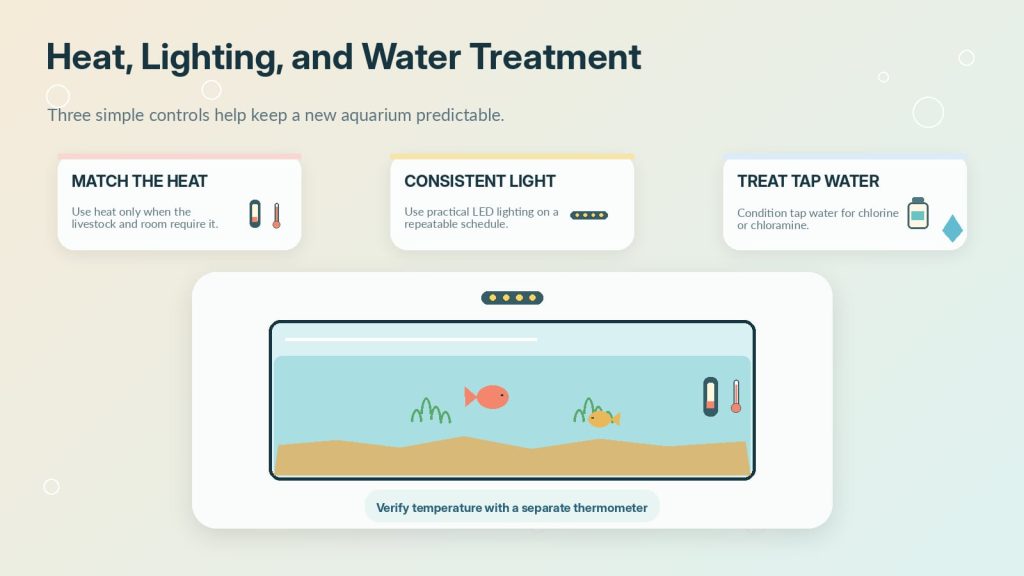
Regarding lighting, it should be suitable for the particular setup of the tank. In the case of a simple freshwater aquarium, I do not need a sophisticated expensive lamp if I do not keep demanding plants. A simple LED can serve well enough if I just want to see the fish or grow some plants that require very little light. I like using a timer because routine is always easier to maintain than random timing.
Using a secure lid helps to keep evaporation low and fish in the tank. I also make sure that the lid allows access to the filter, heater, air tubes, and feeding.
With freshwater tanks filled with tap water, water conditioner is already part of the procedure from the beginning. Tap water has chlorine or chloramine, so I make sure the water that I will be using is treated with a water conditioner. I make sure that I have a good supply of water conditioner.
The Aquarium Water Test Kit Is Essential
If I could have just one missing item from a basic fish tank kit, it would be an aquarium water testing kit.
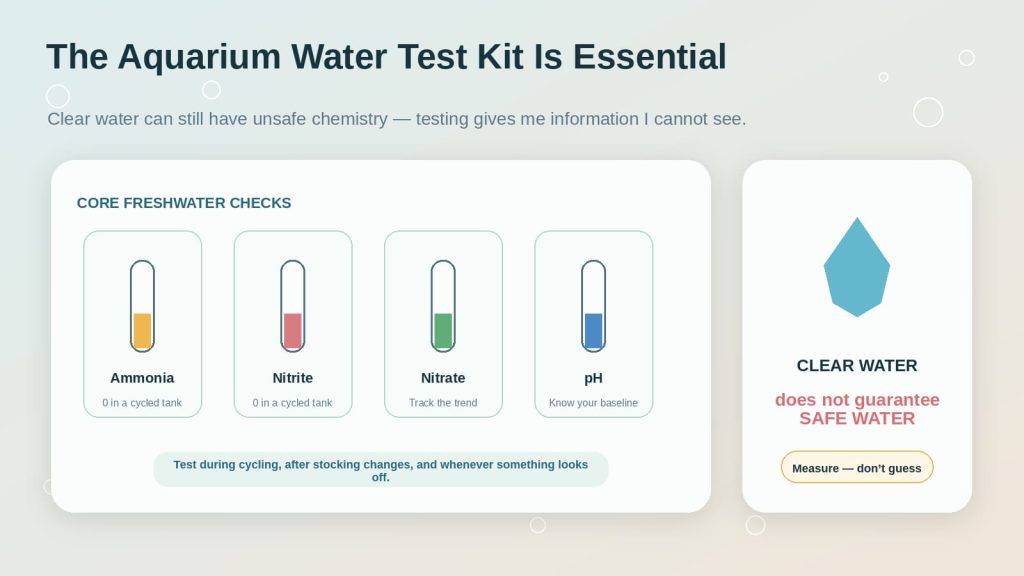
Even with clear water, chemical levels may be unsafe. For example, during cycling and after the fish have been put in, I want to check ammonia, nitrite, nitrate, and pH in order to monitor biological filtration and know if anything goes wrong with water quality.
A freshwater aquarium testing kit must include the essential parameters associated with the nitrogen cycle. A seawater aquarium testing kit also needs to incorporate some particular testing for marine environments. I have a method that I can repeat consistently. Liquid kits happen to be more useful if I need to be sure. Meanwhile, high-quality strips can provide accuracy in case of routine checks, depending on the required parameters. I make sure that ammonia is tested even if I need to perform a separate test to do it.
Aquarium testing kits can never be considered “nice to have.” Personally, I treat them as the dashboard for aquariums.
Substrate, Plants, and Maintenance Tools
In my case, gravel, sand, planted substrate, rock, and wood are determined by animals and plants’ needs rather than a beautiful appearance. For fish keeping at the bottom of the tank, I avoid sharp materials for the substrate, as they may damage the soft tissues of the fish. When it comes to the species that like to dig, I make sure that the substrate is safe for burrowing. I apply safe materials for decorating the aquarium and leave space for swimming.
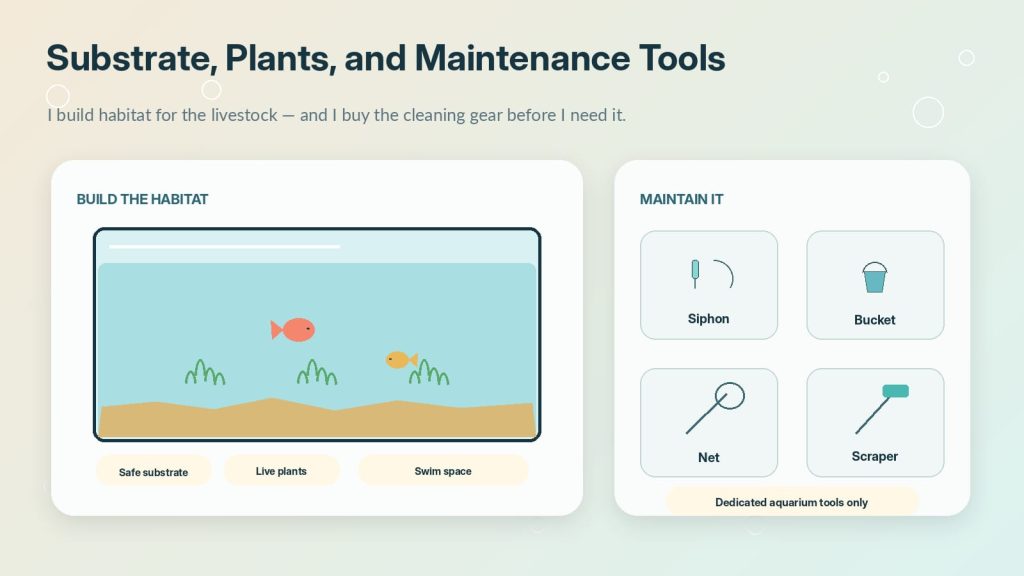
Plants that are easy to maintain are amongst my favorites when starting off with a freshwater aquarium. They do give a natural look to the aquarium and help with the extraction of nutrients, although they are not an alternative to water filters or frequent water changes.
Most of the starter aquariums and kits provide equipment for assembly only, but none consider the equipment necessary for maintaining those systems in good condition. So, I always buy these supplies by myself. My basic cleaning kit consists of a gravel cleaner, a separate cleaning bucket, an algae pad, and a net. An aquarium water change kit can also be useful if you have a huge or remote aquarium.
I never use a bucket that was used for cleaners or chemicals in my aquariums, and I avoid cleaning all filter media during routine operations on my aquariums because the biological filter needs to be protected.
Cycling Turns Equipment Into an Ecosystem
No matter how expensive the starter fish tank kits might be, they have to be accompanied by the biology. I only assume the new tank is ready for normal stocking after the biological filtration process has been established, also known as aquarium cycling.
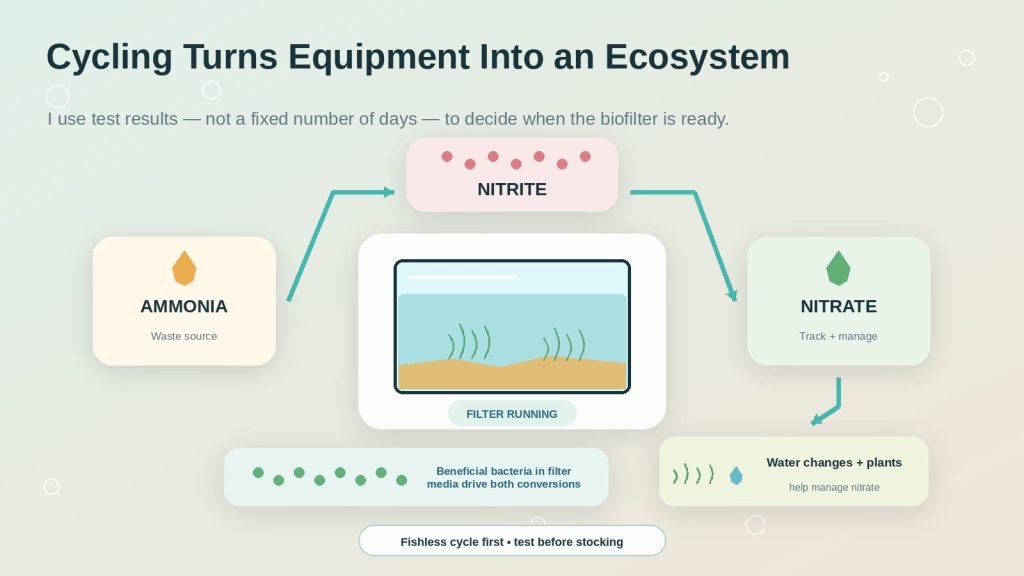
Fish waste and decomposing organic matter produce ammonia gas. Beneficial bacteria convert ammonia into nitrites and nitrates. Ammonia and nitrites are hazardous for fish, and thus, a new aquarium must be cycled and tested before it can operate like the established system.
I favor the fishless cycling method because this allows me to design a biofilter without introducing fish to ammonia and nitrites purposefully. I use the proper cycling method, maintain constant filter operation, and test water using the aquarium test kit.
I don’t just consider the tank cycled because a specific number of days has passed. I focus on finding the same test results indicating that the biological filter is capable of processing the waste source. The use of the ready beneficial bacteria in a bottle can help establish the new tank, but I always check the progress using the tests.
After cycling, I’m starting to add fish slowly. A beautiful aquascape could look complete long before the biofilter is functional enough to allow for some fish.
My New Aquarium Setup Order
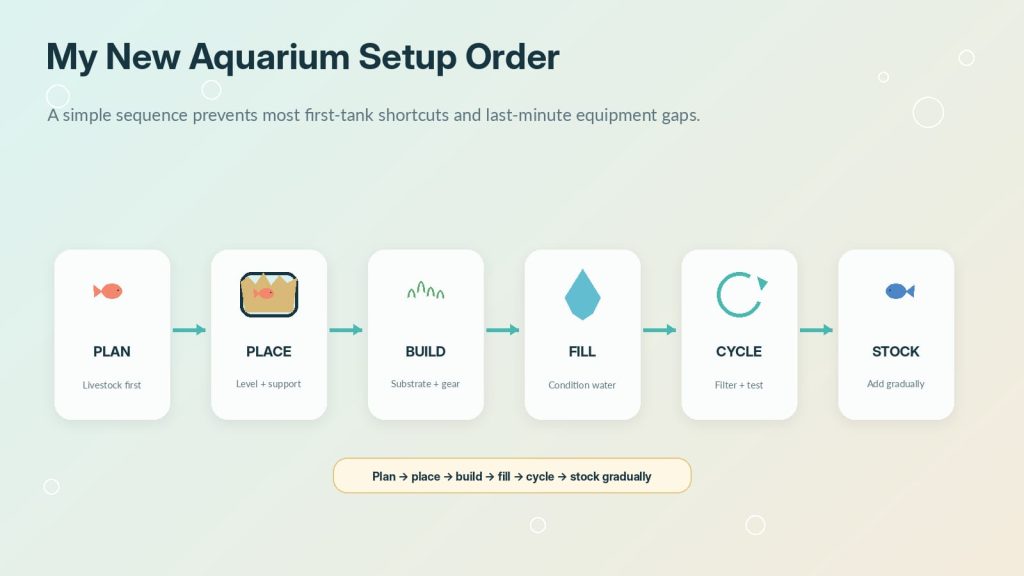
This is the order I follow for a simple freshwater setup:
- I start off with picking a livestock plan and checking the life requirements of adult fish.
- Then I select the right tank size for these animals.
- I find a proper surface to set up the tank. It should be flat and well supported and must not be exposed to fluctuating heat and sunlight.
- I rinse the empty tank and the substrate with regular water.
- I add substrate, hardscape material, and plants.
- I install the filtering system and the heating system, thermometer, lights, and hood if needed.
- I fill up the tank and treat tap water.
- I start the filtering system and the heating system.
- I begin the process of cycling.
- I test ammonia, nitrites, and nitrates, pH level, and water temperature during the process.
- The fish are put into the aquarium only when the biofilter is ready and when the water is suitable for the species at hand.
- Fish stocking is carried out slowly along with tests for water parameters.
Using that order gives a beginner’s aquarium system some legitimate fish tank abilities instead of just being a fancy bucket of water.
Freshwater and Saltwater Kits Need Different Plans
For beginners, I prefer to recommend freshwater systems because they offer a reduced complexity in equipment and water preparation. Freshwater aquarium kits still allow you to develop all important skills: cycling, testing, filtration, feeding, stocking, and water changes.
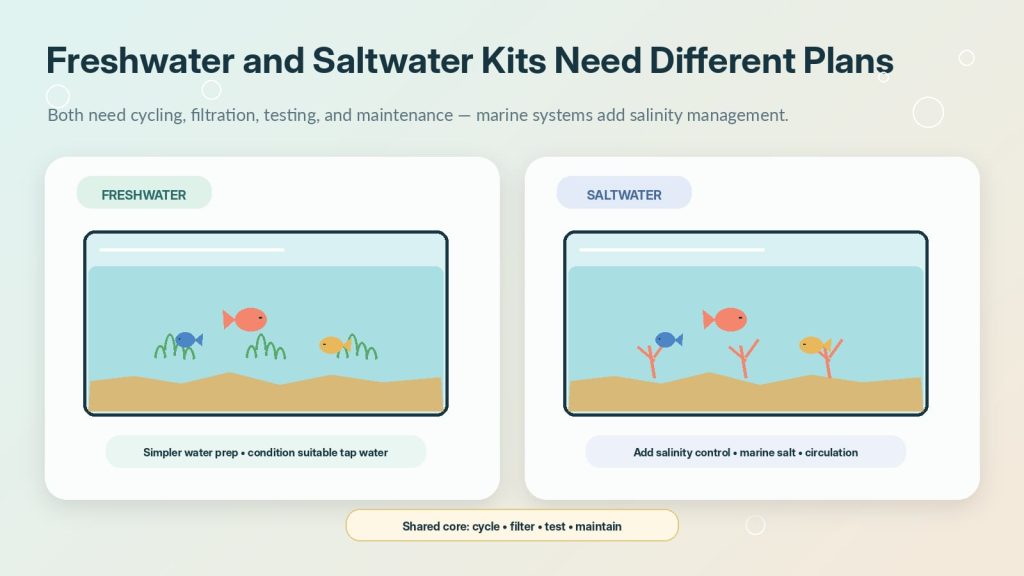
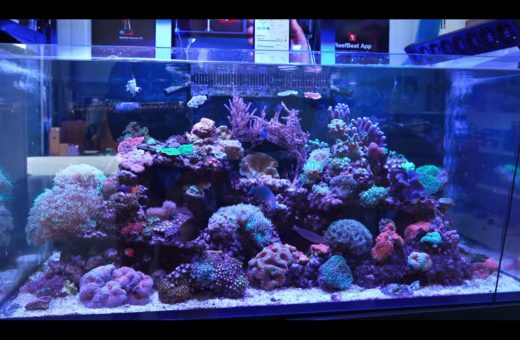
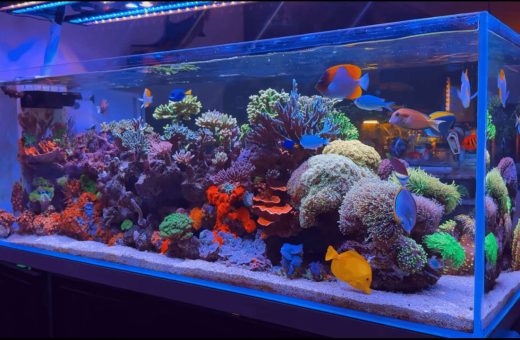
With a saltwater aquarium kit, things get more complicated. In addition to standard filtration and cycling, one should also pay attention to salinity levels, saltwater mix, quality of water being used, water circulation, and testing. Reef aquariums might require special attention to the lighting system and chemistry.
Saltwater aquarium starter kits can be useful, though I do not think that they are maintenance-free. When choosing a cool starter saltwater aquarium kit for beginners, I analyze the size of the aquarium, space for the filtration equipment, capacity for water circulation, lighting capabilities, maintenance, lid design, and space for additional devices.
Beginner Kit Mistakes I Avoid
I avoid buying fish on the day I purchase a new aquarium. I want to make sure all the planning and preparation is done before adding fish to the setup.
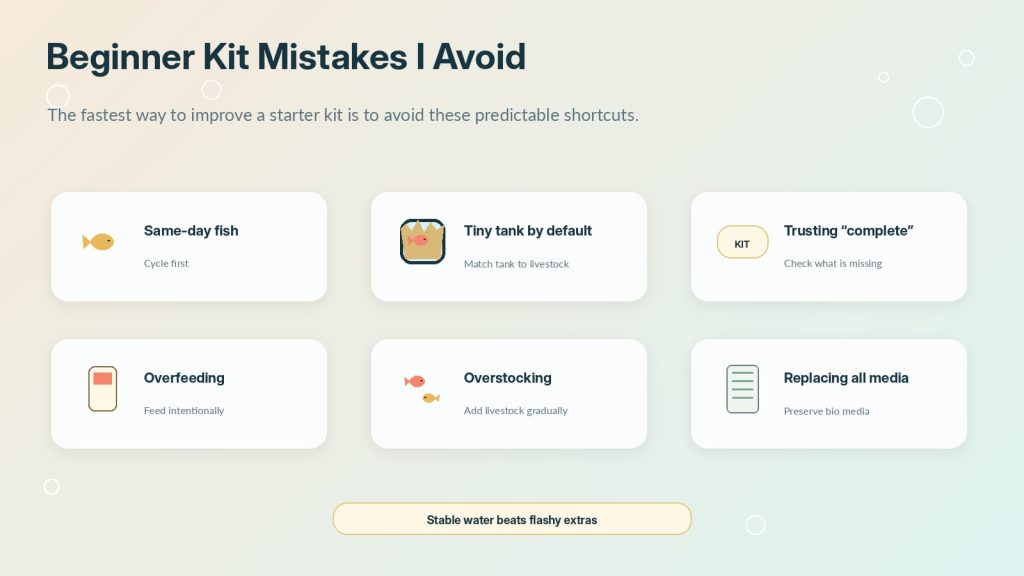
I do not choose a small tank just because it appears to be easy. Small tanks require precise maintenance.
I never trust the word “complete” without knowing what’s in it. As a matter of fact, there may be a number of necessary additional supplies.
Always conduct water tests and monitor water quality, ensure that I do not overcrowd my fish tank or overfeed my fish, or exchange all filter media at the same time.
In my opinion, it is unreasonable to adjust the pH level with chemicals without understanding the nature of the water and the chemical composition. It is much better to have a stable aquarium than to adjust numbers all the time.
Finally, do not choose fish according to their appearance in the aquarium store. Compatibility means not only how attractive a fish looks next to another species but also other aspects, for example, gender, size, temperament, or compatibility in terms of the preferred water parameters.
My Aquarium Kit Buying Checklist
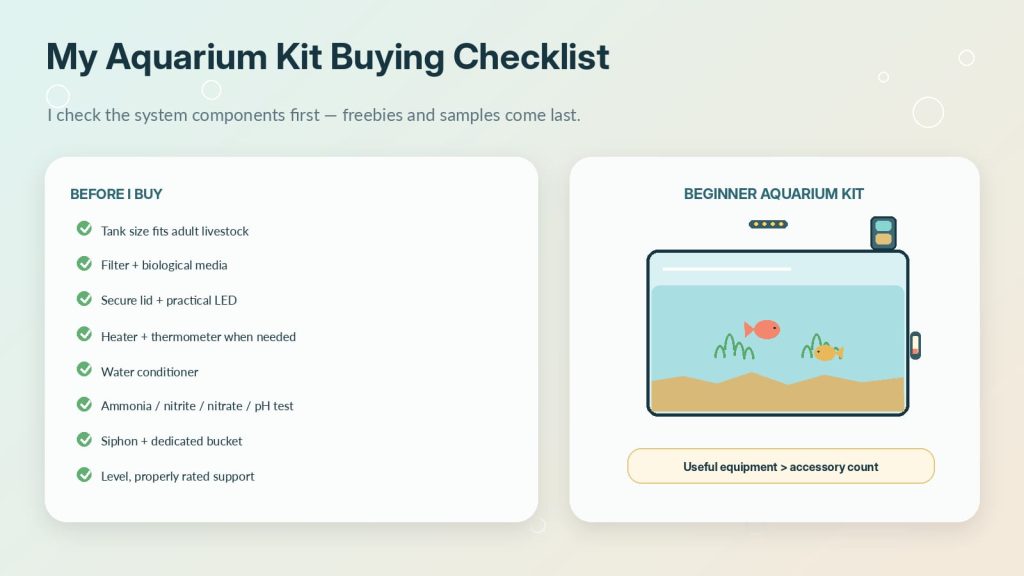
Prior to purchasing a beginner’s aquarium set, I always keep in mind the following parameters:
- Tank: Big enough to accommodate adult animals.
- Filter: Suitably sized, practical, and able to accommodate biological media.
- Lid: Appropriately fitted and safe with the devices.
- Lighting: Suitable for the purpose of observing and setting up plants.
- Heater: Provided with a set of animals that require warm water.
- Thermometer: Provided separately so that it may be checked.
- Water conditioner: Enough for both operating and making periodic water changes.
- Testing: Has to include tests for ammonia, nitrites, nitrates, and pH in a new freshwater tank.
- Tools for maintenance: siphon, bucket, algae cleaning gadget, and net.
- Decorations and substrate: Compatible with the particular animals.
- Stand: Flat and level enough to withstand the filled aquarium.
- Food: Chosen according to the type of animal, not just because it comes in the package.
After these requirements are fulfilled, the kit can be considered a really good starter aquarium kit.
My Final Recommendation
When picking the best starting aquarium set for beginners, it is enough to focus only on certain aspects, whether it includes a good tank of ten to twenty gallons, reliable filtration, a sturdy lid, suitable LED lights, and all other necessary features that will cater to fish. For tropical fish, I look for a heater and thermometer. From my experience, it is always useful to get a package that contains water conditioner, a water test kit, and other maintenance tools separately.
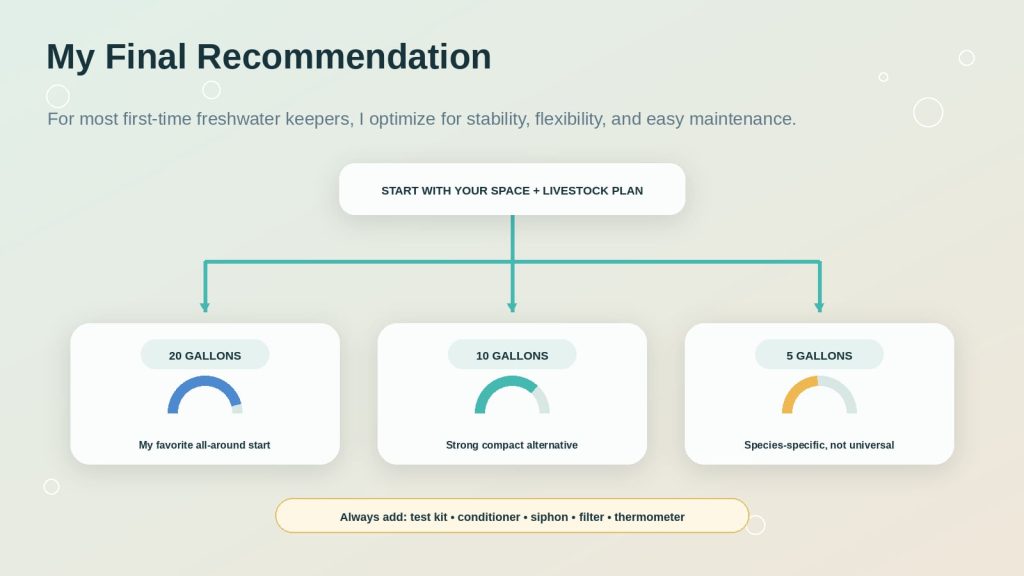
As for the newbies keeping freshwater fishes, I’d probably choose a 20-gallon tank kit as my favorite-sized starter kit, provided the space is sufficient, of course. If space is scarce, then I’d go with a 10-gallon starter kit. Generally speaking, I consider 5-gallon tanks as species-specific.
No matter whether it’s called an aquarium starter kit, fish tank starting kit, an aquarium kit for beginners, or anything else, I find that choosing the system that is capable of sustaining stable, easily testable, and appropriate for species water is much more important than the number of bonuses.
Quick answers
Frequently asked questions
What aquarium kit is recommended for beginners?
I would opt for a freshwater kit allowing for between 10 and 20 gallons with a strong filter, hood, and LED light as well as an aquarium heater for keeping tropical fish. After that, I include the conditioner, thermometer, complete test kit, and other maintenance supplies.
Can a beginner use a 10-gallon aquarium?
Yes, if the fish plan is modest and fish species-appropriate. The good old 10-gallon tank just doesn’t give much room for mistakes as the bigger aquarium does.
Is it easier to use a 20-gallon aquarium than a 10-gallon tank?
In most cases, yes. It is probable that beginners will find larger aquarium tanks more forgiving in terms of filtering and designing the aquarium and setting up the ecosystem.
What should be included in an aquarium starter set?
I expect the tank itself, cover, pieces of equipment for fish keeping, and light. If the fish are tropical, a heater is necessary, and chemical tests for water quality, a thermometer, and tools for routine care should be included.
Should I buy an aquarium test kit prior to acquiring fish?
Definitely. I prefer to use an aquarium test kit in order to measure the stages of cycling and check the quality of water in terms of different parameters, such as ammonia, nitrate, nitrite, and pH.
Is it necessary to cycle a new aquarium set?
Certainly. I believe that biological filtration should start functioning before carrying out normal stocking and that test results should be used instead of dates.
Is it compulsory for every aquarium to contain a heater?
Not necessarily. The presence of a heater in the fish tank depends on the type of fish to be kept and the temperature in the room.
Is it a must-have for every fish tank to contain an air pump?
Not necessarily. The use of an air pump can be optional if the water filter is good enough to ensure proper water surface agitation.
Do aquarium starter kits provide full sets of equipment?
Not in all cases. Very often, they do not include testing tools, a siphon, a special bucket, additional conditioner, or special equipment for the particular type of fish.
Is a 5-gallon aquarium kit perfect for newbie aquarists?
Some small species may be okay in a 5-gallon tank; that size is not what I typically recommend to beginners.
Can water from the tap be used in freshwater aquaria?
In most cases the answer is yes as long as it is treated for specific aquatic species and properly conditioned with a product suitable for use in aquaria that neutralizes chlorine and/or chloramines.
Which is better for your first aquarium: freshwater or saltwater?
In my recommendations I stick with freshwater tanks since setup and preparation of freshwater is much easier.
How often should the water of the new fish tank be tested?
My water is tested regularly while cycling and after adding new fish, and also whenever there is anything odd with the fish behavior or water quality.
Should the filter materials be replaced every month?
I do not just throw away all my biological media on a particular time and date every month. Rather, I take care of my filter as necessary while still keeping all biological filtration intact and following what the filter advises me.
What makes it worth buying a beginner tank kit?
Such a kit allows you to save money, as it includes all the essential components, such as tanks, filters, lids, and heaters, that the buyer would need anyway. There is no point in getting some cheap extras if the filter is bad or the tank is too small.

About the author
Grace Morgan
I am Grace Morgan, an expert in all the equipment used in aquariums and a knowledgeable writer, which has helped me gather over 14 years of experience on the proper equipment that will make fish-keeping easier, safer, and enjoyable. I work at Stardexa, creating different guides about filters, heaters, aerators, lights, thermometers, and protein skimmers, concentrating on helping aquarists find the equipment according to the size of the tank, type of livestock, and aquarium configuration.
Reader Fishkeeping Feedback
Comments, questions, and aquarium reviews
Share your aquarium experience, ask a fish care question, or write a helpful note about tank setup, water quality, filters, algae control, or maintenance for other readers.
No aquarium reviews yet. Be the first to share a helpful review on content or fishkeeping question, setup tip, or care experience.