Beginner Aquarium Setup Starts With a Clear Plan
Your aquarium setup starts long before water is poured into the tank. Tank size, dimensions of the room, support, plugging, maintenance space, and species requirements matter in making the final decision. A good choice of a location away from direct sunlight, draughts, and temperature changes will simplify everyday care.
Our materials about beginner aquarium setup will show you how to choose tank size and equipment according to the needs of fish you want to keep. All the guides focus on adult size and behavior, water parameters, compatibility, individual filtration needs, efficient maintenance, etc. rather than treating all types of aquariums equally.
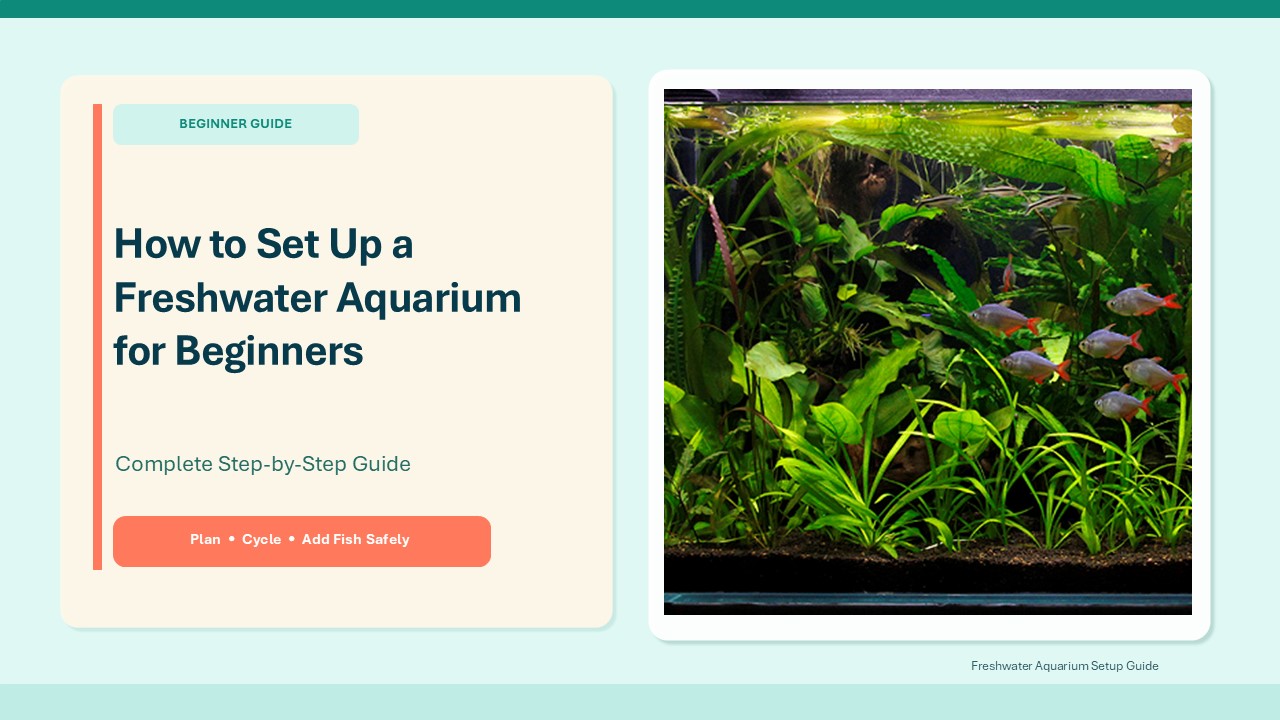
Freshwater Aquarium Setup for Beginners
One of the most widely chosen options for beginners in fishkeeping is building a freshwater aquarium due to the great variety in sizes and shapes available. An average beginner’s aquarium set-up involves getting an appropriate tank and stand, heater (if needed), filter, thermometer, light, water treatment, substrate, testing kit accessories, and decorations or plants safe for fish stocked in the aquarium.
The process of setting up an aquarium is more complicated than filling a tank with water and releasing fish into it. A freshwater aquarium requires time for establishing biological filtration. Beneficial bacteria convert ammonia, which is released through waste products, first to nitrites and then to nitrates and make the water safer and more stable. Water testing is a good tool for beginners who want to know when the tank is ready instead of improvising it by guessing.
Saltwater and Reef Tank Setup for Beginners
The setup of a saltwater aquarium for beginners demands more care with regards to salinity level, water movement, filtering, and chemistry than with that of a freshwater aquarium. Fish-only tanks and reef aquariums have different requirements in terms of equipment and livestock. Reef tanks may need a particular type of lighting and closer monitoring of parameters important for the life of corals and other invertebrates.
The above article will provide saltwater aquarium setup and reef tank setup advice that incorporates aquarium size, preparation of saltwater, filtering, circulation and balancing of rocks, substrate, cycling of the tank, testing, stocking, and maintenance stages. The main purpose of the article is to ensure that beginners understand that an aquarium is considered a living system.
Species-Specific Beginner Tank Guides
Aquatic animals are quite diverse, thus raising the necessity of specific types of tanks for each fish species considered. As a result of that, there are specific guides available to the beginners that explain the peculiarities of aquariums depending on the fish species.
For instance, guides for bettas require warm and stable water with an opportunity for swimming. A goldfish tank requires a larger tank featuring appropriate filtration and well-planned tank maintenance for ensuring cleanliness. The shrimp tank guide focuses on stable water at a particular temperature, a lot of hiding places, and suitable tank mates. Cichlids require their tank’s space to be determined in accordance with the size of adult cichlids and their feeding habits. Finally, clownfish require certain knowledge regarding the maintenance of the marine environment.
There are also guides available to the beginners who want to start with turtles, axolotls, and seahorses. However, one should keep in mind that the tanks for turtles and axolotls are quite different. For example, a turtle’s tank must contain an aquatic environment and basking areas, while an axolotl’s tank must be cool and have slow water flow.
Fish Tank Essentials That Support Stability
The best aquarium setup for beginners does not have to be the most costly one. It should work well to accommodate the fish. Common equipment includes filtering systems, temperature adjustment devices, a water conditioner, a test kit, lighting, substrate or no substrate, decorations, and equipment.
The filter must be appropriate for the size of the tank, kinds of fish, amount of waste, and type of water current that is needed. The kind of lighting will depend on whether there are only fish or there is some greenery in the tank.
Cycling and Water Quality Before Stocking
Cycling is probably one of the most important topics for novice aquarists. A new aquarium does not contain a good biological filter right from the start. By testing ammonia, nitrites, nitrates, and pH, one can find out how well the aquarium is functioning.
A proper beginner’s guide would also tell fish keepers how they should condition their water, maintain stable temperature, choose filter material, oxygenate the water, and avoid sudden changes in it. The purpose is not to follow the one ‘ideal’ number for a specific aquarium but to keep an aquarium with stable conditions suitable for the fish species kept in it.
Stocking and Maintenance for Long-Term Success
Establishing a fish tank for novices is simplified if the owner makes stocking decisions prior to buying fish. Parameters such as the adult size of fish, size of groups, temperament of species, their diet, territorial behaviours, and preferences regarding the water determine compatibility. For instance, a tiny fish may grow and require more space compared to a small aquarium; two beautiful species can never live together.
A good beginner aquarium guide will recommend making the stocking and maintenance processes careful and informative. Specific tasks for the daily care can comprise performing partial water exchange, water testing, algae control, substrate cleaning, filter cleaning, checking equipment and plants, and monitoring daily activities. The schedule of each task has to be based on the size, stocking system, filtering, feeding, and type of aquarium.
Explore Beginner Aquarium Setup Guides
The objective of this guide is to help those who are setting up their first aquarium and also experienced aquarists who are considering setting up a new style of aquarium. There are articles about setting up freshwater and saltwater aquariums, coral reef aquariums, shrimp tanks, betta fish tanks, goldfish tanks, turtle homes, axolotl aquariums, aquaponics systems, cichlid tanks, clownfish aquariums, blackwater aquariums, and seahorse aquariums.
Choose the type of aquarium you would like to create, understand what it needs, and build the aquarium around the animals that will live in it. It is essential to set the tank up properly and be patient with the cycling process as well as to plan all the fish and maintenance work that will be needed to run the new aquarium.

No comments yet. After you submit a comment while logged in, it will appear here.