Beginners Aquarium Setup
Best 5-Gallon Fish Tank Ideas for Beginners
Practical Starting Point for a Five-Gallon Aquarium The most successful 5-gallon fish tank ideas depend on your aim to start a nano tank. You have to select what…

Search Aquarium Guides
Aquarium Keyword
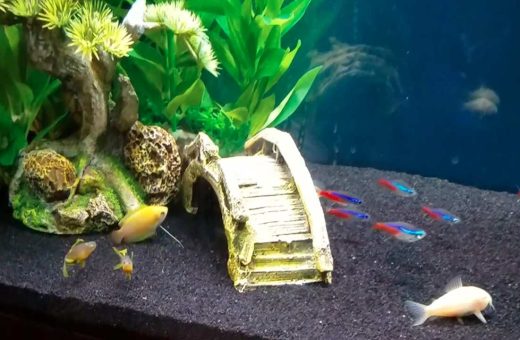
If care is taken when executing the setup, a 5-gallon aquarium can function as a charming centerpiece of a room. This particular size of aquarium is ideal for keeping a solitary betta fish, as well as creating various shrimp, snails, and planted nano projects. Because smaller aquariums contain less water, their filtration and heating, cycling, and feeding systems require more attention and thought than would usually be necessary for larger aquariums. This issue deals with practical information on various aspects of setting up and caring for small aquariums with an emphasis on stocking the aquarium and equipment used in the aquarium.
Practical Starting Point for a Five-Gallon Aquarium The most successful 5-gallon fish tank ideas depend on your aim to start a nano tank. You have to select what…
Five US gallons equals almost 19 liters, which means that the 5-gallon tank may have the perfect dimensions but will hold quite a limited volume of water for ensuring stability. This implies that the proper site for the tank is level and strong enough; water is conditioned; the filtration system is effective; a heater and thermometer are available (if the tank houses tropical fish); and the tank is secured with a lid and properly lit.
Before purchasing any equipment, consider the type of pets that will occupy the tank. A tank devoted to the care of betta fish needs to be designed to allow slow movement of water and sunlight into the surface of the tank, as opposed to a tank for caring for shrimp, which should be equipped with masses of plants such as moss and wood.
Stocking is where restraint is required when dealing with small aquariums. With a 5-gallon tank, the size of the adult fish is only one issue. Other issues to be considered are swimming activity, behavioral needs, social structure, and production of waste.
The best candidates for keeping in small aquariums are Betta fish or shrimp. Most species of fish need to function with schooling fish present in their aquariums, requiring an adequate swimming space in a five-gallon tank. The fact that 1 inch of fish is equal to one gallon of a tank does not mean that such a ratio can be followed in every case.
A 5-gallon betta fish tank is one of the more convenient uses for such a tank container. It is important to have a layout with only one betta together with proper heating, filtration, a secured cap, and smooth flora. Lots of big leaves and places of rest are also very helpful for creating a functional setup without overcrowding the fish tank.
A betta fish tank does not require a very strong current in the water; that is why the filter system must be adjusted. An aquarium with plants may even provide additional camouflage and tranquility.
A 5-gallon shrimp tank can also provide enough movement inside it. Shrimp, Neocaridina, are popular among aquarists keeping freshwater nano-aquariums; they will benefit from additional food-gathering surfaces created with moss or small plants. However, it is necessary to monitor the growing population to ensure it does not grow too much.
Small freshwater snails can also adapt to a five-gallon tank if their size, waste production, feeding habits, and other factors are considered. Do not forget that shrimp and snails are not always compatible with every fish in a mixed setup due to their nature and other important features.
The best type of filter for a 5-gallon fish tank would be any filter that can offer mechanical and biological filtration without the production of excess current. Sponge filters and small adjustable filters are often used, and care should be taken to protect the filter intake if there are small shrimp in the tank.
When selecting a heater for the 5-gallon tank, it should match the species that will inhabit the tank, the room temperature, and the aquarium size according to the rating of the manufacturer. For example, tropical fish such as bettas need an environment that keeps the water warm, but it is important to make sure the water temperature matches this requirement with the help of an additional thermometer as well.
In order to function properly, the new aquarium must have a biological filter that is already functioning. The nitrogen cycle implies that useful bacteria transform ammonia into nitrogen. However, as ammonia and nitrates can be dangerous, the stocking plan must be based on water testing results rather than a set duration.
In an aquarium of 5 gallons, the water parameters can oscillate within hours after overfeeding, neglecting the maintenance, having a clogged filter, or increasing the bioload. Test ammonia, nitrite, nitrate, and parameters of ambient conditions for your fish. Treat the water before adding it, and use a biological filter to bring more stability instead of trying to achieve one “ideal figure.”
Plants can make the small aquarium look more natural and bring décor for fish or invertebrates to hide in. The participation of Anubias, Java fern, Cryptocoryne, mosses, and some floating plants is successful when the light and nutrient conditions suit them.
One should use the right proportions in hardscaping. One piece of driftwood, one group of boulders, and one plant look more impressive than many decorations. The pathways should be open; it is good to avoid narrow paths and edges for maintenance purposes.
Regular service will make a small aquarium predictable. Regularly test parameters and services, remove uneaten food, prune excess plants, and perform maintenance of the equipment where necessary, while water testing will inform of the amount of water to replace. Remove debris without disturbing established surfaces.
Filter media can be reused by rinsing it in aquarium water only when it is dirty, but it should be noted that biological media should not be rinsed. It is important to note that adding new water does not mean that a water change was performed. Always overfeed fish and change the schedule depending on the number of fish and plants in the tank, filter efficiency, and the results of water tests.
The best 5-gallon setup is based on only one clear idea and not overcrowded species. Choose fish first, and select equipment, a heater, lighting, plants, and decorations according to its needs; after that, prepare the tank and put fish into the aquarium. Whether it is a planted 5-gallon betta aquarium, a shrimp display aquarium, or a simple nano tank, a proper start will determine further success.
Enter your subscribed email. We will send a 6-digit code to log you in.
New here?
Add your name and email. We will send a verification code before creating your subscriber profile.
Already subscribed?
Profile
Choose what notifications you want to receive from this website.
Your logged-in subscriber comments are connected with your saved profile.
Update your name, profile image, bio, or account status.
No comments yet. After you submit a comment while logged in, it will appear here.