
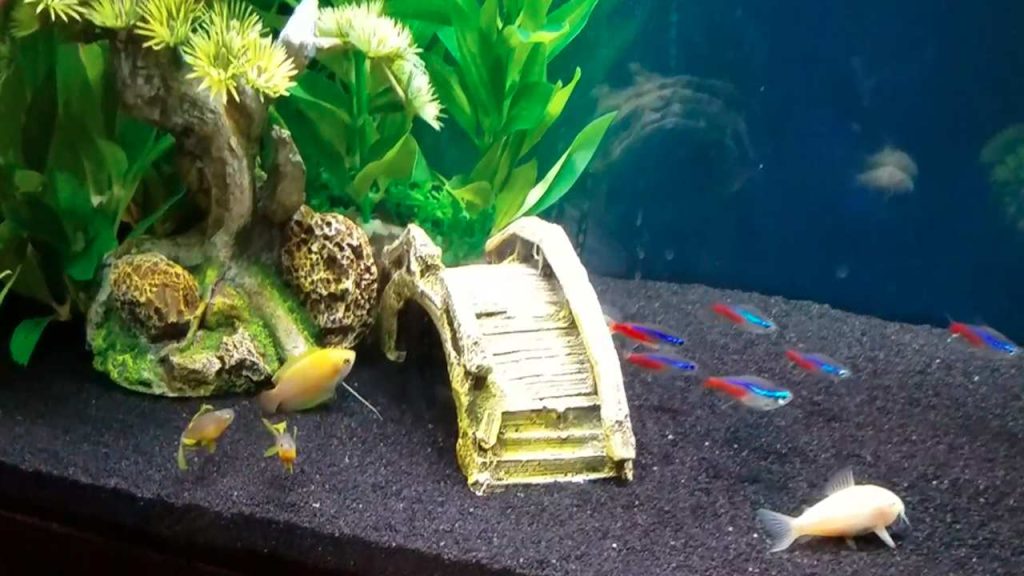
Practical Starting Point for a Five-Gallon Aquarium
The most successful 5-gallon fish tank ideas depend on your aim to start a nano tank. You have to select what kind of fish, decoration, plants, etc. to use for your tank. Instead of filling it with different items, decide on its purpose at once.
The five-gallon aquarium is better considered a small ecosystem rather than a mini community tank. It has less water, and therefore any changes in temperature and quality will occur faster than in other tanks.
From my experience, it is very common for beginners to struggle due to having too many animals or giving food in excess. Having a well-planted aquarium with not much stock usually results in being clean and looking beautiful with the animals feeling more relaxed.
Best Five-Gallon Aquarium Ideas at a Glance
| Aquarium idea | Recommended resident | Difficulty | Main feature |
| Planted betta sanctuary | One betta | Beginner | Resting leaves and live plants |
| Freshwater shrimp garden | Dwarf shrimp | Beginner to intermediate | Moss, wood, and grazing areas |
| Snail habitat | One suitable freshwater snail | Beginner | Rocks and natural surfaces |
| Blackwater-inspired tank | One betta | Beginner | Driftwood and warm natural tones |
| Minimal stone aquascape | Shrimp or plants only | Beginner | Clean and open arrangement |
| Plant-only aquarium | No livestock | Beginner | Easy aquascaping practice |
| Desktop jungle tank | One betta or shrimp | Beginner | Dense, low-maintenance plants |
Determining how many fish can live in a particular aquarium is about more than the gallon count of that aquarium. The adult size of the fish, their behavior, activity level, social needs, temperature needs, and waste production all determine whether the animal is suited to life in a 5-gallon tank.
Planted Betta Sanctuary
5 gallon betta fish tanks with plants are among the best options to keep in mind when starting out. You can use a gentle filter, a heater, a good lid, decorations, and plants in such a tank without overcrowding it.
Plants and a little bit of driftwood should be placed in the back or on one of the sides while keeping the front part open so that your betta fish has plenty of room to swim and approach the area where you give food.
Large leaves placed near the water surface can provide the betta good spots to rest. Nevertheless, no plants or ornaments must interfere with the fish getting to the surface, as bettas often swim to the top to breathe air.
The minimum tank size is five gallons for one betta, but it is better to choose a larger tank anyway. The warmth of the water, low current, places to hide, and quiet atmosphere are more important than decorating all unused areas with ornaments.
Good choices of plants will be the following:
- Anubias growing on wood or stone
- Java fern whose rhizome is placed above the substrate
- Java moss growing on a branch or rock
- Cryptocoryne planted at the back of the tank
- Plants floating on the water surface (in limited quantities)
There must be only one betta in this aquascape. Two bettas cannot live in one five-gallon tank, and even females need much larger spaces and more experience in keeping them together.
Colorful Freshwater Shrimp Garden
One can always consider getting a shrimp garden if one enjoys the process of observing small things and nature itself. The dwarf freshwater shrimp always engage in exploration of moss, stones, leaves, and wood in order to make an aquarium active but not full of fish.
Start with a cycled and established tank, as shrimp react badly to changes in the parameters of the aquarium water. Install a sponge on top of the filter intake so that no adults or juveniles could accidentally get caught there.
Use moss, textured wood, and fine leaves to create grazing spots for the shrimp where the biofilm will form naturally. Such spots will serve as hiding places for the juveniles and will help the tank look more densely populated without losing any space for swimming.
Start with a small amount of shrimp and let their number increase organically. However, shrimp should still be fed properly and have access to clean water with steady temperature and conditions of maintenance.
Natural Snail and Plant Habitat
Snail-centered aquariums provide a tranquil environment and are rather exciting to watch. Stones, plants, wood, and areas for grazing create a natural setting that will suit the smooth and leisurely movements of the freshwater snail.
Pick out the type first, as there are different sizes, dietary needs, and excretory systems that are unique to certain snail species. Snails need to be viewed as the centerpiece of your aquarium and not some addition you put in to clean up.
While mystery snails are vibrant and active, they are very messy. It would make sense to have one properly cared for snail rather than multiple large snails.
Keep a lid on the aquarium since most freshwater snails can climb out of the water. Feed the snail accordingly rather than expecting it to get by on algae and leftover fish food.
Blackwater-Inspired Betta Layout
The idea of the blackwater-styled aquarium is to include driftwood, subdued lighting, a brown color scheme, and appropriately prepared botanical elements to give the impression of serene woodland scenery. Such an approach may make your little tank look larger and more natural without having to fill it up with bright artificial elements.
Use one smooth branch or piece of driftwood to create a diagonal line across your aquarium. Surround the base of it with low-light plants, leaving the route for your betta to get to the surface.
The water should not be murky and hard to see through. The subtle effect of amber coloring will help you achieve the necessary ambiance, while at the same time you will be able to keep an eye on the fish and state of the aquarium.
Do not use anything that might be unsafe for your aquarium. Natural untreated wood, leaves, or rocks might contain toxic substances or sharp edges.
Minimal Stone and Moss Aquascape
A minimalist rock setup will add elegance to a five-gallon aquarium by making it look beautiful, spacious, and well-thought out. Use one large rock, one or two rocks that support the large one, natural substrate, and some moss.
Position the biggest rock somewhat off-center to make your arrangement look better. Absolute symmetry in a small tank looks unnatural, whereas the asymmetrical arrangement always looks more natural.
Do not cover everything with moss; place it in small spots. In this way, you will be able to preserve the integrity of your hardscape and will avoid visual weightiness.
A minimalistic aquascape is perfect for shrimp tanks or plants-only tanks. The emptiness of such a tank design helps to spot any leftovers and debris faster.
Plant-Only Botanical Aquarium
One of the easiest to implement 5-gallon fish tank ideas for complete beginners is an aquarium without fish or other inhabitants. Without any inhabitants, you will be able to practice how lighting, filtering, fertilizing, cutting, and water renewals work on your aquarium.
When it comes to selection of plants, choose plants of various shapes and forms rather than selecting numerous different species. Having just one plant with broad leaves, one grassy, and a little bit of moss may be enough for your aquarium design.
An aquarium without any inhabitants allows getting rid of the necessity to take care of livestock while mastering a stable schedule. This aquarium can be your permanent planted aquarium or a basis for your future betta or shrimp aquarium.
The botanical aquarium can be placed on the table, in your bedroom, or in your office because it looks like an alive underwater garden but does not require any inhabitants.
Five-Gallon Fish Tank Dimensions and Placement
There are slight differences between the exact dimensions of a 5-gallon fish tank depending on its shape and producer. The typical 5.5-gallon rectangular aquarium is usually about 16″ x 8″ x 10″, while cubes and vertical aquariums can have entirely different dimensions.
The lengthened aquarium is more useful than the tall one, as it ensures more possibilities for the fish to swim horizontally and better surface area as well as gives more space to arrange aquarium plants and decorations.
Place the aquarium on a solid, leveled, and waterproof surface to bear the total weight of the aquarium. When you add water, substrate, accessories, and decorations, your 5-gallon setup may be as heavy as 50 lbs.
A special stand for a 5-gallon fish tank is handy, but the solid cabinet can perform the same role if it is steady and appropriately sized. Try to place the aquarium in the place where it will not get the sun or any heat sources.
Essential Equipment for a Reliable Setup
A 5-gallon fish tank kit will be useful since it might help you to have fewer individual components to buy. Kits usually come with a lid, lighting, and filter, but you might still need a heater, thermometer, water conditioner, test kit, substrate, and maintenance accessories.
Gentle filtration
A proper 5-gallon fish tank filter will maintain your water conditions without creating too strong currents. A sponge filter is great for shrimp and bettas, but you can also consider adjustable internal filters or small hang-on-back filters if you adjust their flow properly.
A filter not only helps you to remove solid particles from your tank but also serves as a place where beneficial bacteria live, processing ammonia and nitrite. Thus, a filter is one of the most important components of your aquarium.
Stable heating
An effective 5-gallon fish tank heater will be crucial for tropical species if room temperature is not consistent with their needs. Bettas feel better in warm water conditions but not in water that cools during the night.
Thus, always pick a thermostatically controlled heater and use an independent aquarium thermometer. It is safer to know the real water temperature rather than just the heater number on the dial.
Lighting and lid
A light fixture made specifically for low-maintenance aquarium plants will suit just fine. A time switch will help you maintain the schedule and make sure that light stays on only for a sufficient amount of time to prevent algal proliferation.
It is advisable to have a secure lid that will reduce water evaporation, keep heat inside, and protect the fish from jumping out of the aquarium. Please make sure your lid provides proper ventilation and enough space for cables.
Safe Stocking for a Five-Gallon Tank
Many hobbyists start looking for the best fish for their 5-gallon aquarium; however, all those small schooling fish need more room than that. A five-gallon aquarium is perfect either for one fish or an invertebrate aquarium.
Safe beginner options would be the following:
- one betta without any other fish
- a small colony of freshwater shrimps
- one freshwater snail properly selected
- permanent aquascape without fish
Such species as tetras, danios, barbs, and many others cannot be kept in a 5-gallon tank. They require staying in groups and having enough room for swimming.
Another issue when raising guppies is that the fish are also hard to manage in a tiny tank due to their social behavior and rapid reproduction capabilities.
The real solution to how many fish are in a 5-gallon tank is generally only one fish that can live alone. “One gallon equals one fish” is an old-fashioned solution that does not take into consideration many factors, including behavior, adult size, social needs, and waste generation.
Cycling Before Adding Livestock
Don’t put fish right away into a newly set up aquarium. A new tank should have some time to establish healthy bacteria that will be able to handle waste products.
A fishless cycle lets the filter mature without fish suffering from harmful levels of ammonia and nitrite. Check the water parameters and only start when the tank is able to break down the waste and there are zero ammonia and zero nitrite.
Clear water doesn’t necessarily equal safe water. Treat tap water before adding fish, make sure the water temperature is right, and during cycling use the time to test the heating device, adjust the filtration system, plant in the tank, and look for any leaks.
Simple Maintenance That Protects a Small Aquarium
The lightly stocked aquarium requires a weekly partial water change in the usual circumstances. Water tests, feeding routines, and the kind of creature housed will be used to determine the actual cleaning schedule.
One good schedule would include:
- Checking temperature and equipment daily.
- Removing excess uneaten food before they start to rot.
- Testing for ammonia, nitrite, nitrate, and pH levels.
- Performing partial water change (10%-25%) as required.
- Pre-conditioning the new water and matching temperatures of both waters.
- Gentle rinsing of reusable filter media using removed water from the tank.
- Removal of any dying leafy vegetation.
It is not advisable to take out the inhabitant while doing your cleaning work or changing all the water simultaneously. A deep clean on all surfaces will disrupt the helpful bacteria in the tank and create an undue strain on the pet.
Final Words
The top five 5-gallon aquarium ideas revolve around intelligent decision-making and not overcrowding the aquarium. A small aquarium will appear much better and easier to handle with everything having a definite purpose inside the tank.
Select one ideal inhabitant, give him/her all that he/she requires, and leave some open space. Betta fish sanctuary, shrimp garden, snail sanctuary, or botanical aquariums can all be great beginners’ tanks.
Quick answers
Frequently asked questions
Will a five-gallon fish tank suit a beginner?
Yes, it will need frequent monitoring due to changes in temperature and water quality. It will be much easier to care for it with light stocking and consistent maintenance.
Will a 2.5-gallon fish tank suit a betta?
It will allow your betta to survive, but a five-gallon tank will provide a better environment and space to swim.
How many fish can live in a five-gallon tank?
Five-gallon tanks normally do not suit five fish well. The stocking depends on the size of an adult fish, its behavior, and its activity level.
Should a five-gallon aquarium have a filter?
Yes, because a filter promotes beneficial bacteria growth, maintains circulation of the water, traps impurities, and creates healthier conditions.
Should a five-gallon tank for bettas have a heater?
For most houses, yes. Bettas require warm and constant water temperature; hence, a heater is required.
Can goldfish be kept in a five-gallon aquarium?
No, the reason being that goldfish tend to get bigger, generate excessive waste, and need more room to swim.
Is there a difference between a 5.5-gallon fish tank and a five-gallon fish tank?
There is a little difference, as a half gallon more is added, but the aquariums still belong to the category of nano tanks.

About the author
Chloe Adams
I'm Chloe Adams, a beginner aquarium expert and writer for Stardexa with more than 11 years of experience in the field of fishkeeping. As many beginners find aquariums hard to comprehend, I've kept learning, practicing, and sharing all the basic information from choosing the right aquarium to cycling it, filtering it, feeding the fish, and taking care of water quality as well as maintaining it regularly. My aim is to ensure each novice fishkeeper knows how to turn his/her aquarium into a pleasant and healthy habitat for fish.
Reader Fishkeeping Feedback
Comments, questions, and aquarium reviews
Share your aquarium experience, ask a fish care question, or write a helpful note about tank setup, water quality, filters, algae control, or maintenance for other readers.
No aquarium reviews yet. Be the first to share a helpful review on content or fishkeeping question, setup tip, or care experience.