
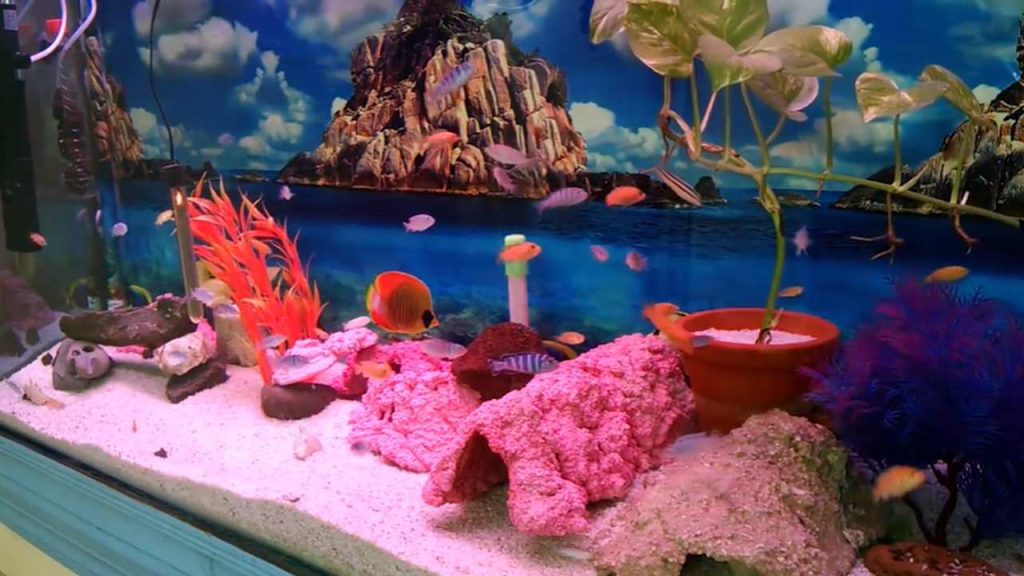
It is very important to make a plan well in advance before buying aquarium fish for a beginner. Choose the size of your aquarium that will satisfy the needs of the given species, install the equipment, get the nitrogen cycle numbers right, and take care of the tank equipment before adding fish to your aquarium.
The steps described above can guide you through the process of setting up your aquarium right—from its first installation to getting the fish tank water as clear as possible.
Fish Keeping Basics for a Stable and Healthy Aquarium
Fish keeping involves setting up a closed environment that takes into consideration the biological and behavioral requirements of its fish residents. Since aquariums contain limited quantities of water, the waste generated by fish, uneaten food, other dissolved substances, or fluctuations in temperature affect their living conditions much quicker than they would the living conditions of aquatic creatures in natural aquatic bodies.
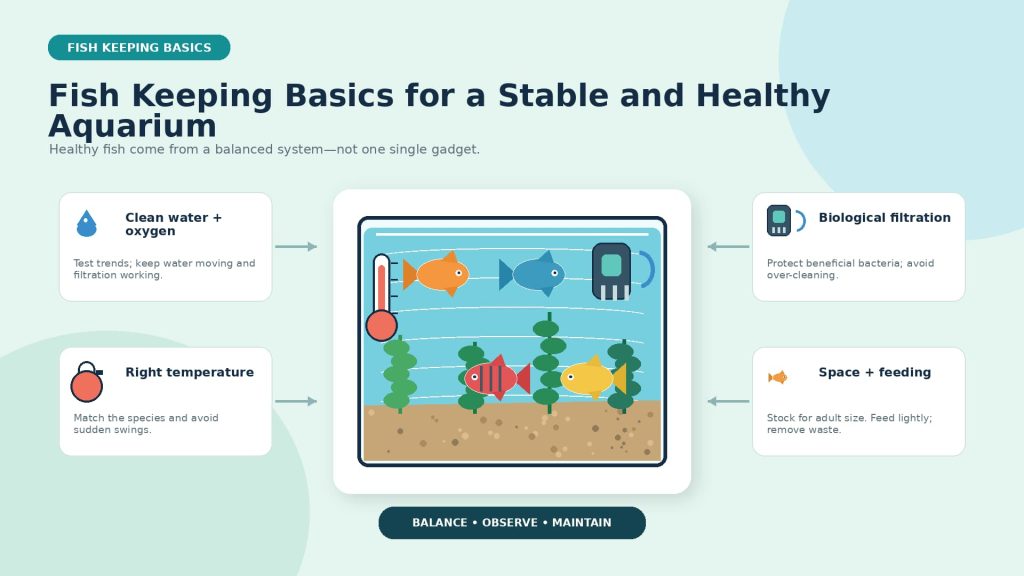
Successful fishkeeping necessitates the need for a balance. Plenty of good water quality, species-appropriate temperature, correct aquarium stocking, proper biological filtration, and responsible feeding should be combined to ensure effective regular maintenance. Overfeeding or overcrowding an aquarium will make any good filter ineffective, while excessive cleaning will hurt the important bacteria responsible for fish waste processing.
A stable aquarium does not have to be immaculate all the time. Some harmless microorganisms, biofilm, plants, and little algae can occur in a stable aquarium. The purpose of a stable aquarium is to have a biological equilibrium, where ammonia and nitrite levels are controlled, fish display appropriate behavior, and the upkeep of the aquarium ensures there is no waste buildup. The RSPCA provides guidelines that focus on factors such as water quality, stock levels, oxygen exchange, more on fish behavior, and care of the aquarium.
The Core Needs of Aquarium Fish
Aquarium fish need access to clean water and sufficient oxygen for survival. Also, water conditions inside the aquarium must suit the specific species of fish, so there is enough room for swimming, the correct temperature, the right water chemistry, hiding places, the right food composition, and filtration able to deal with the biological load of the aquarium.
Fish species have varying social aspects and requirements, with some preferring to keep company with others, preferring to be alone, and others needing several individuals for a successful recreation as well. When creating an aquarium, one must take into consideration the natural characteristics along with the physical characteristics of fish.
Freshwater, Tropical, Coldwater, and Saltwater Fish Keeping
In terms of fish keeping, freshwater fish is usually regarded as the first and basic option. This is because freshwater aquariums include tropical aquariums that need heating, as the fish need warm water, or cold-water aquariums, where fishes thrive in the cooler water.
Saltwater fishkeeping requires maintaining marine chemistry in the aquariums as well as additional devices. For beginners with no particular knowledge about aquariums, freshwater aquariums generally seem easier to handle, but down the road one might find out that things are a bit more complicated.
Step 1: Plan the Right Fish Tank Before Setup
Proper fish tank maintenance begins even before putting water into the aquarium. The first thing to do is to identify what type of fish you want to keep and find out its adult size, activity level, social needs, temperature range, water conditions, and compatibility.
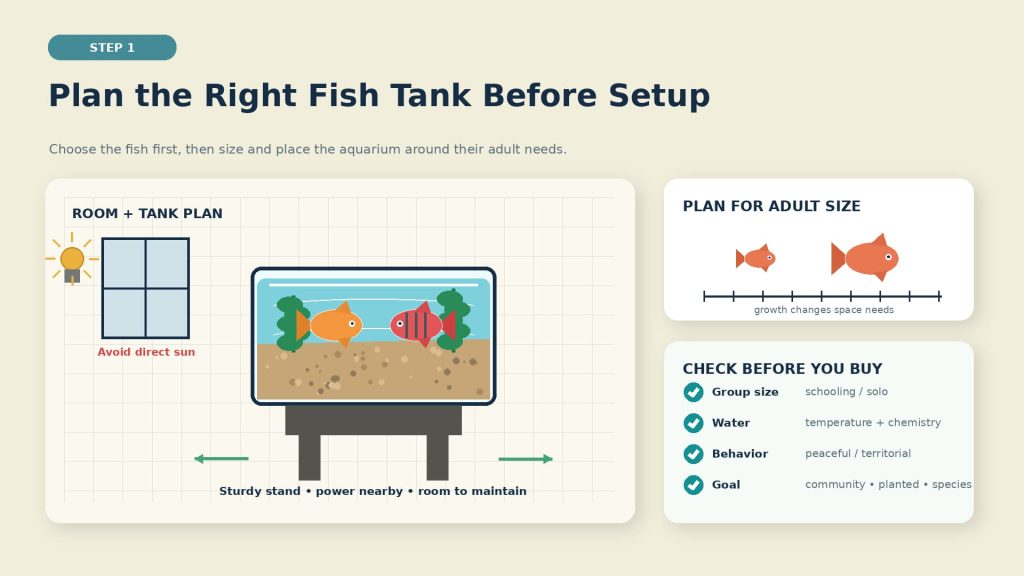
Choosing your fish carefully is important, as young fish sold in stores can grow quite large. A tank that may look perfect on the day of purchase can end up not being suitable for the tank owner when the fish reach adulthood. Likewise, extremely active fish will require more space than the species that live at a slow pace, even though the latter ones are not much smaller than the aggressive ones.
It is also important to think about the maintenance of your fish tank as well. If you keep the aquarium at home, you should ensure that there is enough space around it for feeding and testing, cleaning the aquarium, trimming the plants, and changing the filters. You should also think about where you can take the buckets without creating a dangerous situation.
The volume of an aquarium is just one aspect of its design process. Fish species’ sizes, body shapes, waste production, oxygen needs, swimming behavior, group behavior, and filtration will all affect what fish are appropriately selected for the aquarium. Thus, simple fish-per-gallon rules should never be considered as substitutes for thorough research on species.
Choosing the Right Fish Tank Size
Select the aquarium based around the fish, rather than vice versa. A small aquarium, such as a 5-gallon tank, offers few options or possibilities, as it changes rapidly in terms of water quality or temperature. A 10-gallon aquarium gives more possibilities but still requires careful selection of species. A 20-gallon aquarium allows for much more flexibility when selecting fish.
Choosing the aquarium size does not mean that all newcomers need to choose the same aquarium. One should gather information about the species’ adult size, swimming behavior, group size, territory, and waste production in order to make the right choice.
Choosing the Best Place to Keep a Fish Tank
Find a suitable item or piece of furniture that could support the aquarium at all times and hold its weight when fully filled. Make sure to pick a location that is both suitable for the necessary electric supply and pumping. It must be close enough for easy access and maintaining the fish tank.
At the same time, definitely avoid places that will bring direct sunlight and any drafts. It is also suggested to check whether getting too much sunlight or the room temperature will lead to the constant appearance of algae. Leave sufficient space so that the lid can be opened, filters could be reached, etc.
Matching Aquarium Type With Fish Keeping Goals
Figure out what type of aquarium you are planning to create from the very beginning. It could be a planted aquarium, community tank, species-only setup, tropical aquarium, or cool-water aquarium. This will give you the chance to combine all of the necessary equipment and elements into one complete system instead of making unrelated purchases.
Step 2: Prepare Essential Fish Tank Equipment and Supplies
Having the right tools for the task enables you to achieve predictable conditions rather than deal with issues that could have been avoided in the first place. The exact specifications will depend on the type of aquarium, but while different types of aquariums have different requirements, beginner aquariums in freshwater need the following standard items: filter, water heater, temperature gauge, lighting fixtures, water treating supplies, equipment for water testing, and routine maintenance items.
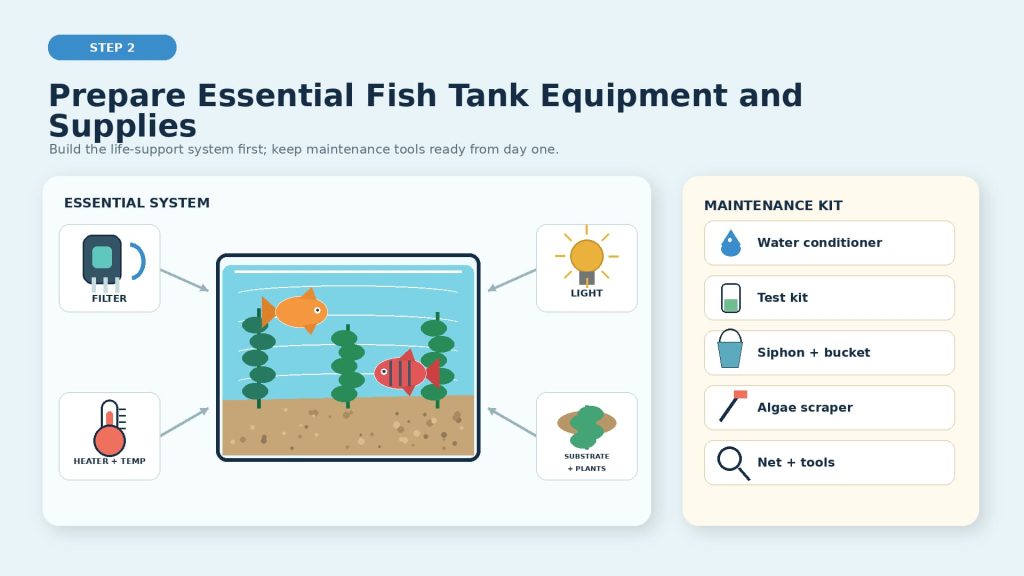
A filter, for instance, is a very essential device because, apart from removing visible dirt, the filter medium gives room for the establishment of new microorganisms that improve biological filtration by processing nitrogenous waste. Hence, the movement of water helps oxygen exchange at the top.
Heaters are used when fishes kept in aquariums require higher temperatures than those available in the surroundings. Having a separate thermometer makes it possible to check aquatic temperature instead of assuming that the heater works correctly from the data of the heater gauge.
It is thus important to plan equipment according to the species being kept instead of purchasing a general aquarium kit and hoping that its parts would fit as needed.
Aquarium Filter, Heater, Thermometer, and Lighting
Filteration of aquariums typically amalgamates mechanical filtration that traps suspended particles and biological filtration that sustains helpful bacteria, with some systems also using chemical media for specific water care purposes.
Tropical fish require heating equipment of the proper size, while temperate and cold-water fishes do not require heating at all. One should always investigate the types of fish involved rather than simply heating the tank.
One should use an aquarium thermometer to measure temperature separately. Lighting is important in establishing a regular day-night cycle and for providing the necessary amount of light to inhabiting plant species without making the photoperiod longer than necessary, which can foster algae growth.
Substrate, Plants, Decorations, and Hiding Places
The aquarium substrate may be made of stones, sand, or plants, with the choices depending on the type of fish and your maintenance techniques. Species that live on the bottom will require some specific type of substrate, while plants require one that will hold them in place and provide nutrients for their survival.
Aquarium plants, rocks, logs, caves, and similar objects will take care of providing a shelter for your fish and breaking the vision lines between fish, but at the same time, leave space to swim for active species.
It is recommended that any decorations that will be used in the aquarium be either specially prepared or suitable for aquarium use. It is better to avoid sharp edges, unstable rock formations, contaminated products, and décor that will create spaces where garbage will accumulate over time.
Water Conditioner, Test Kit, Siphon, and Cleaning Tools
Water may contain chlorine or chloramine, and so you will need to ensure that you use a suitable aquarium water conditioner when preparing the replacement water. A reliable test kit helps measure the water quality parameters, while the use of a siphon allows for partial water changes as well as getting rid of any waste accumulated in the substrate. RSPCA recommendations include carrying out regular tests and using conditioned water for replacements.
The following is the essential equipment needed for an aquarium:
- Aquarium and robust stand
- Suitable filtration system and media
- Heater if the species requires it
- Aquarium thermometer
- Light for the aquarium and timer
- Substrate and safe decor for the aquarium
- Water conditioner
- Ammonia/nitrite/nitrate/pH test kits
- Gravel siphon or an aquarium water changer
- Dedicated aquarium bucket
- Algae scraper or magnetic glass cleaner
- Fish net and necessary maintenance tools
Step 3: Set Up and Cycle the Fish Tank Before Stocking
It does not take much time to create a physical aquarium, but the biological filtration system can take time to get established. This is one of the important lessons in the process of beginner fish keeping.
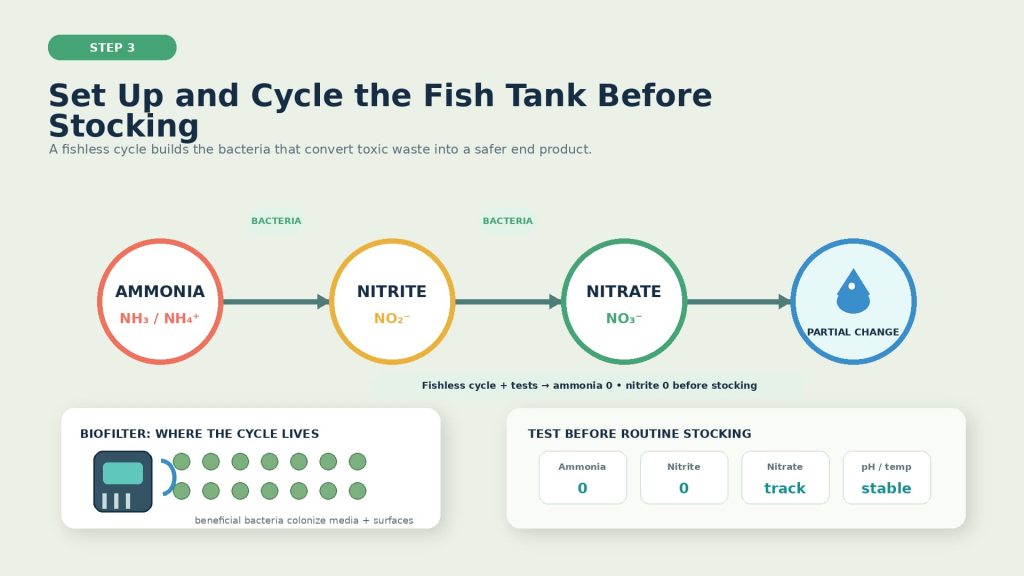
An aquarium can be aesthetically pleasing with clear water, decorations, and plants in place; however, there may exist few beneficial bacteria to break down the waste produced by the fish.
This biological process of establishing the tank is called fish tank cycling or aquarium nitrogen cycling. Fishless cycling is the most preferred method of running a biological filter because there is no unnecessary exposure of fish to elevated ammonia or nitrite levels. The cycling process can be confirmed by water testing and not by waiting for a certain period of time.
Fish Tank Setup From Empty Aquarium to Running System
- Start by placing an empty aquarium. Ensure that the stand is flat, sturdy, and strong enough to carry the weight of the full tank.
- Clean the substrate. Make sure the gravel or any substrate you decide to use is washed with plain water; do not use soap.
- Set up the design. Arrange the tank-friendly stones, woods, caves, and plants while ensuring that there is free space for swimming.
- Fit in the devices. Install the filter, heater if necessary, thermometer, and light in perfect accordance with the manual.
- Fill up the tank. Pour in water very carefully not to disturb the substrate.
- Treat the water. Add a water conditioner according to the directions.
- Begin the filtration. Let the water flow through the filter continuously.
- Set the temperature. If a heater is placed, set the temperature according to the thermometer.
- Check the entire installation for leaks and proper functioning before going through the process of cycling and fish adding.
Aquarium Nitrogen Cycle and Beneficial Bacteria
Fish excrete waste products, and decomposition of uneaten food and organic matter also takes place. This can lead to the formation of ammonia, which is toxic to fish. A working biological filter is able to make the inhabited bacteria and other microorganisms convert ammonia into nitrite, which is toxic again, and then convert nitrite to nitrate.
Nitrate, although being less toxic than ammonia or nitrite, still needs to be managed to avoid excessive nitrate accumulation, which can be done with the help of plants, keeping proper stocking and feeding, and, especially, with regular doing of partial water changes.
The aim of fish tank cycling is to create a functioning biological filter to process the future waste until it reaches normal levels of nitrification and filtration. Beneficial bacteria populate various areas of fish tanks, but they are concentrated on filters with large filtering surfaces and continuous flow of oxygenated water.
Aquarium Water Testing Before Adding Fish
Learn these parameters before stocking:
| Parameter | What it tells you |
| Ammonia | Confirmation that there are toxic nitrogenous wastes |
| Nitrite | Evidence that an additional toxic step of the nitrogen cycle is taking place |
| Nitrate | Information as to whether the final product is kept in control by means of maintenance and water changes |
| pH | Determination in terms of the acidity level of water |
| Temperature | Proof that conditions are stable for the fish selected |
Fish tanks have to be cycled properly in order for ammonia levels and nitrites to be equal to zero prior to routine stocking of fish confirming that biological filtration is already functioning. The pH levels, target nitrate management, and the temperature of the water should meet fish keeping requirements.
Step 4: Choose Beginner Fish and Build a Compatible Community
The selection of fish for the new aquarist needs to be based on their ease of care and suitability to the aquarium rather than just their physical beauty.
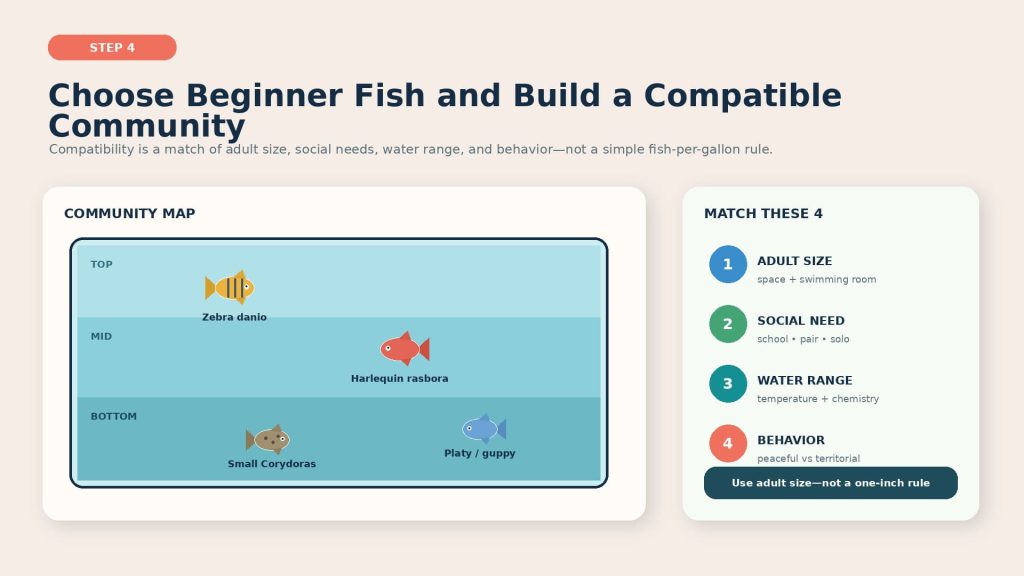
When selecting a fish species, it’s essential to obtain as much information about the species as possible regarding the adult size, temperature preferences, water chemistry required, behavior, swimming level, group size, diet, amount of waste produced, and compatibility.
Some fish that may appear peaceful in the shop may be active fin nippers. Some small fish have to be kept in reasonable numbers and minimum swimming space. Others may become aggressive as they get older. Some livebearers can breed very quickly, and some fish sold as small babies possibly grow much more than expected.
Choosing the right number of species of fish that get along and putting the social fish together most likely create a community, where fish live in a way more natural than putting one or two species of fish in an aquarium.
Beginner-Friendly Aquarium Fish Selection
The below-mentioned species of fish are frequently used in research of beginner freshwater fish tanks. However, the compatibility of fish chosen depends on tank size, number of fishes, and water conditions. Aqueon’s beginners’ guide suggests using danios, harlequin rasboras, white cloud minnows, cherry barbs, Corydoras, and bettas.
| Fish | Approx. adult size | Behaviour | Temperature need | General care |
| Zebra danio | ~5–6 cm | Very active, social/shoaling | Temperate to warm | Easy |
| White cloud mountain minnow | ~4 cm | Peaceful, active shoaling fish | Cooler/temperate | Easy |
| Harlequin rasbora | ~4–5 cm | Peaceful schooling fish | Tropical | Easy |
| Cherry barb | ~4–5 cm | Social, active | Tropical | Easy |
| Small Corydoras species | ~4–7 cm | Social bottom-dwellers | Tropical, species-dependent | Easy–moderate |
| Platy | ~5–7 cm | Social livebearer | Tropical | Easy |
| Guppy | ~3–6 cm | Active livebearer | Tropical | Easy |
| Betta | ~6–7 cm | Individual temperament; males often housed singly | Warm tropical | Easy–moderate |
These suggestions should be treated as starting recommendations for research purposes only.
Fish Tank Size, Stocking Levels, and Adult Fish Growth
Do not base stocking on a single, “one inch per gallon” rule, or any other similar rule. Two fish with the same length will have differences in body mass, activity level, oxygen demands, waste generation, and territoriality.
You need to stock based on the size of adult fish, ignoring the size of juvenile fish in the store. Then you may analyze the specifics of group size and swimming behavior of the group of fish or info like filtration capacity, tank size, water quality, and maintenance schedule. Aquaria stocked heavily usually produce more waste and don’t have as much room for mistakes as tanks with light stocking do.
Aquarium Fish Compatibility and Tank Mates
Choose fish species with similar requirements in tanks in terms of water quality, temperature, and behavior. Check which species are territorial, aggressive, fish nippers, highly active, timid, or like living in a big group.
Do not assume that two species can coexist because they pertain to a “community fish” group. Tank volume, group size, sex ratios, personalities, tank decoration, and availability of territories all make a difference in the quality of interaction among fish.
Step 5: Add New Fish Safely and Establish a Feeding Routine
When the aquarium becomes cycled, and water testing determines that water conditions are correct, do not surrender to the desire to release all the fish at once.
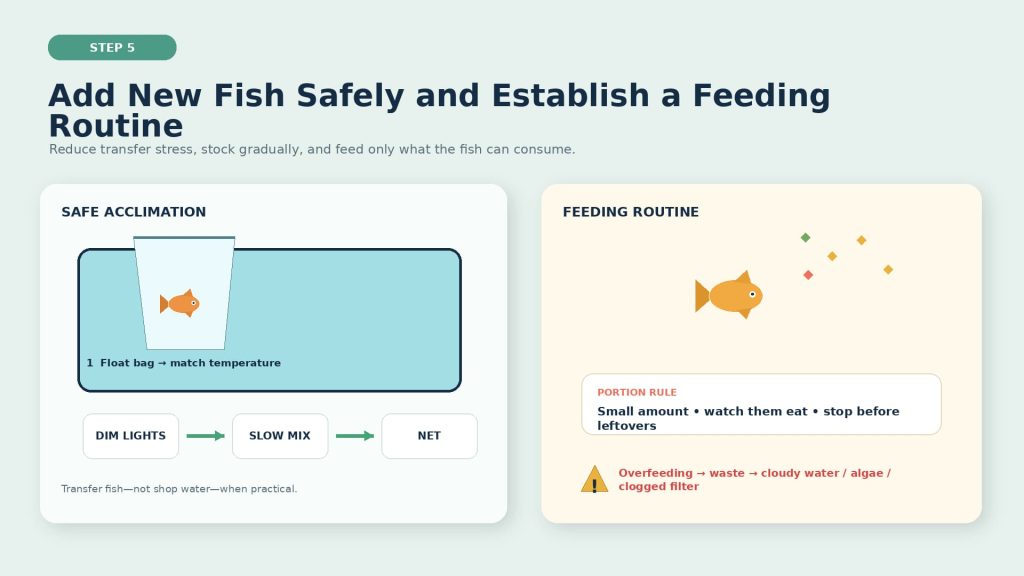
Every new fish increases the biological load. Adding fish in small steps is useful to allow the bacteria in the filter to adjust themselves and gives an opportunity to observe the actions, feeding, ammonia, nitrite, and compatibility of the animals.
The transportation is also stressful for fish, and the conditions in the shop or in the system of a breeder may differ in temperature and water chemistry from the conditions in your aquarium. Careful acclimatization makes this transition less harsh. After you add the fish to your tank, watch closely to see if they have rapid breathing, hide, show aggression, do not eat, swim strangely, or have any signs of disease.
A proper feeding system is also very important. A proper dry food and the proper amount of food will help the fish, and too much of the food will give extra nutrients and waste in the aquarium.
Gradual Fish Stocking and Aquarium Acclimation
It is best to add fish gradually instead of loading fish into a new aquarium in one go. Once you have added the first batch of fish, you should test the levels of ammonia and nitrites. If the water quality deteriorates, avoid buying more fish.
To acclimatize the fish correctly, dim or turn off the tank lights. Place the transport bag or container directly into the aquarium without releasing any water before letting the water inside the bag warm up to the temperature of the aquarium. Slowly add water to the bag depending on the species you are trying to acclimatize.
Move the fish into the aquarium with great care and do not allow any water from the transport bag to mix with the water in the aquarium. Allow time for the fish to settle down, and closely watch them for the next few days. Aqueon also recommends gradual temperature and water adjustments, as transport and store conditions can be very different from your home aquarium.
Fish Feeding Amounts, Frequency, and Food Types
Provide species-specific food. Quality flakes, appropriately sized pellets, wafers, frozen foods, safe live foods, or vegetable-based food are some of the options to consider based on the species of fish.
Feeding in precise quantities is more important than simply pouring an unspecified amount of food into the tank. You must observe the fishes consuming their food and give them just enough that they are able to eat everything without leaving a lot behind.
Frequency of feeding will vary according to age and species, so you need to follow species-specific guidelines instead of assuming that all aquarium fishes follow the same patterns. The RSPCA points out that overfeeding will do more harm to the water quality than underfeeding.
Overfeeding and Its Effect on Fish Tank Water
Any uneaten food will decompose, thereby forming organic matter. Additionally, when the fish are overfed, they create a greater amount of waste. These factors may lead to cloudiness of water, an increase of nitrogenous waste, excessive nutrients, and the growth of algae, as well as unpleasant smells and increased effort required to clean the aquarium.
Overfeeding can be detected by the following signs:
- Food remains at the bottom of the aquarium after feeding;
- Food accumulates behind decorations;
- Persistent cloudy water;
- Fast algae growth together with excessive nutrients or lighting;
- Substrate becomes dirty faster than usual;
- The filter maintains clogging regularly;
- Ammonia levels rise, or the water tests show the unadvantageous values.
If you observe these signs, make sure to reduce the amount of food you give your fish and monitor water quality instead of using chemicals that allow you to cover the problem.
Step 6: Keep Fish Tank Water Clean, Clear, and Algae Controlled
If you’re wondering how to clean a fish tank, it’s not about continually tank cleaning. Good fish tank maintenance means carrying out little measures on a consistent basis.
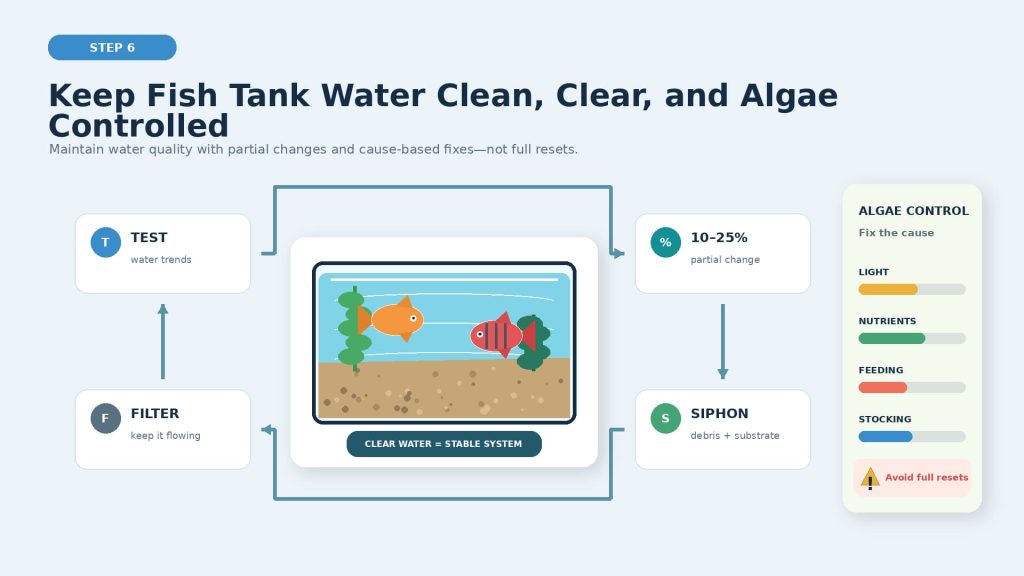
This means taking water samples, changing water regularly, siphoning debris from the bottom, cleaning algae off the walls, keeping the filter working without altering its biological media, and keeping any problems that recur in check.
This is the same reason why aquarium water remains clear. Healthy aquarium water comes from controlled feeding, proper aquarium occupancy, good filtration, the right biological conditions, and diligent maintenance—not frequent water changes.
Regular partial water changes and bottom cleanings are always encouraged, while complete water changes ruin the biological balance that you worked hard to create.
Fish Tank Cleaning and Partial Water Changes
Commencing a pragmatic cleaning process for an aquarium entails observation and testing of applied water. First, removing visible waste and dead vegetation once observed, cleaning algae off the glass with tank-appropriate equipment, and siphoning out some water and accumulating debris from the exposed parts of the substrate.
For numerous older freshwater tanks, conducting partial water changes within 10–25% each week is a good starting point, although the right quantities and frequency must be changed according to fishes and plants placed in the aquarium and according to the tests of used water for nitrates and other substances. RSPCA Australia recommends partial changes in this range done weekly for tanks that are operated for a long time.
To avoid shocks in temperature, treat the replacement of water from the tap with a conditioner.
Do not replace all filtering media at the same time every time or otherwise clean not only all surfaces in the aquarium but also on the water. Beneficial bacteria connected to bio-filtration are a part of the system that you’re trying to maintain.
Clear Fish Tank Water and Cloudy Water Prevention
When a fish aquarium becomes murky again and again, determine what type of cloudiness it is and its cause.
Start by checking if a substrate or dirt had been disturbed. Then, check whether there are any leftovers from food or decaying plant materials or whether the aquarium is overcrowded or has too much waste in it. It is advisable to test biological stability by checking ammonia and nitrite levels, especially in a newly established aquarium. Finally, check the flow of the water and the filter effectiveness.
A fish tank that was newly established can also go through the process of a bacterial bloom while its microorganisms are still changing. Therefore, to get your fish tank to become clear again, it is better to fix the imbalance in fish tank water instead of just draining it over and over again.
If you want to know how to keep the fish tank clean in the long run, pay attention to how much food you give, how well the cycling process is carried out, and how partial maintenance and water filtration are carried out, as well as the number of fish kept in the aquarium.
Green Fish Tank Water, Algae Growth, and Ammonia Control
If you’re wondering why your fish tank is going green, two things you need to explore are the availability of light and the experience of nutrients. In some cases, excessive feeding, fish waste, poor maintenance, and direct sunlight could also be the cause of the unwanted algae.
In order to avoid excessive growth of algae in your fish tank, it is advisable to manage the cause effectively: have fixed timings for the lights, pay attention to the sunlight coming in, avoid overfeeding, maintain an efficient filtration system, and carry out regular cleaning of the fish tank.
It is a wrong practice to think that some algae-eating species can replace the owner in terms of providing good care for the aquarium. While the fish absorb algae, they produce waste too.
In order to lower ammonia in the aquarium, you need to monitor the condition of your biological filter, avoid overstuffing and excessive feeding, and remove decaying material from the tank. Thus, rolling regular checks on the fish tank is an effective way of ensuring the restoration of a good composition of the water without relying on a fish to clean the water.
Step 7: Maintain Aquarium Plants, Lighting, and Temperature
Aquarium stability is dependent on various factors such as plants, lighting, and temperature. The presence of healthy live plants proves beneficial in terms of their camouflage, but they also require proper lighting and nutrition. Lighting plays an important role in fish behavior and growth of algae, while temperature affects fish metabolism and oxygen content in water.
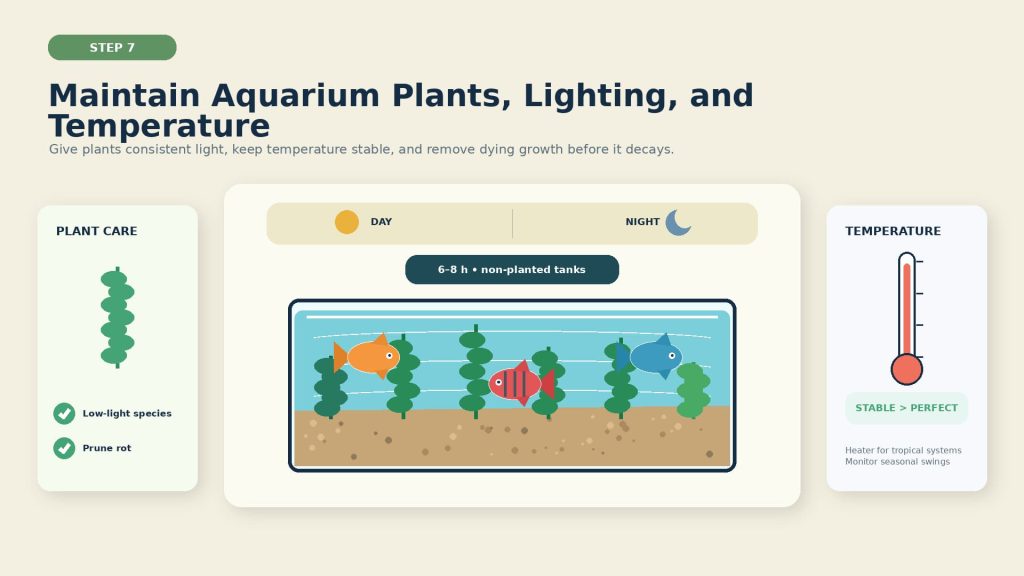
The safest way to proceed is to maintain certain consistency. In other words, rather than constantly playing with lighting and nutrition level, you need to choose plants for the aquarium. Using a timer will help you control the duration of illumination.
Temperature changes might occur with changing seasons, especially in small tanks, sunshiny rooms, or in non-climatic controlled houses.
Keeping Fish Tank Plants Alive and Healthy
When selecting fish tank plants, it is important to ensure that they are suited to the conditions in which they are kept. Low-light plants are more suitable for beginners than high-maintenance ones that feature high lighting requirements, unique feeding habits, and may need additional carbon dioxide.
While rooted plants are nourished from the substrate, some plants will absorb their nutrients from water alone. In this case, it is good to prune the damaged or rotting leaves and trim excessive growth in order to prevent algae growth.
However, it is necessary to choose the plants that are safe to use with the selected fish species because there are often fish that will dig them out or eat them.
Fish Tank Lighting Schedule and Algae Balance
The natural day-night cycle is beneficial for fish, which means that the lighting should not be left on in the aquarium. A good lighting period for most aquariums without plants amounts to around 6-8 hours a day. For planted aquariums, the required period can vary depending on what plants are used.
A timer should be used to reduce the number of lighting hours if there are signs of algae present. The required number of hours of light should be considered together with the needs of the plants.
Stable Fish Tank Temperature Through Seasonal Changes
The optimal temperature should be maintained, and any drastic changes should be avoided. Most tropical systems usually need a heater; the temperature can be checked using a thermometer.
When it is hot outside, the temperature and the movement of the water should be carefully watched. For short power failures, it is important to spare the heat loss, avoid overfeeding the fish, and have a proper plan regarding dealing with temperature changes.
Step 8: Follow a Simple Fish Keeping Maintenance and Health Routine
Seeing problems coming is half the battle. Spend a short period inspecting your aquatics every day—it is better than waiting for your scheduled maintenance.
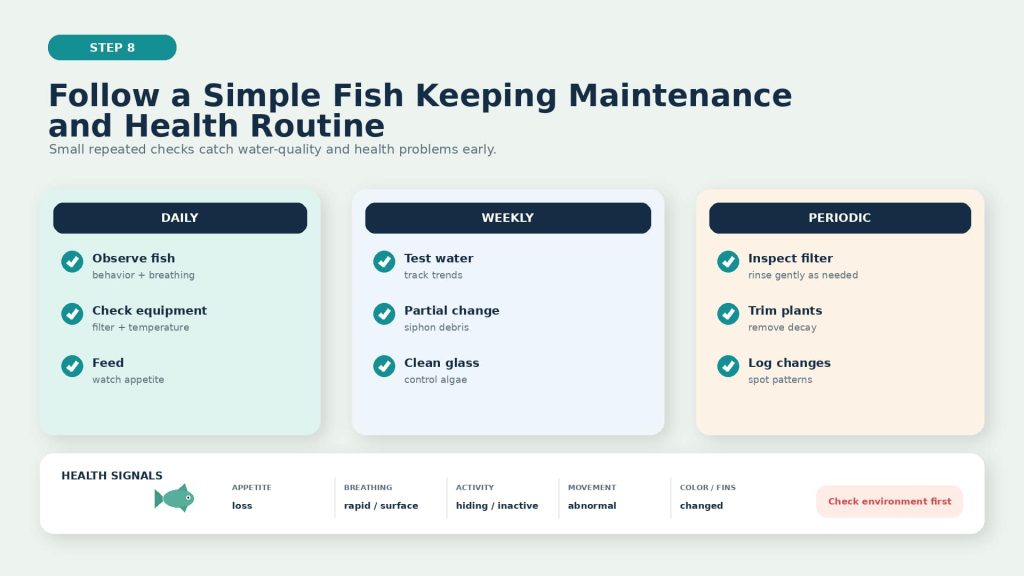
If fish are healthy, they will behave according to common patterns: normal swimming, acceptable interactions with other fish, normal feeding habits, and normal breath patterns. At the same time, all the systems will run smoothly. The filtration will circulate water, while the heater will stabilize the temperature in its working mode.
Then, your weekly maintenance will be based on testing many parameters—water cleaning, filtration, testing, plant maintenance, and other equipment used in the aquarium.
Otherwise, you will need to keep a table of all your measurements. Instead of having one nitrate, pH, or temperature reading, you will have a general sense of the changes that occurred over time.
Daily, Weekly, and Monthly Fish Tank Maintenance
| Frequency | Fish tank care tasks |
| Daily | Examine the behavior and feeding habits of the fish; check their breathing and looks; make sure that the filter is working; check water temperature; and remove the easy uneaten food or dead material. |
| Weekly | Carry out tests of the main water parameters; make a suitable partial water change if necessary; vacuum the part of the dirt that can be easily reached; and clean the glass when needed. |
| Periodically/Monthly | Examine the filter materials and water flow; do the cleaning of the filter according to the standards; check the operation of the heater, thermometer, lighting system, cables, and hoses, and decorations; trim plants; and see the trends in maintaining the aquarium. |
The maintenance in the aquarium should depend more on its condition than on the time of the year. The aquarium, which is too populated or newly set up, will need more attention than the stable aquarium.
Early Signs of Fish Stress and Poor Aquarium Conditions
The change of fish behavior can be a good indicator that something bad happened. Look for the signs like food refusal, odd hiding, constant jumping up to the surface, rapid respiration, loss of activity, abnormal movements, changes in color, damaged fins, and others.
Not all symptoms need to be assumed as illnesses. Start by checking the temperature, ammonia, nitrite, nitrate, pH, the operation of instruments, equipment maintenance, aggression, or other environmental factors. If there are still symptoms, one should seek species-specific and veterinary advice. The guidance of RSPCA for the fish also mentions abnormal swimming, damaged fins, spots visible on skin, and temperature-related behavior changes as reasons to be alerted.
Common Fish Keeping Mistakes to Avoid
- Putting fish before the aquarium is biologically ready
- Placing too many fish in too short a time period
- Ignoring adult fish size
- Combining incompatible tank mates
- Keeping social fish in inappropriate group sizes
- Overfeeding
- Allowing fish tank temperature to remain unstable
- Keeping aquarium lamps on too long
- Not testing aquarium water
- Doing unnecessary full aquarium washes
- Changing biological filter media abruptly
Quick answers
Frequently asked questions
What are the steps in fish keeping for beginners?
Fish keeping involves the selection of the right size aquarium, proper filtering system and temperature regulator, cycling the tank, testing water quality, and choosing compatible fishes that will be able to survive together. It is important for beginners that their aquarium is set up in accordance with the needs of adult fish and not the other way round.
How often should one clean the fish tank?
There are freshwater aquariums that are not cleaned completely but checked weekly instead. The aquarium water should be tested, debris should be removed, and water should be changed partly.
What allows the water in a fish tank to be free of cloudy presence?
To ensure that the water in your fish tank is clear, avoid overfeeding and overcrowding the tank, ensure effective filtration, carry out regular partial water changes, and keep the environment biologically stable. In case of clouding, check ammonia and nitrite levels and find out the cause of the issue before using any treatment.
Why does a fish tank turn green?
In almost all cases, the water in a fish tank turns green due to the uncontrolled growth of algae. This is usually caused by excess light and nutrients. The causes can be direct exposure to sunlight, long light periods, overfeeding, accumulation of nutrients, and poor maintenance. It is better to reduce the algae situation by reducing unwanted light, fixing nutrient imbalance, and keeping on making regular water changes instead of merely treating the visible algae.
What methods can be employed to minimize ammonia levels in an aquarium?
Mitigation of ammonia levels can be achieved through the establishment of biological filtration prior to normal stocking, avoiding overcrowding and overfeeding, removing decaying organic matter, maintaining proper functioning of filters, and performing regular tests. In the event of a rising ammonia level in an established aquarium, it should be investigated immediately since it may indicate higher rates of waste generation than the level of the biological decomposition process.
How long does a new fish tank need to be cycled?
There is no specific amount of time for the process of cycling an aquarium. It usually takes a few weeks for the establishment of biological filtration in a new tank. It is important to follow the recommendations of the RSPCA when cycling an aquarium for four to six weeks instead of the recommended time.
What fish are good for beginners?
Some examples of beginner-friendly fish are zebra danios, white cloud mountain minnows, harlequin rasboras, cherry barbs, specific types of Corydoras, guppies, platies, and bettas as long as they are properly housed. But in order to determine proper fish species, it is necessary to take into account the size of the tank, the temperature of water, the requirements for living in groups, the adult size of fish, and their compatibility, so make sure to do your research before buying any fish.
How many fish should be kept in one aquarium?
There is no strict rule that determines the number of fish to keep in one aquarium. Generally speaking, level of safety depends on the size of the adult fish, body weight, waste produced by fish, level of activity, body of water needed for swimming, nature, amount of oxygen present in the aquarium, quality of filters, etc. It is important to conduct research about specific species of fish before buying them and stocking them efficiently.
For how many hours daily should the lights of the fish tank remain on?
Most aquariums that do not have plants can use artificial lighting for six to eight hours a day, while those with plants may need more depending on the nature of plants and brightness of the lights. To keep the issue of algae at bay as well as to provide darkness every night, use a timer and reduce excessive lighting in cases of algae formation as well.

About the author
Chloe Adams
I'm Chloe Adams, a beginner aquarium expert and writer for Stardexa with more than 11 years of experience in the field of fishkeeping. As many beginners find aquariums hard to comprehend, I've kept learning, practicing, and sharing all the basic information from choosing the right aquarium to cycling it, filtering it, feeding the fish, and taking care of water quality as well as maintaining it regularly. My aim is to ensure each novice fishkeeper knows how to turn his/her aquarium into a pleasant and healthy habitat for fish.
Reader Fishkeeping Feedback
Comments, questions, and aquarium reviews
Share your aquarium experience, ask a fish care question, or write a helpful note about tank setup, water quality, filters, algae control, or maintenance for other readers.
No aquarium reviews yet. Be the first to share a helpful review on content or fishkeeping question, setup tip, or care experience.