
What Makes a Fish Beginner-Friendly
A good fish for beginners adapts to the regular changes in the tank without getting too stressed. It does not mean that the fish can survive in bad water. Every fish needs clean water, proper temperature, food, space, and tank mates.
These are the first three things I check about a fish when deciding to put it in my aquarium:
- Size of an adult fish: The aquarium needs to offer adequate space when the fish grows into an adult.
- Social demands: If the fish is schooling, it will require adequate companionship for survival and good behavior.
- Compatibility with water: Naturally compatible fish tend to thrive in their environment more than those requiring water changes.
Water plays a more critical role in determining how healthy your fish are than virtually everything else. The levels of ammonia and nitrites must be kept at zero while a new tank must complete its cycle without fish before being stocked. A larger tank makes the work easier because the temperature and chemistry remain fairly more stable than those of small tanks.
Quick Comparison of the Best Aquarium Fish for Beginners
| Fish | Suggested Starting Tank | Social Need | Typical Temperature | Best Feature |
| Platy | 15–20 gallons | Small group | 72–78°F | Best overall choice |
| Zebra danio | 20-gallon long | 6 or more | 64–75°F | Active and adaptable |
| Harlequin rasbora | 15–20 gallons | 6 or more | 72–81°F | Peaceful community fish |
| Cherry barb | 20 gallons | 6 or more | 72–80°F | Calm and colorful |
| Guppy | 10–20 gallons | Small group | 72–82°F | Colorful and easy to feed |
| Corydoras catfish | 20 gallons | 6 of one species | Species dependent | Peaceful bottom swimmer |
| White cloud minnow | 10–15 gallons | 6 or more | 64–72°F | Good for cooler water |
| Betta | 5 gallons or larger | Usually kept alone | 75–79°F | Best single-fish setup |
These dimensions are reasonable suggestions as opposed to strict guidelines. Your perfect tank will depend on many other factors such as the adult size of the fish, its swimming behavior, and group requirements.
Eight Reliable Freshwater Fish for New Aquariums
1. Platies
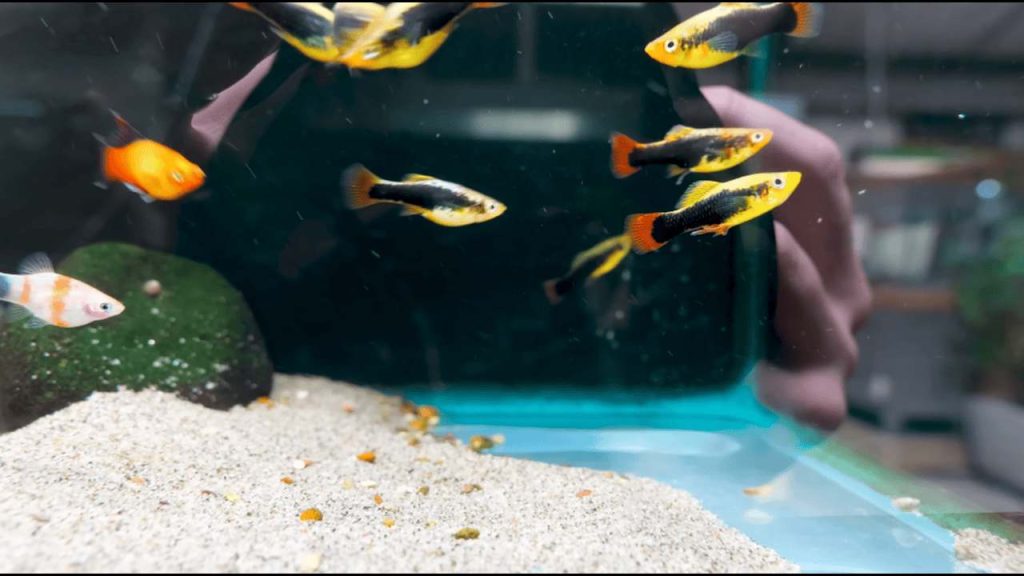
I would recommend platies as the best fit for an initial community aquarium. They are very active but not aggressive fish; they feed on various common fish foods, and there is an abundance of different color forms of platies.
Platies usually prefer neutral or moderately hard water, and thus they can survive in most of the water in homes. The aquarium should be at least 15 or 20 gallons in order to provide adequate swimming room and to keep the water stable.
Platies belong to the family of livebearers and reproduce by giving birth to free-swimming young. Thus, even a small group of these fish will quickly multiply. Furthermore, a bought female platy may already have young in her belly, and that is why it is better to be prepared for that possibility.
2. Zebra Danios
Zebra danios are known to be very tough, active, and adaptable fish. They constantly move, and it makes watching them a pleasure, but it also indicates that they require a bit larger area for swimming than one might think. Zebra danios feel well in the long aquarium.
They require being kept in groups consisting of at least six individuals. Such a school will help the fish feel safe and will contribute to its natural behavior without allowing one fish to be in the focus of the rest.
Zebra Danios will feel more comfortable than most tropical fish in a wider range of temperatures. However, it is important to remember that this fish should not be exposed to any drastic temperature changes. Due to the high swimming activity, this fish will do well with other similar active fish but not with slow swimmers with long fins.
3. Harlequin Rasboras
Harlequin Rasboras will be great fish for those who like an orderly and tranquil group of fish. The copper color and dark triangles on the body of this fish make it even more attractive when a group of several fish swims in the tank.
At least six fish are needed, but the bigger group will feel more confident and behave naturally. The planted areas along the sides and the rear part of the aquarium provide them with hiding places, while the free center will allow them to swim.
Captive-raised harlequin rasboras are fairly tolerant creatures, but they need clean and stable water parameters. It is advisable to maintain them in a cycled tank without any presence of ammonia or nitrite. Filtering and heating equipment will help to provide comfortable conditions.
4. Cherry Barbs
There are some barb species known for being very aggressive and fin-nipping towards other fish, but cherry barbs are more peaceful fish; therefore, they can be used in a beginner community aquarium.
It is important that cherry barbs are kept in groups, as in this case they feel safe and act like they would in their natural habitat. Tanks with lots of plants and shaded places and open spaces would be comfortable for both timid and bold cherry barbs.
A 20-gallon tank is a good size for a school. They get along well with other fish that are of similar size and behaviour, but they shouldn’t be kept with aggressive species and those who could easily eat them.
5. Guppies
The guppy is a small, brightly colored fish that is easy to feed and breed and is also widely available in stores. The fish easily takes to flakes, small pellets, and frozen food appropriate for its diet and is therefore often considered one of the best tropical fish for a beginner.
The primary issue with the fish is that they reproduce very quickly, with just a few fish giving rise to many in no time at all. This can cause problems with overcrowding of the tank and will lead to poor water quality and undue stress on the whole tank environment.
A sexless group can lower the risk of unwanted offspring even though females can be pregnant at the time of purchase. Guppies require regular filtration, plants, proper water conditions, and sufficient swimming space.
6. Corydoras Catfish
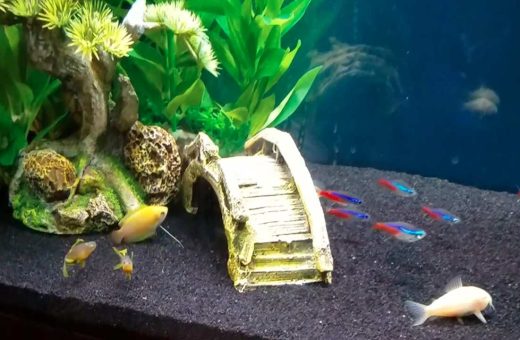
The Corydoras is a peaceful species of bottom-dwelling catfish, which will contribute life to the lower level of your tank. It is a very sociable fish that should always be kept in groups of no less than six from the same species.
One of the main mistakes is to purchase only one Corydoras as a “cleaner” fish. While the corydoras will help you to clean food leftovers from the bottom of your aquarium, they won’t substitute water changes, tank cleaning, etc. Moreover, they require special sinking food to stay healthy.
It is recommended to use smooth sand or rounded gravel, as it may harm the delicate barbels of your fish. The most common Corydoras require more ground area than smaller breeds; therefore, a 20-gallon tank would be a better choice for a beginner.
7. White Cloud Mountain Minnows
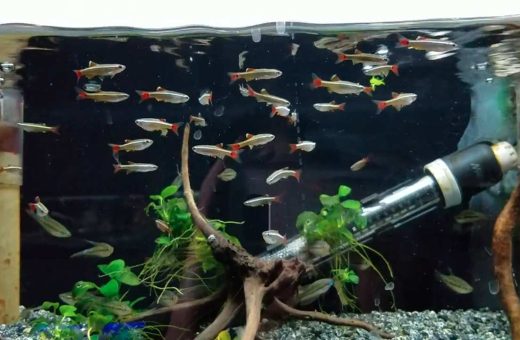
White Cloud Mountain Minnows make a good selection for an aquarium that needs cool water because they stay relatively small, will eat standard fish food, and grow red fins with reflective markings.
This fish should be maintained in groups of at least six in an aquarium with cover and ample swimming room. While they are peaceful, their small size puts them at risk around other fish that might consider them prey.
While white clouds are not as accustomed to warmer temperatures as other tropical fish, keeping them in continuously warm water just to accommodate another fish could reduce their lifespan and cause stress.
8. Betta Fish
A betta makes a good selection for a person wanting only one impressive specimen rather than a collection of community fish. Bettas should not be kept in cups, vases, or unheated bowls, although this is how many people choose to display them.
It is advisable to have at least a five-gallon tank that will provide a betta with adequate room for gentle filtration, a heater, plants, hideouts, and water stability. The tank should have a tightly fitting lid since the fish are known to be good jumpers.
Male bettas tend to be aggressive and territorial and therefore cannot be kept together. They can be kept with some of the other tank mates as long as it is carefully done; however, each fish has a different character and aggression levels. For a beginner, having one betta alone in an aquarium is the best thing to do.
Best Fish for Beginners in a Small Tank
Those who search for the best fish for beginners in a small tank think that a smaller aquarium needs less maintenance work. Yet in fact, changes in temperature, amounts of waste, and chemical composition of water occur faster with less water.
For a five-gallon aquarium, the choice is undoubtedly one betta. The tank needs to be equipped with a heater, filtration system, lid, live plants, or hiding places. In a ten-gallon aquarium, the number of species increases, but schooling fishes have to be kept in their groups and have enough space to swim.
A twenty-gallon long aquarium is more suitable for a novice aquarist than a tiny tank. There is more floor space, natural schooling sizes, and time for monitoring water quality problems.
Fish That Are Often Poor First Choices
However, there are several popular fish that are commonly sold to novice owners even though adult fish’s size, waste generation, or special requirements for care are hard to cope with.
Goldfish release a lot of waste and can grow way larger than expected by many owners. They need powerful filtration and also a larger volume of water than a bowl or initial tank can offer.
A common pleco is bought as a small algae eater; however, it can outgrow a typical home aquarium and generate a lot of waste besides requiring a more diverse feeding schedule than just living on algae.
Bala sharks, oscars, and large cichlids need a big aquarium, powerful filtration, and proper planning regarding aggressiveness and tank mates. Their long-term requirements are usually incompatible with a first-time aquarium.
Certain sensitive tetra fish will not be comfortable in an aquarium that has just been set up. In most cases, these fish need mature tanks with the established conditions.
Thus, the safest way would be finding information about the adult size and character of the purchased fish. A small fish in a store tank can later grow way larger and be significantly more active or aggressive.
A Simple Setup for Hardy Beginner Fish
Make sure that the aquarium is set up correctly before getting any fish:
- Decide what species you are going to keep and how many there should be in one tank.
- Find a tank that will be able to accommodate the fish fully grown.
- Set up the filter, heater, thermometer, cover, and lights.
- Condition your tap water by treating it to remove chlorine and chloramines from it.
- Cycle your aquarium using the fishless cycle method.
- Check the water parameters to make sure that ammonia and nitrites are at zero levels.
- Introduce fish slowly; do not fill your aquarium at once.
- Carry out partial water changes regularly using conditioned water with the same temperature.
Never change all filter media at once and never clean biological filter media with tap water. This is because the filter contains good bacteria that convert dangerous fish waste into harmless substances, and changing too much of this bacteria can lead to an imbalance in your aquarium cycle.
My Practical Picks by Aquarium Goal
For a small community aquarium, either platies or harlequin rasboras would work well, as both are easy-going, beautiful, and easy to take care of.
For an energetic display, zebra danios will do great, as they are constantly moving around all day and make good use of the open water.
For cold water fish, white cloud mountain minnows are better suited compared to tropical fish, which require warm temperatures.
For a sole focal point fish, the betta kept in a planted tank of no less than five gallons is a good option.
For a large community tank, an easy-going school in the center of the aquarium can be complemented by a proper school of corydoras in the bottom part of the tank.
In Short
It’s also a mistake to choose the fish that can endure the biggest variety of living conditions. It’s better to choose a fish that will have appropriate size, temperament, temperature, and water preferences according to your conditions in the aquarium.
Platies are a good choice, but zebra danios, harlequin rasboras, cherry barbs, guppies, corydoras, white clouds, and bettas are good choices depending on the type of the tank you plan to build. Start with an established tank and add fish gradually, focusing only on one fish at a time.
Quick answers
Frequently asked questions
What is the easiest freshwater fish for a beginner?
Platies are the easiest freshwater fish because of their peacefulness, adaptability, colorfulness, and ability to eat common aquarium food.
Which is the best fish for a 5-gallon tank?
The best choice is to put just one betta in the tank. But the tank will require a heater, filtration system, top cover, shelter, and changing of the water.
Are there beginner fish that can be put in a tank without cycling first?
No, beginner fish can die from ammonia and nitrite poisoning. It would be better to use a fishless cycle first to be sure the water is safe.
How many fish should a beginner have at once?
Beginners can only add a few fish at first while observing the minimal group size of the fish. Testing of water and allowing the filtration system to adjust first before adding more fish should be done.
Are schooling fish good for beginners?
Yes, they are good for beginners when kept in their proper numbers and adequate space to swim.

About the author
Chloe Adams
I'm Chloe Adams, a beginner aquarium expert and writer for Stardexa with more than 11 years of experience in the field of fishkeeping. As many beginners find aquariums hard to comprehend, I've kept learning, practicing, and sharing all the basic information from choosing the right aquarium to cycling it, filtering it, feeding the fish, and taking care of water quality as well as maintaining it regularly. My aim is to ensure each novice fishkeeper knows how to turn his/her aquarium into a pleasant and healthy habitat for fish.
Reader Fishkeeping Feedback
Comments, questions, and aquarium reviews
Share your aquarium experience, ask a fish care question, or write a helpful note about tank setup, water quality, filters, algae control, or maintenance for other readers.
No aquarium reviews yet. Be the first to share a helpful review on content or fishkeeping question, setup tip, or care experience.