
Ich Fish Treatment at a Glance
Effective Ich treatment includes not only proper Ich medicine but also constant water conditions, sufficient aeration, tank cleaning, and enough time to finish the whole course of treatment. All the affected fish need to be involved in the ich treatment process, as the parasites can stay in a fish’s body without visible white spots.
The most valuable experience in Ich fish treatment is the knowledge that clear skin doesn’t mean the infection is finished. The parasites could leave the fish’s body to produce offspring in other places of the tank. Stopping the ich treatment too soon could lead to new, possibly worse, outbreaks.
| Treatment priority | Practical action |
| Favor healthy breathing | Improve aeration and check whether the filter functions well |
| Stabilize the aquarium | Ammonia, nitrite, temperature, pH, and salinity check-ups depending on the situation |
| Kill parasites | Suction of waste and elimination of debris in accessible areas of the tank |
| Hit parasites in their vulnerable phase | Medication usage throughout the whole recommended duration |
| Prevention of the recurrence | Keep treating even after the disappearance of the white spots according to the instructions |
| Fish protection from future outbreaks | Quarantine new fish before their introduction to the main tank |
Ich and White Spot Disease Explained
The cause of freshwater ich is a small parasite, Ichthyophthirius multifiliis, that feeds on the skin, fins, and gills of the freshwater fish. Almost any species of fish in fresh water is susceptible to infection with this disease. There is also marine ich that looks alike, but it is caused by another parasite called Cryptocaryon irritans that infects saltwater and brackish water fish.
Both infections are usually referred to as “white spot disease” since fish infected with the disease will have tiny bumps on their bodies resembling salt grains. Although the symptoms are alike, marine and freshwater ich are different types of diseases. Treatment for the freshwater tanks may be hazardous for the marine tanks, especially if there are corals or other invertebrates in them.
It can turn dangerous really fast due to its rapid reproduction rate. For example, from one mature parasite in the freshwater tanks, there can be released hundreds of parasites that cause the infection. If gills get heavily infested, the fish will have trouble breathing or even die without having spots on the body.
Ich Symptoms in Fish
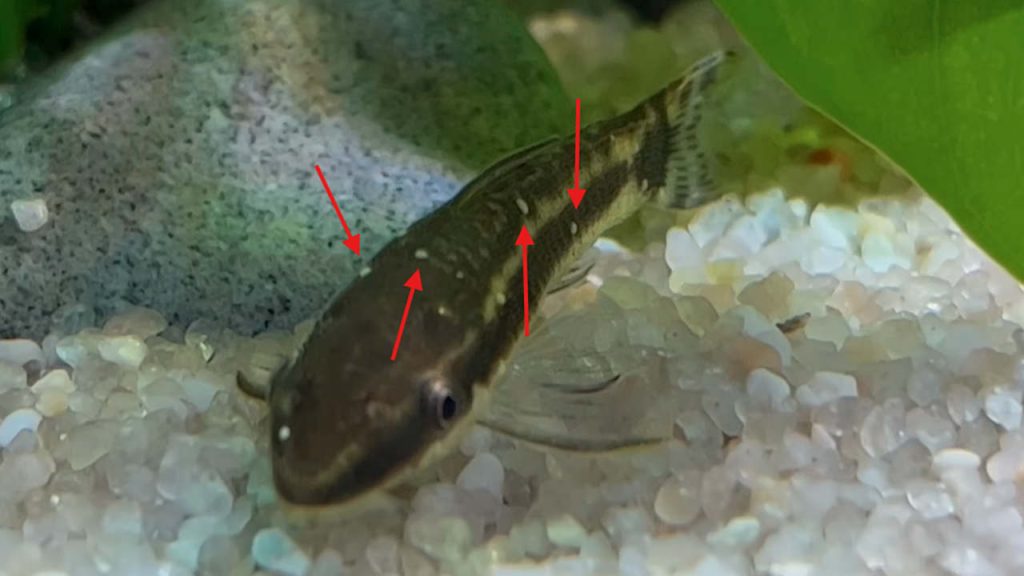
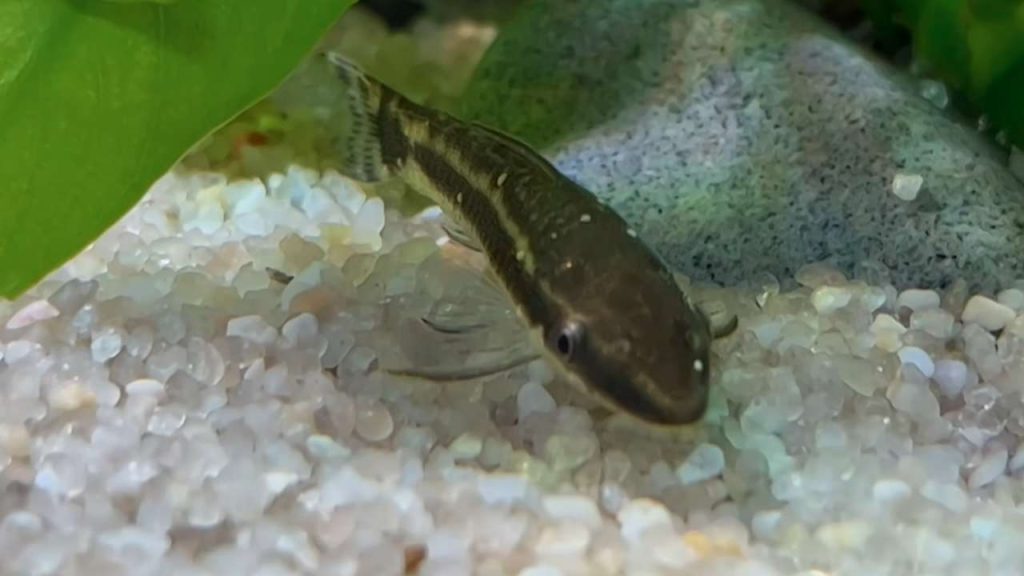
The most common signs of ich disease in fish are small white spots on the body, fins, or gill covers. They should look like salt grains rather than fuzzy spots, smooth discolored spots, or big lumps.
Additional symptoms of ich in fish include:
- Rubbing/flashing against rocks, wood, decorations, or substrate
- Rapid gill movements/labored breathing
- Hanging out near the water surface, filter outlet, or air stone
- Clamped fins
- Mucus accumulation on the skin
- Low appetite
- Strange hiding behavior/behavioral isolation
- Dull/darkened body coloration
- Lethargy/unstable swimming
Behavioral signs may show up before it becomes easy to spot the white spots. The fish can start rubbing against decorations, breathing fast, or hanging out near oxygen-rich zones in the tank. If the infection affects the gills mainly, then despite the healthy appearance of the skin, the fish will experience difficulties with breathing.
Not all white spots mean ich. For example, velvet disease produces a fine, gold, yellow, or dust-like covering, whereas lymphocystis causes large, uneven growths that look like little warts or bits of cauliflower. If the white spots do not seem to be characteristic for ich, a microscopic diagnosis should be made.
Causes of Ich in Fish
Itch is caused by being exposed to the parasite itself. Cold water, stress, and bad water conditions cannot cause the disease, although they may lower the fish’s health status, making it harder to treat an infection. The parasite may enter the aquarium with a new fish, which may not have any symptoms yet.
However, stress remains one of the factors that influence how severe the Ich outbreak will be. Transporting the fish, crowding, aggressiveness of other fishes, sudden change of temperature, inappropriate water chemistry, inadequate food, and constant handling of fish decrease the animal’s defenses, and this makes the outbreak of the parasite grow fast.
Methods of introduction can be through:
- Introducing new fish without quarantining them
- Passing wet nets, siphons, or other equipment used between tanks
- Transferring plants or decorations from a tank that houses fish
- Draining water from the shipping bag into the aquarium
- Storing newly acquired fish in too small a tank
- Not cleaning or drying equipment used to treat an infected tank
Newly added fish may look healthy for several days before the onset of symptoms. In warm water, the disease can manifest itself one to three weeks after transport. Quarantine for at least thirty days gives hidden infection more opportunity to surface.
The Life Cycle Behind Repeat Treatment
Knowledge about the parasite’s life cycle helps better understand the treatment procedure. It also becomes clear why one dose of the ich fish treatment is unlikely to be fully effective.
The freshwater ich goes through the following three stages:
- Trophont: Parasites feed under the fish’s skin or gills. This phase creates visible white spots.
- Tomont: The adult parasite leaves the host fish, fixes itself on a certain surface, creates a cyst, and starts multiplying.
- Theront: Infectious young parasites leave the cyst and actively swim in the tank looking for another fish to attach to.
Parasites are hard to kill when they are sheltered under the fish’s skin or in a cyst when multiplying. Almost all treatment procedures are effective when applied to the parasites in the free-swimming phase. That is why repetitive doses or constant treatment are needed as parasites enter different phases of the life cycle simultaneously.
The temperature of the water determines the speed of development of the life cycle. Under 75-79 degrees Fahrenheit, freshwater ich completes its life cycle within 3-6 days. The cycle is longer in colder water, and the duration of treatment should take into account the temperature of the aquarium.
A Safe Aquarium Fish Ich Treatment Plan
Confirm the likely diagnosis
Inspect several fish using bright and clear lighting conditions. Check for signs of individual salt-like spots, rubbing, clamped fins, excessive mucus, loss of appetite, and changes in respiration rate. In case the symptoms are ambiguous, consult a specialist to get a diagnosis rather than experiment with different medications hoping that one of them will work.
Treat the exposed population
Taking one spotted fish out of the group without any further actions is seldom sufficient. If the fish displays symptoms of ich, the parasites may have already started multiplying on the bottom of the aquarium or freely swim in the water. Healthy-looking fish might also harbor parasites in their early stages of development.
The hospital tank should be used in the cases where there are plants, shrimp, snails, corals, live rocks, and any other organisms in the aquarium that cannot tolerate the selected medication. However, taking the spotted fish out of the display tank will not make the latter safe.
Correct water quality first
Check ammonia and nitrite levels before medication. These readings need to be zero for a properly cycled aquarium. In case of poor water parameters, do a controlled water change with prepared, temperature-matched water, avoiding any drastic change that will add extra stress to the fish.
Use increased aeration during the treatment process since Ich infection could injure fish gills and make it more difficult for fish to breathe. Some medications and high water temperature could also reduce oxygen levels; thus, an air stone and improved surface agitation would help fish cope with recovery.
Calculate the real water volume
Dosage of every medicine should be based on water volume of an aquarium and not on tank capacity. Rocks, gravel, wood, internal equipment, and lack of total filling decrease water volume by several gallons. Overdose might hurt the fish, while underdosing won’t kill parasites.
When using activated carbon, ultraviolet sterilization, water conditioner, water change, and repeated dosing, always follow the instructions provided on the packaging of every particular product, as directions for each product differ and some advice works only for certain medicines.
Remove cyst-bearing debris
The substrate can be siphoned carefully to rid it of uneaten food, fish waste, and other debris. Cleaning the aquarium every other day while using the freshwater treatment may remove some of the reproductive cysts in advance of their releasing parasites. However, do not over-clean the aquarium, unless the prescribed treatment protocol demands it, because you might disrupt the biological filter in the process.
Complete the treatment course
Continue the treatment process for the whole time mentioned in the label of the product used or suggested by an experienced fish-health specialist. Stop the treatment after the disappearance of the last visible spot. At this point, the parasites could leave the fish and enter the reproductive phase in another place in the aquarium.
Ich Medication Options and Their Limits
There is no one drug that may be called the best ich treatment in all cases. It all depends on what type of aquarium you have, the type of fishes in the aquarium, the water chemistry, the temperature, and the sensitivity of the plants and invertebrates living in the aquarium.
Commercial ich medicine for fish
Many commercially available medications contain formalin, malachite green, copper, or a combination of active ingredients. They can prove efficient if the doses are calculated properly and the full course of therapy is observed. Some kinds of fish are more susceptible to the ingredients used.
Select the preparation that is designed for a specific kind of aquarium. Combining two medications is possible only when the product guidelines explicitly state so or an experienced aqua specialist advises you to do so.
Formalin-based treatment
Medications containing formalin are capable of dealing with the freshwater ich if administered in proper amounts. Proper dosage and aeration are required since this medication may reduce the amount of oxygen in the water and put extra stress on fish with injured gills.
Weak, heavily infested, or medication-sensitive fish will not be able to tolerate a full dose. Use only aquarium or aquaculture preparations and never try to prepare a remedy from an industrial chemical.
Copper treatment
Copper can be effective against vulnerable, free-swimming parasite forms. However, the dosing margin is relatively tight. Copper toxicity in freshwater aquariums depends on the water chemistry, such as the alkalinity. What will be tolerated in one aquarium can be lethal for the inhabitants of another.
Copper is toxic to many kinds of marine invertebrates and attaches to rock, sand, and aquarium surfaces. Marine fish should be kept separately from the main aquariums during the treatment in a hospital tank where the copper concentration can be measured using a compatible test kit.
Salt-based freshwater treatment
Salt can be used for treating ich infections in freshwater aquariums if all plants and animals in the aquarium tolerate the necessary salt concentration. The traditional approach is using sodium chloride at the concentration of 4 to 5 grams per liter for 7 to 10 days in 75 to 79°F water. The approach is not universal.
Plants, shrimp, snails, loaches, catfish, and some other salt-sensitive organisms can suffer from elevated salt concentration. Salt should be measured by weight and thoroughly dissolved in water before addition, and remember that salt is not evaporating. When you replace the evaporated water, do not use additional salt, only clean water.
Temperature management
An increase in temperature will accelerate the life cycle of the parasite, but it should not be relied upon to provide a solution to ich in fish. An incremental increase in temperature may work in accelerating the administration of medication to the most susceptible stages of development if the increased temperature is within the safe limits for all organisms in the aquarium.
Too much heat will stress cold-water fishes, lower the level of oxygen available, and cause respiration problems. Avoid raising the aquarium to a widely recommended temperature on the Internet before establishing the safe temperature for all fishes, plants, and invertebrates in the aquarium.
Potassium permanganate
Potassium permanganate may solve some external parasite problems, but due to the frequency of administration required for Ich, there will be irritation of the skin, eyes, and gills.
Betta Fish Ich Treatment
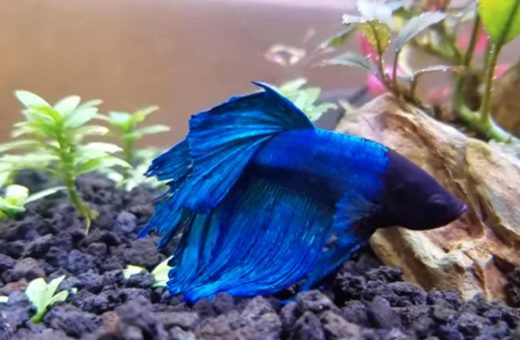
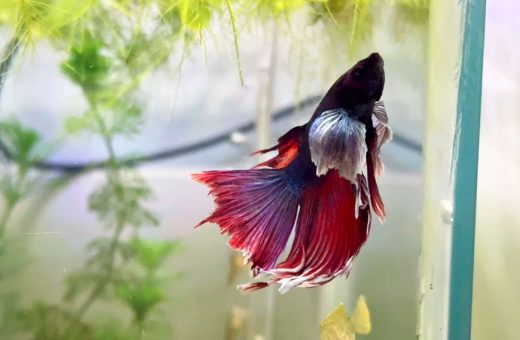
A betta fish ich treatment uses the same life cycle principles as the parasite life cycle for other freshwater fish; however, the tank size and swimming requirements of the betta need to be considered. Ensure the temperature remains constant and tropical and oxygen exchange is sufficient without causing the fish to become fatigued from the current.
Since small tanks for bettas are especially easy to overdose with medications because of decorations and substrate that reduce the actual water volume, ensure you use the correct amount and continue the treatment process past the disappearance of the dots on your fish.
Marine Fish Ich Treatment
Ich in marine fishes is not freshwater ich that happens to be in saltwater. Instead, this condition is caused by a totally different parasite that has a much longer and varied life cycle. This means that treatment of marine ich normally involves having a separate aquarium and a well-planned approach.
All the marine fish are normally withdrawn from the display and are subjected to some treatment, which may involve monitored use of copper, chloroquine, tank transferring, or salinity treatment. Use of copper is never supposed to be done directly in a display tank where corals, shrimps, snails, and other invertebrates live. Hyposalinity is also not recommended for some kinds of fishes as well.
Treatment of marine ich normally involves weeks, not days. There are situations where treatment lasts for three to six weeks, and in this case, the display aquarium needs to be without any fish for a longer period of time. The fish-free display aquarium makes sure that the new parasites do not find hosts and complete their life cycles.
Common Treatment Mistakes
Stopping after the spots disappear
This is the most popular scenario for why fish ich treatment works and then stops working. In that case, the absence of the spots indicates the reproduction of parasites rather than their death.
Use of multiple medications at once
Combining different medications can be very harmful for the fish’s gills, can reduce oxygen content, negatively impact the biofilter, or result in dangerous chemical reactions. Select one right treatment method and use it properly.
Treatment of only one fish
Ich is an aquarium-wide disease after fish have been in the same water tank. Healthy-looking tank mates may also be sick without having any spots.
Increasing water temperature rapidly
Fast temperature changes cause stress and can push some species of fish outside the comfort zone. Temperature change must be slow and small.
Without considering ammonia and oxygen
The medication will not help when there is toxic water and/or insufficient oxygen in the tank. Difficulty in breathing can be due to the presence of gill parasites and poor water quality.
Moving equipment contaminated with parasites
A wet net or siphon may bring the infective material to other fish tanks. You need to use different equipment in quarantine and treatment tanks or clean and dry your equipment between tanks.
Recovery and Prevention
It is possible that your fish will still be weak even when the spots disappear. Observe the appetite, breathing, health, fin placement, and water quality. The damaged skin and gills make it possible for the fish to get infected with bacteria.
To prevent an outbreak in the future:
- Quarantine new freshwater fish for 30 days or more.
- Use different nets and siphons in the quarantine tanks.
- Don’t use water from transport bags in your display.
- Disinfect old tanks and décor.
- Stock appropriately.
- Maintain stable water conditions and temperatures.
- Remove dead fish immediately.
- Observe the new fish for any sign of disease.
The most helpful prevention practice is to avoid giving medications “just in case.” It is making the acclimation process slower in order for parasites to show themselves before becoming an integral part of the existing aquarium.
Quick answers
Frequently asked questions
Are fish capable of getting cured of ich?
Yes, they can, if treatment was started early enough, water conditions are kept optimal, and all stages of the parasite life cycle are treated. Secondary infections or serious gill injuries may decrease the chances for a cure.
How long is the Ich fish treatment period?
It may take several days up to a few weeks in the case of freshwater treatment and several weeks for marine one.
Does the disappearance of white spots indicate that ich is gone?
No, it may be only the beginning of the formation of reproductive cysts by the parasites outside the fish.
Will I survive in an aquarium without fish?
Ich in freshwaters will require fish for its life cycle to occur, but protected life stages can exist in the environment for a specific period depending on the temperature. Marine Ich can live away from the host for much longer periods.
Is every fish in the tank needed to be treated?
All exposed fish must be included in the management strategy since the infection may be present even if there are no apparent signs of infection.
Can ich in the aquarium be treated with salt?
Salt will control the ich in the right system at an effective dose, but it is toxic to some fish species, plants, and invertebrates. It will not always work in the case of marine ich infections.
Is ich contagious in bettas?
Yes, an infected betta fish can infect other freshwater fish via the water or tank items.
When should I seek professional assistance?
Professional help will be needed when the fish are struggling, dying, not responding to any treatments, or when the symptoms are not those associated with ick.

About the author
Daniel Reed
I'm Daniel Reed, a specialist in aquariums, and I write about fish health. I have accumulated experience over the last seven years learning about the connections between different conditions in aquariums, the behavior of various fish species, and the diseases they are subject to. At Stardexa, I make sure fish lovers know how to spot warning signs before it is too late, as well as what might be troubling their fish and what they need to do to help them with their condition. I write many articles on the topics of ich, fin rot, parasites, stress, fungi, unhealthy water conditions, quarantine, etc. My aim is to help aquarists learn how to make better observations and avoid wrong treatments.
Reader Fishkeeping Feedback
Comments, questions, and aquarium reviews
Share your aquarium experience, ask a fish care question, or write a helpful note about tank setup, water quality, filters, algae control, or maintenance for other readers.
No aquarium reviews yet. Be the first to share a helpful review on content or fishkeeping question, setup tip, or care experience.