
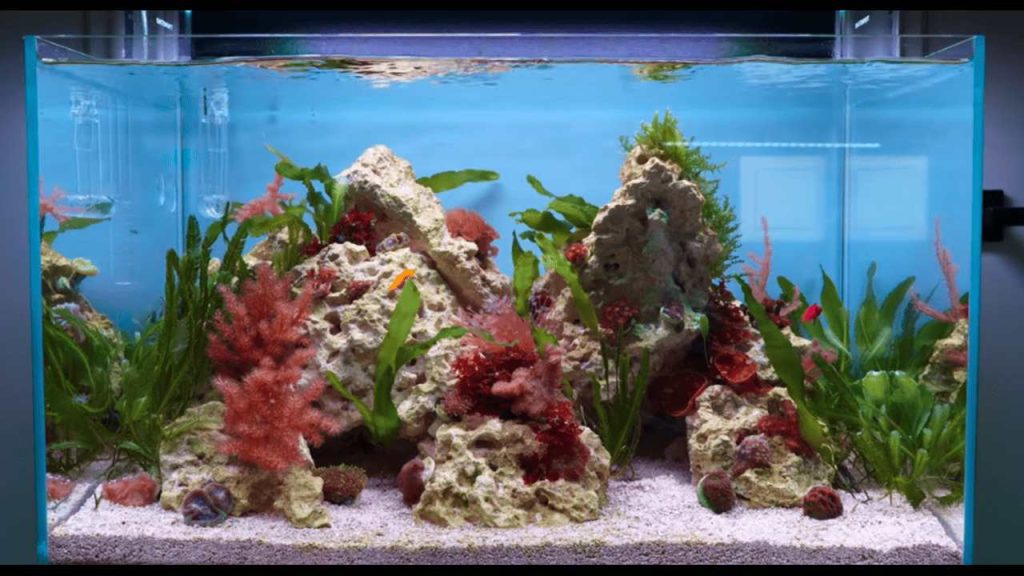
Tropical Fish Aquarium Complete Guide
To start an aquarium with tropical fish, the right size should be chosen, a filter and a heater added, the water treated, the aquarium cycled, and then the fish added.
The main rule is simple to memorize: you install the aquarium first and then buy your fish.
An aquarium might be clean; however, the presence of clear water does not guarantee that it is ready for fish. You must have healthy bacteria in your filter that would help you neutralize the ammonia and nitrites from the water in the process of breaking down the waste of your fish.
Why Starting a Tropical Fish Aquarium Requires Planning
A tropical fish aquarium is much more than just a tank of water. This is a tiny ecosystem in which tropical fish require clean water, appropriate temperature, enough space, safe tank mates, oxygen, and proper care.
The most common mistake of beginners is purchasing fish without a plan and only because they like how it looks.
The above-listed sequence of actions should be followed when establishing an aquarium:
- Choosing the fish you would like to have.
- Choosing the proper tank for these fish.
- Setting up the aquarium equipment.
- Cycling the aquarium.
- Introducing the fish gradually.
- Maintaining proper water quality.
Following this easy procedure will help you avoid many common problems of aquarium keeping. They include stress, poor water quality, disease, overpopulation, and fish compatibility issues.
Larger tanks tend to be easier to maintain by novice aquarists because water parameters change much slower there than in smaller aquariums.
Choose the Right Tropical Aquarium Setup
But before purchasing an aquarium, one should consider the type of aquarium he/she wants to build. A peaceful community aquarium will be perfect for a beginner aquarist, as it will give an opportunity to learn about water management, feeding, maintenance, and fish behavior.
Choose Your Fish Before Choosing Your Tank
Do not buy any fish based on their looks in the shop. Every type of fish has its requirements, and there are many species of fish that require more attention and space than one might think at first glance.
Before purchasing any fish, you should consider the following:
- Size as an adult
- Required temperature
- Requirements about water pH and hardness
- Temperament
- Type of swimming
- Requirement to keep fish in groups
- Required size of the tank
- Compatibility with other species
There are certain fish types that have to be kept in groups, and some of them will be territorial when they mature. The same applies to aggression – the calm fish in the shop is not necessarily going to be docile in your tank. Always pick compatible fish species.
Pick a Safe Location
Find a safe place for the aquarium before filling it with water. The filled aquarium will be very heavy; therefore, it needs a solid and level base. Do not put your aquarium next to any sources of light, heat, noise, or vibrations.
Exposure to direct light will increase water temperatures and lead to excessive algae growth. Heat sources and air drafts can also lead to rapid fluctuations in water temperature. Provide enough space around and behind the aquarium for installation of filters, pipes, cables, cleaning, and water replacement.
Essential Equipment for a Beginner Tropical Fish Aquarium
A healthy tropical aquarium requires proper equipment from the very start. Proper equipment will maintain the quality of the water in the tank and simplify fishkeeping.
Tropical Aquarium Equipment Checklist
| Equipment | Why You Need It |
| Aquarium with cover | Provides sufficient room for fish to swim around in and prevents fish from jumping out. |
| Stand or cabinet | Strong enough to hold the weight of the aquarium. |
| Filter | Keeps water moving and waste removed while ensuring that good bacteria develop. |
| Adjustable heater | Maintains water at the correct temperature for tropical fish. |
| Thermometer | Helps ensure the safety of the temperature of the water. |
| Lighting and timer | Creates day/night cycle for the fish and plants. |
| Water conditioner | Treats tap water, making it safe by removing any chemicals such as chlorine. |
| Test kit | Makes it easy for you to test the levels of ammonia, nitrite, nitrate, and other water conditions. |
| Substrate | Serves as the base for planting and decor and helps to maintain good bacteria in the tank. |
| Gravel vacuum or siphon | Removes waste on the bottom of the tank during water change. |
| Aquarium only bucket | Prevents any soap, chemicals, and cleaning agents from getting into the aquarium. |
| Fish Net | Helps when moving the fish. |
| Décor, caves, and plants | Provide shelter and a resting place for fish. |
A filter is an essential element of a tropical aquarium. In addition to removing visible debris from the water, the filter provides a surface where helpful bacteria thrive.
The bacteria convert toxic fish waste products into less harmful substances. Without proper biological filtration, the fish can get stressed or sick.
How to Set Up a Tropical Fish Aquarium Step by Step
Step 1: Clean the Tank and Add Substrate
Clean the tank by rinsing it under running water. No soap, chemicals, detergents, cleaning products, or sprays should be used to rinse the tank. Gravel, sand, rocks, and other decorations must be rinsed under water till they get clearer and free from dust and debris.
Fill the tank with substrate first and then decorate it with rocks, caves, driftwood, plants, and other decorations. Make sure that all the decorations and accessories are safe for the aquarium and do not harm the fish with sharp edges.
Step 2: Install the Filter, Heater, and Thermometer
Place the filter in the aquarium according to the manufacturer’s instructions. The filter must ensure proper circulation of water in the tank. The heater should be located in a way that will help to distribute warmth across the aquarium evenly and avoid cold and warm spots.
It is recommended to use a thermostatic heater and a separate thermometer. The heater maintains water temperature while the thermometer ensures that temperature is stable. Temperature needs vary from one tropical fish species to another, so you must select a temperature suitable for the species.
Step 3: Fill the Aquarium and Treat the Water
Filling the tank should be done gradually to minimize disturbance of the aquarium bottom and decorations. Before introducing fish, the water should be treated with a good aquarium water conditioner. Tap water can contain chlorine or chloramines, which can hurt fish and useful bacteria.
The water conditioner should be used each time when new tap water is added in the course of future water changes.
Step 4: Run the Equipment and Check for Stability
The filter, the heater, the thermometer, and the aquarium light should be turned on. The tank must run during this time while you make sure that everything works fine.
The following items have to be checked:
- The filter runs properly.
- The temperature of the water is stable.
- There are no leaks.
- The heater works normally.
- Decorations are fixed properly.
- Electrical cords are arranged safely.
- The aquarium stands levelly on the stand.
Drip loops should be made on electrical cords. A drip loop is the lowest point of the cord beneath the socket, which prevents water from entering the plug or power outlet.
Step 5: Cycle the Aquarium Before Adding Fish
The cycling process is the first essential procedure for any tropical fish aquarium. Both the waste from fish and leftover food result in the formation of ammonia. Even trace amounts of ammonia are poisonous for the health of the fishes. Under normal conditions, useful bacteria convert the ammonia into nitrite and further into nitrate.
However, a fresh aquarium lacks useful bacteria and therefore requires the cycling process prior to the introduction of fishes. For the inexperienced, fishless cycling is always preferred because this procedure implies creating useful bacteria in the aquarium while there are no fishes in the water.
Use either an aquarium cycling kit or any ammonia source for fishless cycling.
Your aquarium is fully cycled when:
- The ammonia level is 0 ppm.
- Nitrite level is 0 ppm.
- Temperature is stable.
- The pH level is stable.
- Nitrate is present but under control.
Never cycle the tank solely on the basis of the time passed. Different fish tanks cycle at different rates. Trust the results of the water tests more than the calendar.
Step 6: Add Fish Slowly
After cycling your aquarium, only put a few fish into it. Fish will release wastes. If you introduce too many fish, there will be extra waste. This will overload the filter, thus resulting in ammonia and nitrite surges.
You should introduce fish gradually to enable the useful bacteria in the filter time to adjust to the situation.
Here are simple procedures for introducing fish at home:
- Turn off the aquarium lights.
- Float the fish in the bag in the aquarium for some minutes.
- Slowly add some aquarium water into the bag.
- Use the net to transfer fish into the aquarium.
- Avoid putting the shop water in your aquarium.
- Keep the lights turned off for the remainder of the day.
It will reduce stress and allow fish to adjust to the new environment.
How to Choose Beginner Tropical Aquarium Fish
Not all the tough tropical fish are the best for beginners. The best tropical fish depend on the conditions of your tank, experience level, and plans.
Before purchasing any fish, consider this easy guide.
1. Match Water Requirements
Select the fish that will require the same water conditions. The fish selected must have the same requirements for the temperature, water pH, and water hardness.
Try not to select fish that will require totally different water conditions. This can cause instability due to constant alteration of the water conditions.
Constant water conditions are better than constant change of the water in order to achieve the ideal number.
2. Think About Adult Size, Not Shop Size
The fish you will be able to purchase from aquariums are most often young. They are small at the moment, but some of them can get very large later on.
Research the size of the fish you want when it reaches adulthood.
Do not base your choice of the fish on its size while you are in the aquarium.
3. Respect Social Needs
Some types of fish should be kept in shoals. If you keep schooling fish separately or in very small numbers, it will cause stress to them.
Some fish enjoy being alone and can get aggressive if the aquarium is overcrowded.
Do not pick any fish randomly. Make your community aquarium using those fish that have the same social habits and docile nature.
4. Choose Healthy Fish
Whenever possible, purchase fish from a good and hygienic aquarium store. Select only those fish that are lively and swim normally. Do not select fish that look ill and stressed.
You should not select fish that have:
- Torn or injured fins
- Diseased eyes
- White patches
- Open wounds
- Difficulty in breathing
- Irregular swimming
- Thin body shape
Never select fish from tanks where other fish appear ill.
The Simple Maintenance Routine for a Healthy Tropical Aquarium
Establishing an aquarium for tropical fishes is just the beginning. The key lies in maintenance. An easy-to-do schedule allows you to maintain clean water, healthy fish, and overall stability of the aquarium environment.
Daily Aquarium Care
- Daily maintenance of an aquarium involves:
- Checking the filtration system operation.
- The monitoring of the temperature of the water.
- Observation of fish for any changes in their behavior.
- Finding out whether there are any damaged fins, rapid breathing, or hiding.
- Feeding the fish small portions of food.
- Collecting leftovers if required.
Overfeeding is one of the main issues among beginners in the aquarium business. The excessive feeding results in decomposition of the remains of the food and produces more waste. This leads to the development of such dangerous compounds as ammonia, nitrites, nitrates, and algae in the water.
Weekly Aquarium Care
Perform weekly aquarium maintenance. The following steps need to be taken:
- Testing the levels of ammonia, nitrite, nitrate, and pH.
- Partial water change.
- Vacuuming the bottom of the aquarium with the help of a siphon.
- Cleaning the algae off the front glass.
- Filter flow test.
- Conditioned water needs to be added.
Never forget to match water temperatures. Rapid changes are harmful to fish. The ammonia and nitrite levels must always be kept at zero. Water testing will allow detecting potential problems beforehand.
Monthly Aquarium Care
Every month you will have to perform aquarium equipment checks. The following actions need to be taken:
- Checking the heater.
- Checking the thermometer.
- Inspecting filter tubing.
- Inspecting the seals and connections.
- Cleaning filter impellers.
- Checking if cables are dry and safe.
- Rinsing filter sponges in aquarium water.
Never rinse the filter material under tap water, as it contains harmful elements (chlorine or chloramine), which can destroy bacteria necessary for aquarium health.
Common Mistakes When Starting a Tropical Fish Aquarium
Adding Fish on the Same Day
If an aquarium is filled recently will have fresh water; it cannot accommodate any fish immediately because the bacterial colony has not formed in the filter. Adding the fish too soon into such conditions can be risky because of the presence of dangerous levels of ammonia and nitrite. Therefore, cycling an aquarium should always precede adding fish.
Overstocking the Aquarium
Having too many fish increases the amount of waste generated. This affects the efficiency of the filtration system. Fish should be added gradually, and the future adult size of fish should be taken into account.
Overfeeding
Fish require a very small amount of food, and excessive feeding can turn the aquarium water murky. Overfeeding results in the production of uneaten food, which can further lead to high ammonia levels, high nitrates, murky water, algae growth, and bad smells. Feeding fish should be done with caution.
Replacing All Filter Media at Once
There are certain beneficial bacteria living in the filter. Replacement of all filters at once may result in the removal of this bacterial colony. It will upset the natural biological balance of the aquarium. When cleaning filter media, one must use the old water from the aquarium.
Mixing Fish Without Research
All tropical fish species do not co-exist. There are some fish species that might fight, chase each other, eat small fish, or have entirely different water requirements. When selecting a fish for purchase, consider the size, behavior, social requirements, water requirements, and compatibility with other existing fish.
Ignoring Water Tests Because the Water Looks Clear
Sometimes, clear water may have dangerous levels of ammonia and nitrite. You may not be able to detect the dangers by just looking at the water. It is important to test the water, because appearance does not always tell you about any problems with the water.
Chasing pH With Constant Chemicals
It is common practice for beginners to change the pH of their water very frequently. This makes water conditions very unstable. Fish are normally more comfortable living in stable water rather than changing water every couple of days.
What to Do If Ammonia or Nitrite Is Above Zero
The presence of ammonia or nitrite in the aquarium indicates that it is not able to remove waste products from the water. The reasons may be the newly installed aquarium, the addition of too many fish, overfeeding, or malfunctioning of the filter.
What to do:
- Stop adding fish.
- Re-test the water to double-check the results.
- Change some of the water with the use of conditioned water, which matches the temperature of the tank water.
- Limit feeding for a few days.
- Check the filter to ensure its proper operation.
- Do not change the filter media completely.
- Test the water daily.
- Consult an expert on aquariums or an aquatic veterinarian if fish exhibit signs of distress.
The appearance of ammonia and nitrite may cause fish to get distressed. Immediate actions will help save fish and prevent the situation from worsening.
Starting a Tropical Fish Aquarium: A Practical Timeline
Day 1: Build the Aquarium
Tank setup should be done, the substrate added, the decorations put in, the filter, heater, thermometer, light fixture, and the treated water. It is vital to check everything works well and is stable.
Days 2–7: Check Equipment and Begin Cycling
The heater should maintain water stability; the filter operates normally. Begin the fishless cycling and water testing on a regular basis.
Weeks 2 and Beyond: Wait for Measurable Stability
Cycling should continue until there is an increase in the level of ammonia and nitrite followed by their decrease to zero. Do not add fish into the tank after some number of days because each tank cycles at its own pace.
After the Aquarium Is Cycled: Add a Small First Group
When ammonia and nitrite are zero, it is time to add a few compatible fish. They should be acclimated slowly while the water quality should be tested frequently within several weeks.
Following Weeks: Stock Slowly and Maintain Consistency
Fish should be added step-by-step, not all at once. Feedings should be done carefully; water should be tested, partly changed, and observed. Consistency is one of the most important factors of keeping fish successfully.
Quick answers
Frequently asked questions
What things should beginners know about setting up a tropical fish tank?
Beginners should know that a tropical fish tank must be prepared before adding fish to it. They will need a filter, heater, water conditioner, testing kit, and a cycled aquarium. Fish must always be added gradually, and water tests need to be done regularly and water changes made.
How long should I wait before adding fish to a newly set up tropical fish tank?
You need to wait until the tank goes through the cycling process. It is difficult to say how many days you have to wait because this may vary from tank to tank. Therefore, your tank is ready when the tests show no ammonia and nitrites in the water.
What would be a perfect tropical fish tank for beginners?
The best tropical fish tank for beginners consists of the following things: an appropriate aquarium, an efficient filter, a heater, a thermometer, water conditioner, a water test kit, decorations, and proper fish.
Should I have a heater for my tropical fish aquarium?
Yes, tropical fish require warm water with stable conditions. It is recommended to use a thermostatic heater and thermometer for maintaining the correct temperature of the water.
Can I add tropical fish into the tank the very same day when I've established an aquarium?
No, an aquarium requires a cycling period before adding any fish to it. Otherwise, the fish could be harmed by ammonia and nitrite that appear during the cycling process.
Which water tests should I do for my beginner aquarium?
The most crucial tests would be for ammonia, nitrite, nitrate, and pH. Sometimes water hardness and alkalinity will also need to be tested, but that depends on your fish and tap water.
How frequently should I replace water in my tropical fish tank?
Tropical fish tanks generally require partial water replacement regularly, usually on a weekly basis. The frequency will vary depending on the size of your tank, number of fish, nitrate concentration, feeding schedule, etc.
Why is my aquarium water turbid even after setting up?
There may be many causes for clouding of water, including gravel disturbance, bacterial blooms, excess food, or a new filter. Test the water and ensure that you don't overfeed your fish, don't introduce any new fish, and allow the filter to stabilize.
Are all beginner tropical aquarium fishes compatible with each other?
Yes, there are beginner tropical fish that can coexist in an aquarium; however, only under the condition of having similar water parameters, adult size, behavior, and social requirements.

About the author
Chloe Adams
I'm Chloe Adams, a beginner aquarium expert and writer for Stardexa with more than 11 years of experience in the field of fishkeeping. As many beginners find aquariums hard to comprehend, I've kept learning, practicing, and sharing all the basic information from choosing the right aquarium to cycling it, filtering it, feeding the fish, and taking care of water quality as well as maintaining it regularly. My aim is to ensure each novice fishkeeper knows how to turn his/her aquarium into a pleasant and healthy habitat for fish.
Reader Fishkeeping Feedback
Comments, questions, and aquarium reviews
Share your aquarium experience, ask a fish care question, or write a helpful note about tank setup, water quality, filters, algae control, or maintenance for other readers.
No aquarium reviews yet. Be the first to share a helpful review on content or fishkeeping question, setup tip, or care experience.