
What Are the Best Aquarium Fish for Beginners?
Good choices for a first-time aquarium would include freshwater fish, which are peaceful, tolerant, easy to feed, and appropriate for a filtered and cycled aquarium.
Some of the best fish for beginner tanks are the following:
- PlatiesGuppies
- Small tetras
- Zebra danios
- Corydoras catfish
- Betta fish
- White cloud mountain minnows
- Honey gouramis
Nevertheless, there is no such fish that would fit any aquarium perfectly. Your tank size, room temperature, water characteristics, and even your desire to have a single showpiece fish or an array of bright ones would be considered in choosing the proper species.
Thus, for instance, bettas can be successfully kept in small planted tanks, while tetras and danios require company, guppies and platies are colorful and available but tend to breed very fast, and corydoras are peaceful bottom-dwellers but require some space and cannot be kept alone.
The main thing to keep in mind is that even the hardiest of fish require a filtered and cycled tank.
Best Beginner Aquarium Fish at a Glance
| Fish | Best For | Recommended Tank Size | Social Needs | Difficulty Level | Important Note |
| Platies | Colourful beginner community tanks | 45 litres / 12 gallons+ | Keep in small groups | Easy | Can breed quickly |
| Guppies | Bright and active freshwater aquariums | 45 litres / 12 gallons+ | Keep in groups | Easy | Prefer stable, moderately hard water |
| Small tetras | Peaceful planted tanks | 45 litres / 12 gallons+ | Keep at least 5 | Easy to moderate | Need stable water conditions |
| Zebra danios | Active cooler or tropical tanks | 60 to 75 litres+ | Keep at least 5 | Easy | Need good swimming space |
| Corydoras catfish | Bottom-dwelling community fish | 80 litres / 21 gallons+ | Keep at least 5 | Easy to moderate | Need smooth substrate |
| Betta fish | A single feature fish tank | 38 litres / 10 gallons+ | Usually kept alone | Easy to moderate | Avoid strong filter current |
| White cloud minnows | Cooler indoor tanks | 45 to 60 litres+ | Keep at least 6 | Easy | Better for stable cooler water |
| Honey gouramis | Calm planted community tanks | 60 litres / 15 gallons+ | Pair or small group | Moderate | Need peaceful tankmates |
What to Consider Before Choosing Aquarium Fish
Always spend some time understanding how much the aquarium can actually accommodate before you go out there to buy any fish. This will help you to avoid most of the mistakes that most people make in the early weeks.
Think About Tank Size First
Most people buy their tanks after they have decided on which fish to buy. You should always decide on which tank to buy before selecting the fish that you would like to accommodate.
Smaller tanks look easy to handle, but they are actually quite difficult to manage. The water conditions in smaller tanks fluctuate more rapidly, and a slight pollution can cause serious changes in water quality.
Larger tanks provide more space for the fish, and usually the water conditions are easily managed. You do not need to have a very large tank, but the largest tank that you can conveniently manage is always preferable.
Check Whether the Fish Needs Company
Many beginner-level fishes are very sociable beings. Species like tetras, danios, Corydoras, guppies, platies, and white cloud minnows feel much better when living together in the company of their peers.
A tetra or Corydoras catfish can live alone, but it will never show its natural behavior in such an environment. Fish that tend to live in schools and shoals have to be kept in proper numbers and sufficient tank sizes.
Match the Fish to Your Water Temperature
The majority of aquarium freshwater fish found in pet shops are tropical ones. They require warm water that needs to be heated and controlled by a thermometer.
Species like guppies, platies, tetras, bettas, Corydoras, and gouramis are all tropical fishes. Their life requires a steady temperature that shouldn’t be too cold for them.
Danios, zebras, and white cloud mountain minnows prefer lower temperatures. However, they require good water quality, filtration, and proper temperature control anyway.
Consider Water Hardness and pH
Although various fish types differ slightly in their requirements, novices should pay more attention to stability than to the ideal value that they should maintain every day.
Guppies and platies tend to feel good in neutral and moderately hard water. Tetras like soft water, whereas bettas require warm and stable water with moderate currents.
It is important to find out whether your tap water or water at local aquarium stores meets the requirements of particular species before buying some fish. Thus, you will find fish that are well-adjusted to the environment.
Check Fish Compatibility
All peaceful fish do not necessarily get along with each other.
For instance, bettas feel distressed around fish that move fast and fin nippers. Although Corydoras are peaceful, they cannot live together with predatory fish. Small tetras are not appropriate to keep with bigger fish since they might consider the latter to be food.
The best way to maintain a community aquarium for beginners is to choose fish that have similar water requirements, adult sizes, and temperaments.
Best Aquarium Fish for Beginners
1. Platies
Platies are one of the most accessible freshwater fish species for beginners. They are very colorful, peaceful, active fish, which can be found in abundance in any aquarium store.
There are lots of variations in terms of coloring – orange, yellow, red, black, blue or any combinations of those colors. Owing to the small size and peaceful behavior, platies are commonly kept by novice aquarists in community tanks.
Platies are easy to feed – they are happy to eat various flakes and pellets as well as frozen and live food. Platies are very active during daytime and usually get along well with other peaceful fish.
To keep platies in a group, an aquarium should be at least 45 liters. Platies are social fish and do not like staying alone.
The main thing that all beginners should know about platies is that they are representatives of live-bearer fish. Under favorable conditions, platies can give birth to their babies very quickly and easily. Of course, this might create a problem of overpopulation.
In general, platies are an excellent choice for those people who are interested in keeping a colorful and lively aquarium.
2. Guppies
Guppies are also one of the best fish for beginners. Guppies are small, colorful, and entertaining fish. Male guppies usually have colorful fins that have hues like blue, red, yellow, orange, and green, thus being popular among novice fish keepers.
They are peaceful fish that go well in a planted aquarium with light water currents. Moreover, guppies will easily consume commercial fish foods, so taking care of them on a daily basis will not be a problem.
Four or five guppies require at least 45 liters of water. Guppies feel comfortable in stable and clean water.
Similarly to platies, guppies are livebearers. It means that if you place both male and female guppies in the same aquarium, you will end up with offspring sooner or later. However, you can have an all-male guppy group in order to prevent reproduction. But again, you should not overcrowd your aquarium.
Therefore, guppies are great choices for beginners wanting to create a colorful freshwater tank.
3. Small Tetras
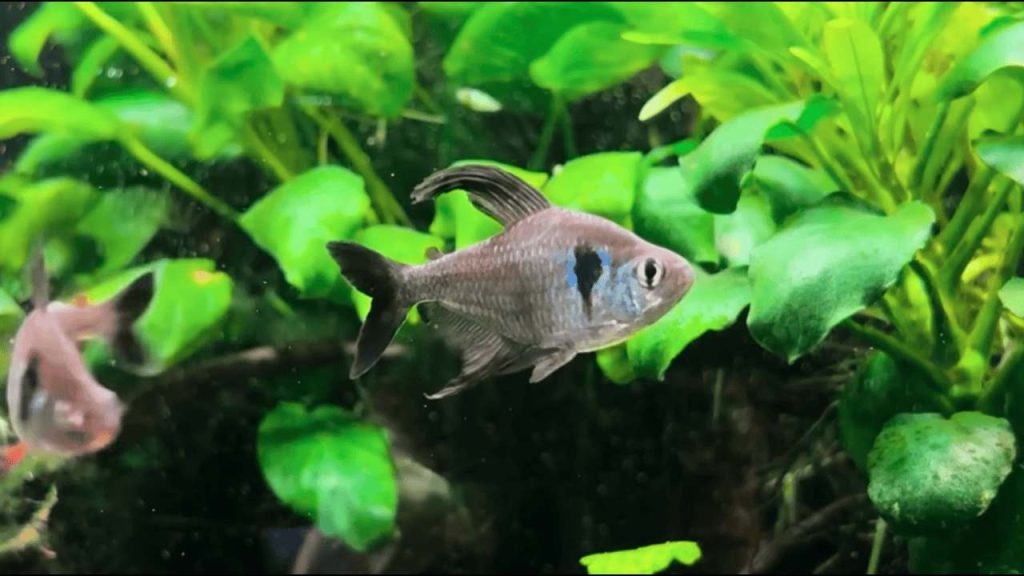
There are many benefits that make small tetras such as neon tetras popular fish to own.
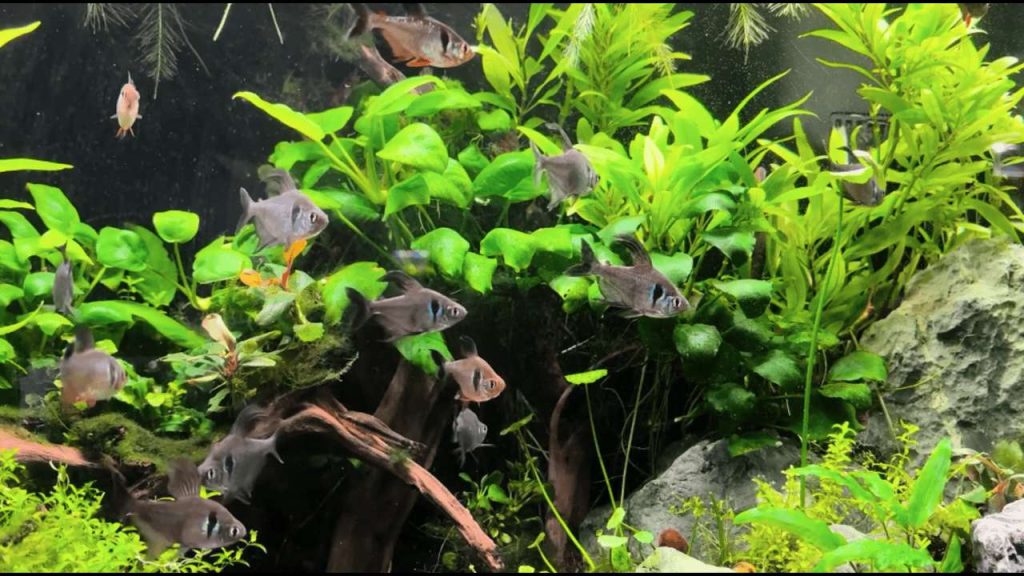
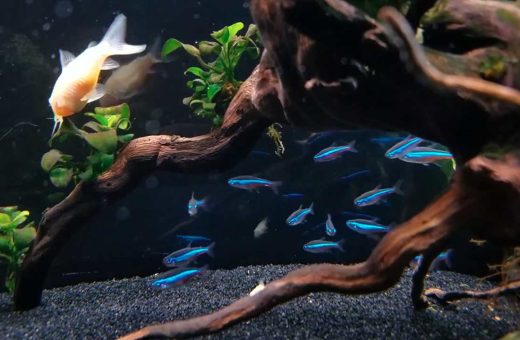
The small tetras including neon tetras and ember tetras as well as those that are similar in size can make great choices for beginning aquarists’ first community aquarium. These small fish will really shine with their colors against the background of green plants, dark gravel, and natural decorations.
Tetras are shoaling fish and need to swim in groups. Keeping one fish by itself is definitely not recommended, and a group of at least five fish would be much more preferable.
A minimum of 45 liters is required for a group of tiny tetras, but a larger aquarium would be even better for them since it will provide more space to swim.
Tetras are fairly easy to take care of; however, they are more sensitive to water parameters than some other beginner fish. So tetras can be only added after cycling the aquarium.
Tetras make great additions to the peaceful planted aquarium.
4. Zebra Danios
Zebra danios are quite lively and energetic fish with distinct stripes on their bodies. Zebra danios are always moving, which makes them rather amusing to watch.
These fish will make great additions to a beginner aquarium if you look for active species. These fish are rather robust and can thrive in a stable environment and even in water slightly colder than most tropical fish.
The number of zebra danios in the aquarium needs to be at least five fish. These fish require living in schools and enough space for swimming, so the aquarium needs to be rather long but not high and narrow.
For zebra danios, a 60 to 75 liter aquarium will be sufficient. Zebra danios love to swim in the open water, have some plants and places to hide, and moderate water currents.
As these fish are rather fast swimmers, they can be unsuitable for slow-moving fish with long fins. These fish tend to stress the calm species.
They will be an excellent addition to a beginner aquarium of someone who prefers active fish.
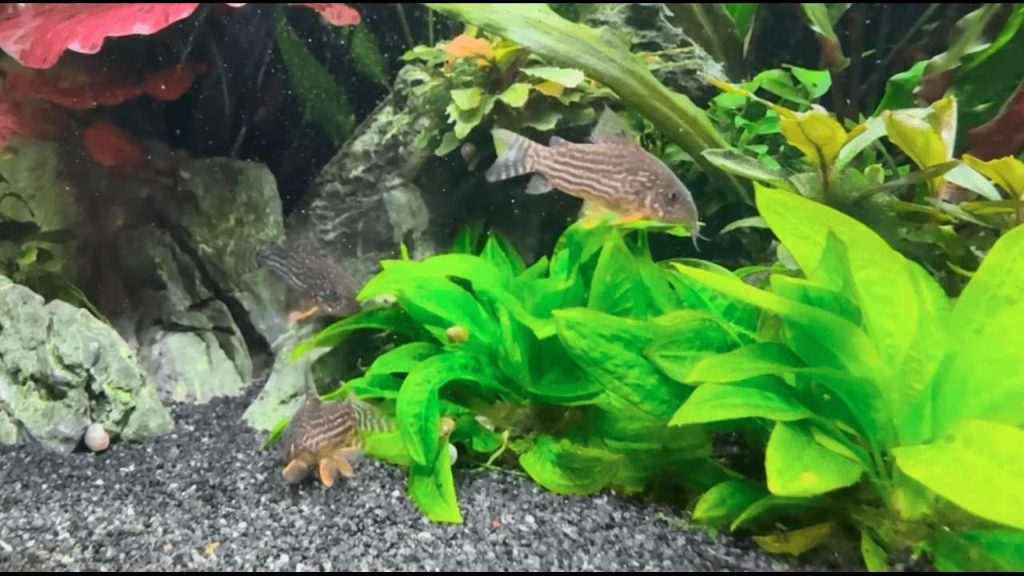
5. Corydoras Catfish
Corydoras catfish are docile bottom dwellers appreciated for their peaceful attitude and playfulness.
Being constantly busy exploring the bottom of the aquarium, searching for food, and forming schools is their normal behavior that may be quite amusing to watch in a well-stocked community tank.
However, calling them the “clean-up” fish may be a misnomer. They do not feed exclusively on leftovers. It is crucial for their survival to maintain the correct diet consisting of pellets, wafers, and frozen foods.
A school of Corydoras requires a relatively large aquarium (starting from 80 liters). The reason is that they need to live in groups of at least five fish, as they are social species.
It is important to pay attention to the substrate, as the rough gravel may hurt their sensitive barbels. Sand or smooth gravel will be a preferable choice.
Corydoras are among the most appropriate fish for beginners who want to have a peaceful community aquarium with such species as tetras, guppies, platies, and others.
6. Betta Fish
These fish have bright colors, beautiful fins, and great characters. Betta fish are often advised for novice fishkeepers since one betta can be enough to create an aquarium’s center.
The bettas are often improperly kept. It is necessary to remember that betta fish cannot be kept in bowls, vases, or any small vessels without filtration and heating.
For the betta, it is needed to provide a tank of at least 38 liters, a heater, a filter, a thermometer, and water testing. The bettas love the warm temperature and weak filtration since the currents in the water may complicate the swimming process.
Bettas are usually kept singly because of the male’s aggressiveness to other males and dislike of fish with long and colored fins.
The best conditions for keeping the bettas are in the planted tank with smooth ornaments, places for rest near the surface, and a weak current.
It can be said that the bettas are a good choice for novice fishkeepers who want to keep only one colorful fish.
7. White Cloud Mountain Minnows
White Cloud Mountain minnows are peaceful fish that would thrive in cool tanks inside.
This species is ideal for people who want a cool and easy-to-maintain fish without maintaining a hot aquarium throughout the year. The colours may not be as vibrant as those of guppies and tetras, but they are definitely nice-looking fish.
The white cloud minnows are schooling fish and must be kept in groups of six or more. They are active swimmers and like planted aquariums with plenty of space to swim around in.
An aquarium between 45 to 60 litres would be a good start for the first few minnows. The filtration system is required along with frequent water changes, despite being tolerant of cooler water temperatures.
This fish is suitable for houses having moderate room temperature and people who want an easy-to-care for freshwater aquarium.
8. Honey Gouramis
The honey gourami is a peaceful and pretty fish that can be great in a peaceful community aquarium. This fish is smaller and calmer compared to other species of gouramis and can suit beginners perfectly.
These fish have bright yellow, orange, and honey coloration that makes them really beautiful to observe in planted aquariums.
It is better to keep honey gouramis in quiet tanks with plenty of vegetation, cover, and filtering. These fish cannot get along with aggressive tankmates and too active fish.
A 60-liter aquarium is quite a reasonable volume for a tank. Honey gouramis can be kept as a pair or as a part of a carefully thought-out peaceful community aquarium.
The honey gouramis can be chosen by beginners as a more sophisticated alternative to guppies, tetras, or platies.
Best Beginner Fish by Tank Size
1. Best Fish for a 38 to 45-Litre Aquarium
In case of a smaller tank, it is important to choose the right stock very carefully. This does not mean that one should place all possible species in a tank just because they look small.
For example, suitable fish could be:
- One betta
- Several guppies
- Several platies
- School of tiny tetras (depending on the species)
- White Cloud Mountain Minnows
What is really important is to choose one option but not several ones in order to keep several kinds of fish in a small aquarium.
For instance, the tank for betta should contain only betta; the tank for guppies should contain only a small group of guppies. One should not keep bettas, tetras, guppies, platies, and bottom-feeders in a small tank.
2. Best Fish for a 60 to 75-Litre Aquarium
With such dimensions, there is plenty of room for manoeuvre, and it will be much easier to build up a harmonious community aquarium for beginners.
Some of the possible combinations are:
- Small shoal of tetras + honey gourami
- A shoal of zebra danios with peaceful tankmates
- Guppies + several peaceful bottom feeders
- Platies + small shoal of peaceful fish
- White cloud minnows in cooler planted aquarium
Even with this dimension of aquarium, one needs to continue being reasonable with stocking; more room does not mean that you have to fill it up.
3. Best Fish for an 80-Litre Aquarium or Larger
An aquarium of 80 litres is an excellent choice for a beginner, as it provides more space to the fish, and the condition of the water becomes more stable.
It can accommodate setups like:
- School of tetras with Corydoras
- Platies with Corydoras in a planted community setup
- Honey gouramis pair with some other peaceful fishes
- More numbers of zebra danios
- Community aquarium setup with compatible fishes
The larger volume of the aquarium would be helpful in maintaining the schooling fish in a proper group, which is necessary for the health of the fish.
How to Set Up a Beginner Aquarium
The best aquarium fish for beginners also require proper habitat conditions. Proper water and stable conditions are much more important than expensive decoration.
Choosing the Aquarium Before Choosing the Fish
If possible, try buying an aquarium with the maximum capacity that you could afford in accordance with the area available to you. The larger size of an aquarium is always preferable because its maintenance is always simpler due to slow changes in water parameters.
An aquarium of a smaller size will also be enough, but it will require constant maintenance.
Basic Aquarium Equipment
For most freshwater aquariums for beginners, the following things are needed:
- A suitable aquarium filter
- Heater for tropical fish
- Thermometer
- Water conditioner
- Ammonia, nitrite, nitrate, and pH tester
- Gravel vacuum or siphon
- Safe substrate
- Fish food
- Plants, stones, wood, or shelters
You should not buy everything immediately, but these basics are very helpful when keeping the fish.
Condition the Water
Tap water usually has chlorine or chloramine in it, which is harmful to fish and good bacteria. It is very important to use aquarium water conditioner whenever you add tap water into the aquarium.
This is an important step for everyone.
Cycle the aquarium before adding fish
Cycling is the most important part of the aquarium setup process.
An already cycled aquarium has good bacteria that decompose the fish waste products. Otherwise, the water would have harmful levels of ammonia and nitrite, which are fatal to fish.
Do not be in a hurry. An aquarium needs to be cycled properly before any fish is added. Make sure the levels of ammonia and nitrite are safe.
It is also important to add fish gradually after the aquarium has been cycled.
Beginner Aquarium Maintenance Tips
An aquarium in perfect condition will require no daily effort, but it requires constant attention.
Daily Tasks
Spend a few minutes a day observing your fish and equipment.
Check on the normal activity of your fish, its healthy appetite, clear eyes, good state of its fins, and absence of any strange marks or wounds.
In addition, make sure that your filter works well and that the heater is functioning properly.
Provide food only in small quantities. Overfeeding is more dangerous than underfeeding.
Food leftovers lead to quick contamination of water.
Weekly Tasks
Test the water and change it partially each week.
Changing the water partially is necessary for removing waste and regulating the level of nitrates in the tank. At the same time, use a gravel vacuum to clean the substrate.
You should also clean algae from the glass and observe your fish for any symptoms of disease.
Monthly Tasks
Every month, perform an inspection of your aquarium equipment.
Make sure the filter, heater, hoses, thermometer, and lighting are working properly. Prune the plants, remove the dead leaves, and check if your aquarium isn’t getting too crowded.
While changing the media in the filter, wash it using old aquarium water instead of tap water. Doing so will keep beneficial bacteria alive.
Common Beginner Aquarium Mistakes to Avoid
Adding Fish Too Soon
A common mistake that many beginners make is filling up a new aquarium with fish before cycling the tank.
Clean water doesn’t necessarily mean safe water. There might still be dangerous levels of ammonia and nitrites in the water.
Always cycle your aquarium and test the water before adding any fish to the aquarium.
Overstocking the Tank
One might think that it is good to fill the tank with many fish, especially if they are colorful in the store. Overcrowding will result in stress, bad water conditions, diseases, and additional care.
Do not follow basic recommendations like one inch of fish per one gallon. Different species vary by their body forms, activity, food requirements, and sociability.
Find out everything about your new pet before purchasing it.
Buying Fish That Will Outgrow the Aquarium
There are some fish that do not seem to be big when they are in stores but get too large when they are adults.
Some Common examples are:
- Common goldfish
- Big plecos
- Oscar cichlids
- Arowanas
- Big catfish
- Aggressive cichlids
It means that they may not be very good for a standard beginner’s aquarium.
Always check adult size before buying.
Keeping Schooling Fish Alone
Group fish such as tetras, Corydoras, danios, and white cloud minnows should be kept in groups, as keeping one or two of them alone makes them stressed and withdrawn.
It is always better to have a proper group of one particular kind of fish rather than mixing up individuals from several kinds of fish.
Overfeeding
Overfeeding is one of the quickest ways of developing water quality issues.
Feed only the amount that your fish will finish eating in a couple of minutes, and remove the excess food, if any.
Overfeeding produces a lot of waste, which leads to excess algae growth and ammonia spikes.
Replacing All the Water at Once
Doing a total water change at once might shock the fish because of the sudden changes in temperature and chemical composition of water.
Generally speaking, partial water change is a better choice for maintenance purposes.
Using the Fish as Decoration
Fish are living creatures with many needs, certain behaviors, and longevity.
Before acquiring any fish, make sure you are able to meet all its requirements.
Quick answers
Frequently asked questions
Which is the best beginner fish for an aquarium?
Some good beginner fish are platies, guppies, smaller tetras, zebra danios, Corydoras catfishes, bettas, and white cloud mountain minnows. This will depend on your tank size, tank temperature, and if you require a single fish or community aquarium setup.
What are some tips for beginners starting a fish aquarium?
Some things that a beginner aquarist should know about setting up an aquarium are the fact that apart from water and fish, the aquarium setup requires other important components like a filter, water conditioner, a thermometer, a testing kit, and a cycled biological filter.
Which are some good beginner freshwater aquarium fish?
Some good beginner freshwater aquarium fish include guppies, platies, smaller tetras, zebra danios, white cloud mountain minnows, Corydoras catfish, bettas, and honey gouramis.
How many fish should be kept by a beginner?
Beginners should keep a few fish once their aquarium is cycled. Fish should be added to the tank gradually rather than having all of them in the aquarium at once. The number varies according to the size of the aquarium and the species chosen by the beginner.
Can a betta fish be kept by a beginner?
Yes, a beginner can keep a betta fish provided that he or she maintains a filtered and heated aquarium. The minimum volume of the tank to keep a betta is 38 liters (10 gallons). Bettas are typically solitary and prefer a low flow of water.
Do beginner fish require a filter?
Yes, a filter is one of the most crucial pieces of equipment for an aquarium.
Can I place fish in a new tank right away?
Absolutely not. New tanks need to be cycled before adding any fish into the tank. This is because cycling ensures that bacteria will grow and help eliminate fish waste and keep fish safe from high levels of ammonia and nitrites.
What kind of fish should beginners stay away from?
Fish that should always be avoided by beginners include those that are large, aggressive, grow rapidly, and/or are highly specialized. Examples include goldfish, plecos, oscars, arowanas, discus, and aggressive cichlids.

About the author
Chloe Adams
I'm Chloe Adams, a beginner aquarium expert and writer for Stardexa with more than 11 years of experience in the field of fishkeeping. As many beginners find aquariums hard to comprehend, I've kept learning, practicing, and sharing all the basic information from choosing the right aquarium to cycling it, filtering it, feeding the fish, and taking care of water quality as well as maintaining it regularly. My aim is to ensure each novice fishkeeper knows how to turn his/her aquarium into a pleasant and healthy habitat for fish.
Reader Fishkeeping Feedback
Comments, questions, and aquarium reviews
Share your aquarium experience, ask a fish care question, or write a helpful note about tank setup, water quality, filters, algae control, or maintenance for other readers.
No aquarium reviews yet. Be the first to share a helpful review on content or fishkeeping question, setup tip, or care experience.