
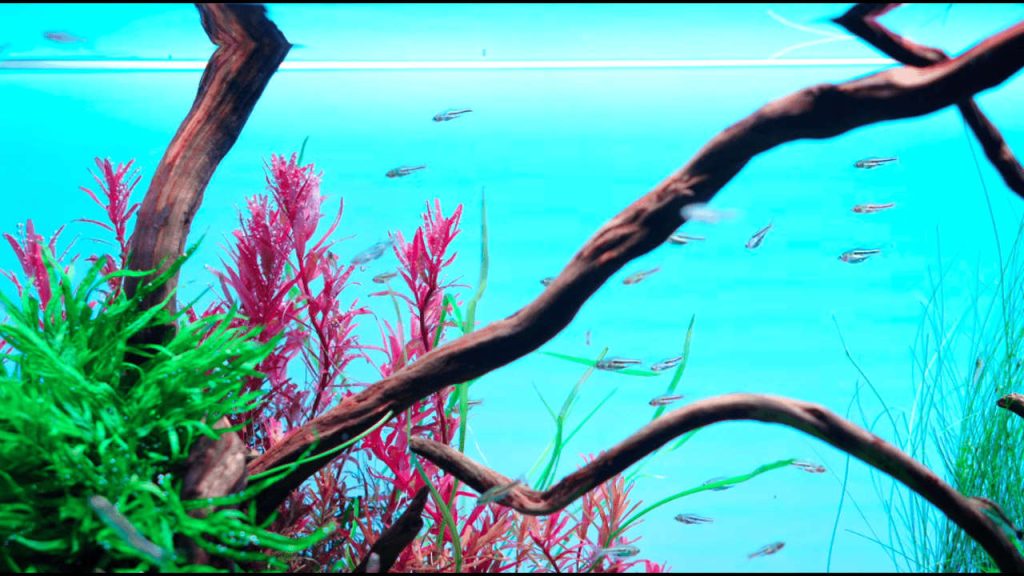
Cold Water Fish Complete Guide
Among the easiest beginner cold-water fish are the white cloud mountain minnows and zebra danios. Small, lively, and easy-to-care-for fish are better choices for beginners than big fish.
Both will thrive in an aquarium with properly cycled water. A tank holding at least 15 to 20 gallons of water is a good size for starters.
Another cold-water fish that is popular among beginners is the goldfish. However, they have higher requirements and therefore may not be the easiest options for starters.
A cold water aquarium doesn’t necessarily mean an aquarium without a heater. The water in the tank has to remain stable. You should provide your fish with clean water, healthy filters, plenty of swimming space, and good tank mates.
Cold Water Aquarium Basics for Beginner Fishkeepers
Cold water aquarium fish are also known as temperate freshwater fish. Cold-water fish can survive in cooler environments than tropical fish; however, they still require consistent conditions.
Temperature in the tank should neither be too low nor fluctuate abruptly. Extreme temperature fluctuations will stress out fish and make them susceptible to disease. Make sure to place your fish tank far away from windows, doors, air conditioning units, radiators, and direct sunlight.
Most cold-water fish can comfortably live in an unheated indoor fish tank. Nonetheless, room temperature must be consistent. In case room temperature falls during winter months, you may want to get a small heating element for your tank. Remember that the purpose of using the heater is not to increase water temperature; it is to prevent abrupt drops.
There are several basic components that any first-time cold water aquarium requires:
- Aquarium of adequate size
- Reliable filtration system
- Water conditioner
- Thermometer
- Test strips
- Gravel/substrate
- Plants, stones, hiding places
- Consistent cleaning process
All in all, there is one main rule to remember—good fish require good water.
Best Cold Water Aquarium Fish for Beginners
Selecting the right kind of fish is among the most crucial decisions that a beginner will make. Do not choose fish simply because they have been tagged as hardy fish. Even hardy fish need clean water, adequate space, compatible tank mates, and adequate feeding.
Beginner fish tend to be peaceful and relatively small fish that can live easily in schools.
| Fish Species | Adult Size | Beginner Suitability | Social Requirement | Temperature Guidance |
| White Cloud Mountain Minnow | Around 1.5 inches | Excellent | Keep in a group of 6 or more | Around 60–72°F / 15–22°C |
| Zebra Danio | Around 2 inches | Excellent | Keep in a group of 5 or more | Around 64–74°F / 18–24°C |
| Leopard Danio | Around 2 inches | Good | Keep in a group | Cool indoor aquarium conditions |
| Rosy Barb or Golden Barb | Larger than minnows | Good for larger tanks | Keep with peaceful schooling fish | Cool indoor aquarium conditions |
| Goldfish | Can grow large | Better for prepared beginners | Depends on the type | Stable cool-water setup |
One of the best cold-water fish for beginners would be the White Cloud Mountain Minnow. They are small-sized, lively, and colorful fish that can live well in a modest aquarium. They must be kept in schools since they are social fish.
Zebra danios would be another good choice for beginners. These are strong swimmers and lively fish that require lots of open spaces for swimming. They must also be kept in schools.
Other examples of cold-water fish may include leopard danios, rosy barbs, golden barbs, hill stream loaches, weather loaches, Amano shrimp, and cherry shrimp.
White Cloud Mountain Minnows for Small Beginner Aquariums
The White Cloud Mountain minnows are some of the easiest fish that one can keep in a cold-water aquarium. This species of fish is not only small but also peaceful and colorful. The bright coloring of the fish shows up easily in a planted aquarium. In addition, the fish stay relatively small compared to other types of cold-water fish that are large.
Six or more fish of the white cloud mountain minnows will be able to thrive in an aquarium holding 15 gallons of water. A large aquarium would be even better since there is more room and stability for the water. The White Cloud Mountain Minnows love a planted aquarium with enough room for swimming and movement of the water.
A simple arrangement for the White Cloud Mountain minnows may contain the following:
- Gentle filtration system
- Smooth and fine substrate
- Plants (real or fake)
- Driftwood/smooth rocks
- Swimming area in the middle of the aquarium
- Aquarium lid
A lid should be put in place since the White Cloud Mountain minnows can jump when scared.
Zebra Danios for Active Cold Water Community Tanks
The zebra danio fish would also be a good choice for someone who has just started. Zebra danios are energetic, fast swimmers that love living in schools. The zebra danio has a distinctive look due to the black lines on its body.
The zebra danio requires more space in the aquarium compared to many small species. It is recommended to have a 20-gallon long aquarium where zebra danios will swim freely from one side of the aquarium to the other. At least six zebra danios need to be kept in one aquarium since they are school fish.
These fish can be kept with other peaceful species of fish that prefer the same water parameters. However, slow fish with large, soft fins cannot be kept with zebra danios since they are quite energetic.
An ideal zebra danio aquarium should have:
- Lots of swimming space
- Plants near walls and background
- Covered top
- Constant temperature of the water
- Filtration system with constant water flow
- At least six fish
Goldfish Care Expectations for Beginners
Goldfish are popular freshwater fish, but they are not necessarily easy fish to maintain for beginner hobbyists. Most people acquire goldfish for small bowls and aquariums. Unfortunately, the issue with this approach is that these fish grow big and excrete copious amounts of waste.
Goldfish need more room than a beginner usually thinks about. An adult goldfish requires a spacious aquarium, powerful filtration system, and regular water changes. An aquarium becomes unsuitable quite quickly in such cases and turns into an unhealthy habitat for goldfish. These fish may live many years and reach almost 25 cm of length in captivity. It means that it is necessary to keep in mind the dimensions that they will have in adulthood before acquiring them.
An ideal goldfish aquarium will require:
- A spacious aquarium with enough room for swimming
- Powerful filtration system
- Round-shaped decoration without sharp edges
- Regular water testing
- Weekly partial water changes
- Plan of long-term keeping
It is good to remember that goldfish make nice pets, but only for those beginners who are able to provide enough space for their fish. Many other species of fish are suitable for beginners.
Step-by-Step Cold Water Aquarium Setup
The healthy conditions should be created even before bringing the fish into the tank since proper preparation can help avoid typical mistakes that beginners tend to make.
Choose the Fish Before Buying Equipment
Choose the fish before buying the tank and other equipment. The needs of different fish vary when it comes to the amount of space, water flow, hiding places, and company. There is a big difference between the tank suitable for white cloud mountain minnows and the one for goldfish. Remember that you should think about the size of an adult fish rather than its current size in the shop.
Select a Stable Aquarium Size
Most beginners will find it easier to take care of 15-20 gallon tanks rather than tiny tanks. Large tanks are more stable; they contain more water, so mistakes made in them are less dangerous for fish. Moreover, there is more space in large tanks to place plants, set up a filtration system, and move around. An aquarium lid will come in handy for zebra danios and white cloud mountain minnows.
Place the Aquarium in a Safe Location
Position the tank in a tranquil and stable area in the house. The areas mentioned above will create unstable temperature fluctuations. Furthermore, the growth of algae becomes rampant in such environments, which might make cleaning of the aquarium difficult. The chosen location should be a flat surface capable of holding the entire weight of the aquarium.
Install Essential Aquarium Equipment
Once the aquarium is placed, ensure that the water is not added before the filter, heater, thermometer, light, substrate, decorations, and plants have been placed in the tank. The filter needs to run throughout the day and night. It cleanses the water by removing debris from the aquarium and houses helpful bacteria. These bacteria play a vital role in maintaining the water safely.
Cycle the Aquarium Before Adding Fish
The cycling of the aquarium is an essential task for beginners. The newly set-up aquarium will lack enough beneficial bacteria that help in breaking down the waste generated by the fish. Lack of these bacteria means that toxic compounds will accumulate within the water of your aquarium.
The cycling of the aquarium ensures the conversion of toxic ammonia to nitrite. Bacteria will then convert the nitrite to nitrate, which is much less toxic. The fishless cycling is normally the best way since you will give time to the filter to form healthy bacteria before you add the fish.
It is essential to test the water when you are cycling. Before adding any fish in the tank, there shouldn’t be ammonia and nitrite in the water. Avoid being impatient with this step. Cycling the aquarium is very beneficial for your fish.
Add Fish Gradually and Carefully
After cycling the aquarium, slowly start adding fish. Add only a small number of fish that can coexist in the same aquarium. Overloading of the aquarium with fish can be damaging to the filter system of the aquarium.
Whenever buying new fish, make the water in the bag holding the fish float in the aquarium for a few minutes to adjust the water temperature. Then carefully transfer the fish into the aquarium while ensuring that the water from the store does not get into the aquarium. Observe the fish for the first seven days to ensure that they swim well, eat, and look healthy.
Weekly Cold Water Aquarium Care Routine
Maintaining an aquarium requires simple steps. Not much time is required daily in taking care of the aquarium.
Daily Aquarium Tasks
Check the condition of your aquarium daily. It must be filtered. Check its water temperature. Observe the behavior of the fishes. The normal state of fish means that they swim normally, eat normally, and have clear colors.
In case the fish hides, gases, swims abnormally, and does not eat food, test the water immediately. Feed small portions of food. You need to feed your fish only with as much food as it eats in a minute or two. Extra food leads to pollution of water because of the formation of extra waste.
Weekly Aquarium Tasks
Test the water weekly. Ammonia, nitrite, nitrate, and pH levels must be checked. Ammonia and nitrite should always be zero in a normal aquarium. Change water partially every week. In most cases, you need to change 20-25% of the water every week.
However, it depends on the number of fish, tank size, and the results of the water testing. Before adding tap water, use the water conditioner.
Every week, you can:
- Get rid of debris from the gravel.
- Scrub the glass of algae.
- Examine the filter flow.
- Rinse filter media using old aquarium water.
- Pour some conditioned water into the tank slowly.
Do not clean filter media using tap water. The beneficial bacteria present in the filter will die due to it.
Common Cold Water Aquarium Mistakes to Avoid
There are many issues in the aquarium, which could be prevented with just some knowledge about them. It will help to save your time, money, and lives of fish.
Skipping the Aquarium Cycle
Placing fish into an aquarium before cycling is probably the most frequent mistake for beginners. As a result, there will be no cycle, and the levels of ammonia and nitrites will rise very fast. Both substances are deadly to fish.
Treating Cold Water Fish as Temperature-Proof
Cold-water fish can survive in lower temperatures, but this does not mean that they can tolerate the quick changes of it. A cold draft, heat, or heating source close to the aquarium can lead to such fluctuations of water temperature.
Keeping Schooling Fish Alone
The white cloud mountain minnows and the zebra danios must not be kept singly since they feel more comfortable when in a school. If kept singly or in pairs, the fish will become stressed and will exhibit unusual behaviors. Make sure that you always keep schooling fish in groups.
Choosing Goldfish for a Small Tank
The goldfish is usually sold as a baby and will soon grow very large. It will contaminate a small bowl or a very small aquarium very easily. The tank needs to be large enough for the goldfish to swim around freely.
Overfeeding the Aquarium
Overfeeding is one of the quickest ways to get water quality problems. Overfeeding leads to decomposition of the excess food in the tank, which leads to an accumulation of waste that leads to poor quality of water. The food must be given in smaller quantities, and any excess should be removed from the aquarium.
Mixing Fish Only by Temperature
Two different fish can tolerate the same water temperature but will not necessarily be compatible in the aquarium because the fish must have similar sizes, behaviors, feeding requirements, and levels of swimming and activity.
Using Medication Without Finding the Cause
In case your fish is sick, most novice fish keepers tend to treat their fish immediately. But the problem may be due to poor water quality. Testing your water before treating the disease would solve the issue in some cases. In case of any severe symptom, seek medical advice from an aquatic vet or an expert in fish health care.
Beginner Stocking Plans for Cold Water Aquariums
Developing a simple stocking strategy will make the whole process of setting up your new tank easy. Do not stock too many fish species at once. It is better to stock just one kind of fish and see how it goes.
Small Temperate School Aquarium
Aquarium size: 15 gallons or more
Primary fish species: 6 to 8 white cloud mountain minnows
Type of aquarium: Plant aquarium with swimming room
Suitable for: Novices that seek small, peaceful, colourful fish
This aquarium is very simple, relaxing, and manageable. The white clouds look good in a plant aquarium. They thrive in groups.
Active Danio Aquarium
Aquarium size: 20 gallons or greater in length
Primary fish species: Six or more zebra danios
Type of aquarium: Open swimming area with plants on the sides
Suitable for: Beginners who like active fish in their aquariums
A great choice for those who would like some energetic fish in their aquarium.
Goldfish-Focused Aquarium
Aquarium size: 100 liters or greater for one adult goldfish
Primary fish species: Goldfish alone or compatible fish as per research.
Type of aquarium: Good filtration, smooth decoration, and lots of swimming area
Suitable for: Beginners who can accommodate the large tank and take up maintenance
Goldfish can make an interesting aquarium but need much preparation before making a decision.
Practical Checklist Before Buying Cold Water Aquarium Fish
Check this list before getting the fish home:
- The aquarium is completely cycled
- There is no ammonia in the water
- There is no nitrite in the water
- The filter works fine
- The water is at the right temperature
- The aquarium is spacious enough to keep adult fish in
- The fish are compatible with each other
- Schooling fish will be kept in a proper group
- You have a water testing kit
- You have water conditioner
- You have an aquarium cleaning schedule
Quick answers
Frequently asked questions
What should beginners know about cold-water aquarium fish?
Coldwater fish require adequate care as well. You should provide the fish with clean water, a cycled aquarium, a functioning filter, a stable temperature, and adequate space. No matter how hardy your fish are, you should not expect them to live in a dirty bowl or a small and uncycled aquarium. Water quality will always be the primary thing when it comes to fishkeeping.
Which are the easiest cold-water aquarium fish for beginners?
White Cloud Mountain minnows and zebra danios are some of the easiest fish to keep for beginners. These fish are small and sociable, and they love being active.
What types of tough, cold-water aquarium fish will be appropriate for beginners?
Such species of fish as white cloud mountain minnows, zebra danios, leopard danios, and some barbs can be perfect for beginners since they are tough enough, but at the same time, they require specific aquarium conditions, clean water, and proper socialization. In addition, goldfish are quite tough, but they require much more spacious conditions.
Is heating necessary for cold-water aquarium fish?
Not necessarily, because if the conditions in the room are constant, such species of fish can live in the aquarium without additional heating. But at the same time, heating might be useful when the room becomes very cold or its temperature is constantly changing. It is necessary to have a stable water temperature.
Would goldfish be a good fish for beginners for a cold-water aquarium?
Goldfish could be a good option for beginners who would be ready for a large size of aquarium since they need much bigger space and better filtration than, for instance, white clouds or zebra danios do. Goldfish should not be kept in small tanks or bowls.
Which one is the easiest cold-water aquarium to make for beginners?
The easiest one would be a 15-20 gallon aquarium with a good filter and white cloud mountain minnows. It will be easier to maintain such an aquarium than a goldfish one, but it would also look very beautiful due to plants and natural decorations.

About the author
Chloe Adams
I'm Chloe Adams, a beginner aquarium expert and writer for Stardexa with more than 11 years of experience in the field of fishkeeping. As many beginners find aquariums hard to comprehend, I've kept learning, practicing, and sharing all the basic information from choosing the right aquarium to cycling it, filtering it, feeding the fish, and taking care of water quality as well as maintaining it regularly. My aim is to ensure each novice fishkeeper knows how to turn his/her aquarium into a pleasant and healthy habitat for fish.
Reader Fishkeeping Feedback
Comments, questions, and aquarium reviews
Share your aquarium experience, ask a fish care question, or write a helpful note about tank setup, water quality, filters, algae control, or maintenance for other readers.
No aquarium reviews yet. Be the first to share a helpful review on content or fishkeeping question, setup tip, or care experience.