
Saltwater Aquarium Complete Aquarium Guide
Absolutely, saltwater tanks can be maintained by beginners, but such tanks require more preparation and maintenance than most freshwater aquariums.
The best choice for novice fish owners would be a fish-only tank or FOAWL tank. “FOWL” stands for “fish only with live rock.” It will allow you to enjoy colorful marine fish without additional efforts related to coralkeeping.
A good size for the tank would be somewhere between 25 and 40 gallons. The thing is that larger aquariums are normally more stable than small ones since even minor changes in such parameters as temperature, salinity, and water composition can greatly influence a smaller tank.
Why Saltwater Aquarium Setup Matters for Beginners
A saltwater aquarium is not simply a tank containing salty water; it is an ecosystem in which many elements such as fish, bacteria, filtration, water movement, temperature, and salinity should be in balance.
What should be prioritized for a newcomer is to keep the aquarium stable. The marine fish will get stressed by any rapid changes in the water parameters. A sudden increase in salinity, ammonia, nitrite, or temperature can adversely affect the fish as well as other inhabitants of the tank.
In particular, salinity should be monitored since the salt concentration increases during evaporation due to the fact that salt is not evaporated from the water.
Before buying fish or selecting a beginner saltwater aquarium kit, one should determine the type of aquarium he or she is going to build.
| Aquarium Type | Best For | Difficulty Level |
| Fish-only tank | Beginners who want marine fish without corals | Beginner-friendly |
| FOWLR tank | Beginners who want fish, live rock, and natural aquascaping | Beginner-friendly |
| Reef tank | Fishkeepers who want corals, invertebrates, and more advanced care | Intermediate |
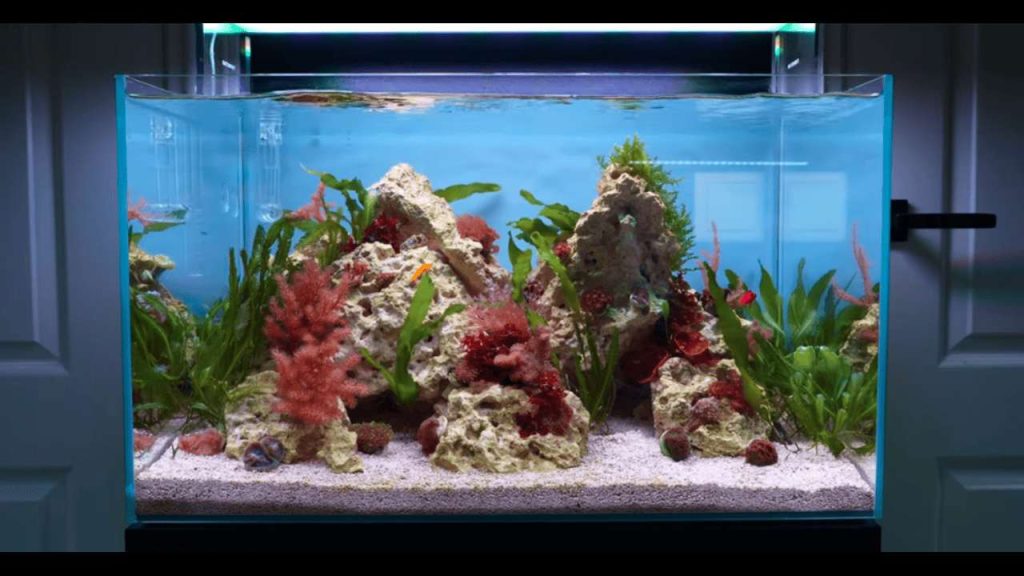
A FOWLR tank can be considered a good choice. The presence of live rock not only provides fish with shelter but also encourages bacteria beneficial for biological filtration.
Essential Beginner Saltwater Aquarium Equipment
Using a beginner’s saltwater aquarium kit can ease your task to some extent. However, a kit can also lack some equipment. You must find out what is included in the kit before purchasing it.
| Equipment | Why You Need It |
| Aquarium and strong stand | To support and hold the tank in place |
| Lid/mesh top | To prevent fish from jumping out |
| Marine salt mix | For creating suitable salt water |
| RO/DI water/purified water | To get rid of impurities |
| Refractometer/hydrometer | To measure salt level in water |
| Thermometer/heater | To maintain temperature level |
| Biological media filter | For waste removal and creation of beneficial bacteria |
| Circulation pump/powerhead | To increase oxygen content and keep water circulating |
| Live rocks that are marine safe | Provides shelters to fish and biological filtration |
| Marine substrate/bare bottom | Base for the aquarium |
| Test kit for aquarium | Monitors ammonia, nitrite, nitrate, pH and more |
| Light for aquarium | For monitoring the aquarium and some tank set ups |
| Siphon tube/buckets | For cleaning the aquarium and changing the water |
| Protein skimmer | For waste removal in many marine aquariums |
Water testing is one of the most crucial components of marine fishkeeping. In addition to basic tests, ammonia, nitrite, nitrate, pH, and salinity should be tested in any case.
In case you want to keep corals in the future, calcium, magnesium, phosphate, and alkalinity testing will become necessary as well.
Ideal Water Parameters for a Beginner Saltwater Aquarium
Before putting the fish in the aquarium, it is important to ensure that the water is clean and stable. While the needs of various species can be slightly different, here are some recommendations for beginners.
| Water Parameter | Beginner Target Range |
| Temperature | 24–26°C / 75–79°F |
| Specific Gravity | 1.020–1.025 |
| pH | 7.9–8.3 |
| Ammonia | 0 ppm |
| Nitrite | 0 ppm |
| Nitrate for fish-only tanks | Ideally below 20 ppm |
| Nitrate for invertebrate tanks | Often 5–10 ppm or lower |
Ammonia and nitrite concentrations should not exceed zero when an aquarium is completely cycled. While nitrate is not as dangerous as two previous compounds, a high nitrate level is stressful and indicates low water quality.
Proper tests, nutrition, filtration, and changing of water will ensure the proper health of the aquarium.
Saltwater Aquarium Setup for Beginners: Step-by-Step
Step 1: Choose the Right Tank Size
Do not go for the smallest tank just because it is cheaper and takes less space. Smallest saltwater tanks may be difficult to maintain since water conditions may change rapidly.
Tank size ranging from 25 to 40 gallons may work best for beginners. Such tanks have bigger water capacity, and thus smaller mistakes will not cause big problems.
Get the largest tank you can afford within your budget and space.
Step 2: Select a Safe Location
Choose a good location for your aquarium before adding any water into it.
Avoid placing your aquarium near sunlight, windows, heaters, air conditioners, and places where there is much traffic. Sunlight may cause excessive growth of algae and may cause water temperature regulation problems.
Ensure that the floor and stand can withstand the total weight of the aquarium and everything else in it.
Step 3: Add Marine Water, Sand, and Rock
Use a marine salt mix, which is specifically intended for aquariums. Do not use table salt, food salt, or any kind of random sea water.
Prepare salt water by following the manufacturer’s instructions. Test its salinity using a refractometer or a hydrometer prior to introducing your fishes.
When the water is ready, add marine sand, then place the live rock or dry rock properly. Position the rocks such that they form caves, hiding spots, and swimming spots.
Live rock will add a more natural appearance to your aquarium. Live rock also serves as a shelter for your fishes while giving room for beneficial bacteria to thrive.
Step 4: Install Filtration, Heater, and Water Flow
All necessary pieces of equipment should be set up before beginning the cycling process.
Install the filter, heater, thermometer, circulation pump, and lighting system. Ensure that all equipment is functioning well, especially that the temperature is always constant.
It is important that your aquarium be circulated well. This will ensure that waste is carried to the filter, improve oxygen levels in the water, and eliminate dead spots where dirt could accumulate.
Step 5: Cycle the Aquarium Before Adding Fish
Cycling is an essential part of setting up a saltwater tank.
When the tank cycles, good bacteria form within the tank. The bacteria work to reduce dangerous chemicals that are created by decomposing fish food and fish waste.
The new saltwater tank can produce dangerously high amounts of ammonia and nitrites. Beneficial bacteria will eventually form and assist in breaking down these dangerous chemicals into nitrates.
Steps in fishless cycling include the following:
- Setup the tank and ensure that the equipment is working properly.
- Introduce an ammonia or cycling agent.
- Keep testing for ammonia, nitrite, and nitrate.
- Wait until both ammonia and nitrite are at zero.
- Make sure that temperature and salinity are constant.
- Slowly introduce fish to the tank.
Do not rush this stage. One of the most common mistakes is introducing fish prematurely.
Step 6: Add Fish Slowly
When your aquarium cycling process is complete, begin to stock your aquarium with fish gradually. Start with one fish or compatible fish pairs.
Do not rush to fill the tank even though you see there is space because each new fish increases the amount of waste products in the aquarium, and you will require time for the filtration to adapt.
Here are some basic stocking guidelines:
- Find out the adult size of each fish before purchasing it.
- Choose peaceful fish that can coexist in the same aquarium.
- Do not overcrowd your aquarium.
- Introduce fish slowly.
- Test your water after stocking.
- Use captive-bred fish whenever possible.
Clownfish are one of the favorite fish for beginners. They are colorful, playful, and easily found in the pet stores. But they still require optimal water parameters, the right tank size, and appropriate tank mates.
Best Beginner Saltwater Aquarium Plan
The simple beginner marine tank setup may contain the following:
- A 30-gallon marine tank or all-in-one marine aquarium
- Marine salt blend
- RO/DI water or filtered water
- Live rock/dry rock with live bacteria
- Marine sand
- A heater and thermometer
- Refractometer
- Filter/Circulation pump
- General aquarium lights
- Aquarium water test kit
- 1 to 2 fish that are compatible after cycling
It is always better to start with fish rather than corals, anemones, delicate invertebrates, or difficult fish.
When one becomes comfortable with water testing, feeding, water change, and fish management, then one may gradually progress towards a more advanced reef aquarium set-up.
Saltwater Aquarium Care Routine for Beginners
A good saltwater aquarium requires minimum effort. But regular maintenance is definitely necessary. It is always better to do small things on a regular basis instead of doing anything when things go wrong.
Daily Saltwater Aquarium Tasks
- Check the water temperature.
- Check the water level.
- Watch for odd fish behavior.
- Check whether the filter and circulation pump work.
- Clean out any leftover food.
- Add more RO/DI water to the aquarium if the level of the water dropped due to evaporation.
Please remember that evaporation takes out water, but not salt. You always should replenish water loss by adding new RO/DI water, never by mixed saltwater.
Weekly Saltwater Aquarium Tasks
- Test ammonia, nitrite, nitrate, pH, and salinity.
- Scrub the algae off the aquarium walls.
- Check the filters and equipment.
- Watch for any salt deposits near the aquarium.
- Do some water changes if necessary.
- Watch the fish for stress, disease, or lack of appetite.
Monthly Saltwater Aquarium Tasks
- Clean the pumps and other equipment if necessary.
- Check whether the heater works correctly.
- Inspect the filter medium.
- Prepare the water for water changes.
- Check your test results for any changes or issues.
Many beginners manage their tanks successfully by performing small weekly water changes. The popular regime is changing about 10% of the water every week or 25% once every two weeks.
The best regime varies with the size of your tank, amount of fish there, feeding habits, and water test results.
Common Saltwater Aquarium Mistakes to Avoid
1. Adding Fish Before the Tank Is Cycled
Having a tank full of water does not mean it is ready for fish yet; the tank needs time to develop beneficial bacteria that will convert waste. Never put fish in the tank without checking the water. There should not be any ammonia or nitrites in the water.
2. Choosing a Very Small Tank
Saltwater tanks that are very small can become difficult to control because salinity and temperature can change rapidly in such a tank. Getting a little bigger tank provides you with more safety.
3. Buying Fish Without Researching Adult Size
Most times, fish are bought when they are still young and tiny. However, some types of fish will grow up to sizes that beginners cannot even imagine. Always look into the size of the fish when it matures, its temperament, dietary requirements, and compatibility before purchasing it.
4. Overfeeding
Overfeeding is one of the reasons why water becomes unhealthy. Food gets dissolved in the tank and results in high nitrate and phosphate levels. Feed fish small portions that they can eat immediately. This means that it is better to underfeed than overfeed.
5. Ignoring Salinity Changes
Salinity levels will increase because of evaporation. By neglecting this, you may end up with saltier water than you need for your fish. Test your salinity frequently and add more purified water into your tank.
6. Replacing All Filter Media at Once
There are good bacteria in the aquarium that reside on filter materials, rocks, sand, and other objects in the aquarium. When changing filter material at once, you risk losing a significant number of beneficial bacteria. Wash filter material gently with old aquarium water whenever possible.
7. Trying to Build a Full Reef Tank Immediately
Reef aquariums look stunning, but they require more maintenance. There is a high chance that corals and invertebrates may require better lighting, water conditions, and testing. Always start with fish only or FOWLR tanks and proceed slowly as you learn more.
Beginner Saltwater Aquarium Kit: What Should It Include?
A beginner saltwater aquarium kit could be useful because it might contain the tank, lights, filters, and all other equipment. However, not all kits will have everything necessary to set up a proper marine aquarium.
The following equipment should be included in a good beginner saltwater aquarium kit:
- The aquarium itself and a safe stand.
- The lid or the mesh.
- Filter.
- Water flow.
- Lights.
- The space where the fish will live.
Also, some of the following could be purchased individually:
- Marine salt.
- Heater.
- Thermometer.
- Refractometer/hydrometer.
- Aquarium testing kit.
- Live or dry rocks.
- Sand.
- Equipment for the water replacement.
- Food for fish.
- RO/DI water or purified water.
Before buying any saltwater aquarium kit for beginners, please read about all its contents very carefully.
Quick answers
Frequently asked questions
Which is the easiest saltwater aquarium for beginners?
Fish-only, or FOWLR, is considered the easiest saltwater aquarium for beginners because there is less need for proper lighting and proper water management as compared to a reef tank. One should begin with keeping a few peaceful fish along with proper filtration and testing in a constant manner.
What is the recommended saltwater aquarium for a beginner?
For a beginner, the recommendation will be to keep a saltwater aquarium ranging from 25 to 40 gallons. Large aquariums are comparatively easy to keep due to the stability of water. Small aquariums have unstable water and are difficult for beginners to keep.
How many days will a saltwater aquarium cycle until one can add fish?
There is no specific number of days because each aquarium cycles according to its own pace. The aquarium is ready for the fish when both ammonia and nitrites are zero and the conditions are constant.
What should a beginner saltwater aquarium kit contain?
A basic beginner saltwater aquarium should have a tank, filtration system, water movement device, lighting, and lid. Additional equipment that you will likely have to purchase may consist of marine salt, a heater, a thermometer, a refractometer, a test kit, rocks, sand, and water-changing equipment.
Are clownfish suitable for beginners?
Yes, they are great for beginners because they are hardy, attractive, and common fish. Nevertheless, they require an established cycle of the aquarium, stable salinity, good water parameters, and suitable tankmates.
Do I need a protein skimmer for my beginner saltwater aquarium?
You don't necessarily need a protein skimmer in your small fish-only aquarium. It can help clean the water and increase its quality. A protein skimmer will become very helpful when you grow your aquarium and increase the number of fish in it or add corals.
How often should I change water in a saltwater aquarium?
It seems that many beginner saltwater tanks work well with a 10% water change weekly or 25% water change biweekly. The frequency depends on your tank parameters, feeding regimen, and water tests.

About the author
Ethan Cole
My name is Ethan Cole, and I have been a writer on saltwater aquariums and reef tanks for over eleven years. My work essentially deals with practical aspects of reef-keeping, such as keeping marine fish and corals; the use of live rocks, protein skimmers, and understanding filtration; analyzing water quality; and performing routine maintenance of an aquarium. I write for aquarists looking for easy-to-understand answers as well as those looking for practical advice.
Reader Fishkeeping Feedback
Comments, questions, and aquarium reviews
Share your aquarium experience, ask a fish care question, or write a helpful note about tank setup, water quality, filters, algae control, or maintenance for other readers.
No aquarium reviews yet. Be the first to share a helpful review on content or fishkeeping question, setup tip, or care experience.