
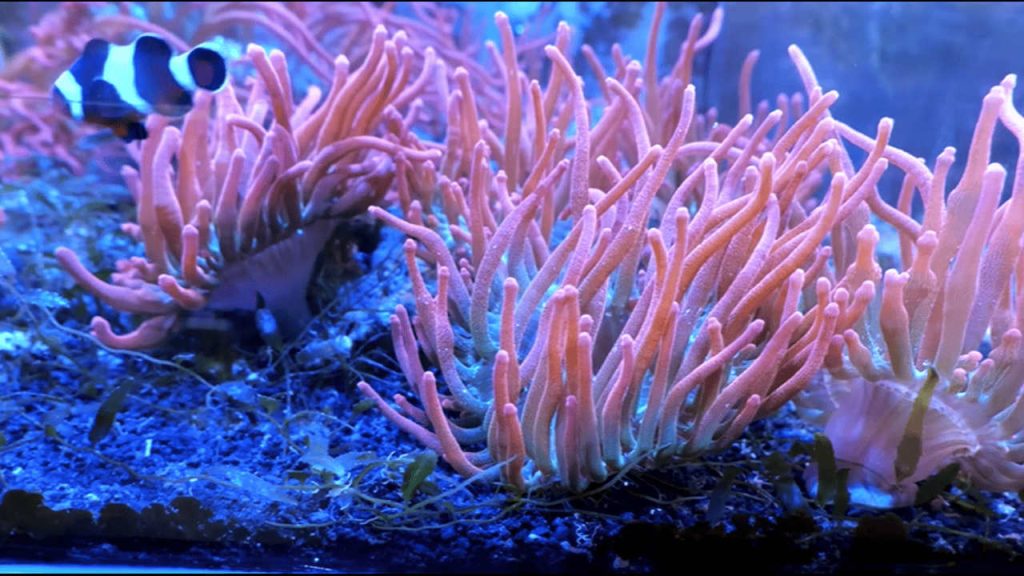
Reef Aquarium for Beginners: Complete Guide
The reef aquarium might be a good selection for novices if it is set up appropriately. It will require more work than a usual freshwater aquarium, but there is no need to be an expert to start one.
The main idea is to provide stability in water. Do not hurry up, put too many fish into the tank, or purchase complicated corals at once. The ideal beginner reef aquarium requires starting with a little tank, regular testing of the water, and gradual steps.
It is much easier for novices to have big tanks because the water conditions are stable in them. Small tanks are characterized by their instability in conditions due to evaporation of the water, leftover food, and increase in temperature.
What Is a Reef Aquarium?
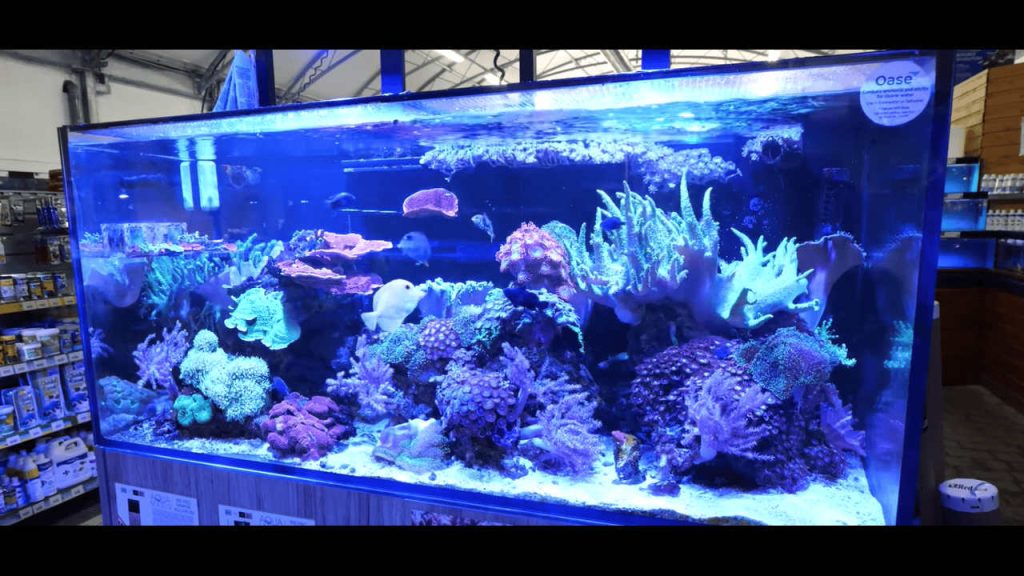
The reef aquarium is the aquarium that is filled with saltwater containing fish, corals, live rock, bacteria, and little creatures from the sea. It is made to represent the fragment of oceanic reef in the house.
The main difference between a normal fish tank and a reef aquarium is that a reef aquarium contains corals. The corals require proper illumination, clean water, water flow, and a stable level of saltiness.
The reef tank works just like an ecosystem. The fish produce organic waste, bacteria degrade the organic matter, filters filter out particles, and water exchange ensures the cleanliness of the tank. When all elements work properly, the tank gets better.
Choose the Right Tank Size First
For novices, it would be better to choose a tank of 20-40 gallons of volume. Such a tank has sufficient water volume to keep the parameters stable, but it is not difficult to keep it at home.
A too-small tank may be cheap, but it is difficult to keep stable conditions in it. In such tanks, it can be more rapidly heated, more rapidly its salinity will be changed, and waste products will accumulate more rapidly.
Before buying the tank, pay attention to the following factors:
- The size of the available space
- Stability of the floor/stand to support the tank
- Proximity of the tank to the sockets
- Presence of the direct sunlight on the tank
- Budget for aquarium equipment, salt, test kits, and fish
- Time available for maintenance per week
Place the aquarium away from windows, heaters, air conditioning systems, and sunlight. This way, you will protect your reef setup from temperature fluctuations and algae growth.
Essential Equipment for a Beginner Reef Aquarium
You do not have to purchase all reef products immediately. Start with the basic equipment, which will help you manage the water conditions, its temperature, lighting, and circulation.
| Equipment | Why You Need It |
| Aquarium and strong stand | Maintains the whole reef ecosystem |
| Heater and thermometer | Maintains the proper water temperature |
| Marine salt mix | Helps make saltwater |
| RO/DI water or purified water | Reduces minerals and impurities |
| Refractometer or salinity tester | Helps check the salt level in water |
| Filtration or built-in filter | Removes debris and promotes beneficial bacteria |
| Power head or circulation pump | Maintains water flow in the aquarium |
| Reef LED lamp | Supplies corals with necessary light |
| Live or dry rocks | Gives fish and corals a natural structure and promotes beneficial bacteria |
| Test kit | Helps check ammonia, nitrites, nitrates, alkalinity, and other parameters |
| Bucket and siphon | For water changes and maintenance |
A protein skimmer is also useful, particularly if you have many fish and coral in the aquarium. It ensures that waste is taken out of the water before it gets broken down. But it should not replace regular cleaning and testing of water.
Use Purified Water Instead of Untreated Tap Water
Water used can affect the success of your reef tank. Many newbies prefer using RO/DI water, or reverse osmosis and deionized water.
The advantage of this type of water is that it is very clean because of the removal of unwanted minerals, chemicals, and impurities. Unwanted impurities can cause algae growth and affect the water quality in general.
Tap water may look clean, but it has substances that are harmful to corals and saltwater fish. The quality of tap water also varies from place to place.
Using purified water helps you control your reef aquarium right from the start.
Reef Aquarium Water Parameters for Beginners
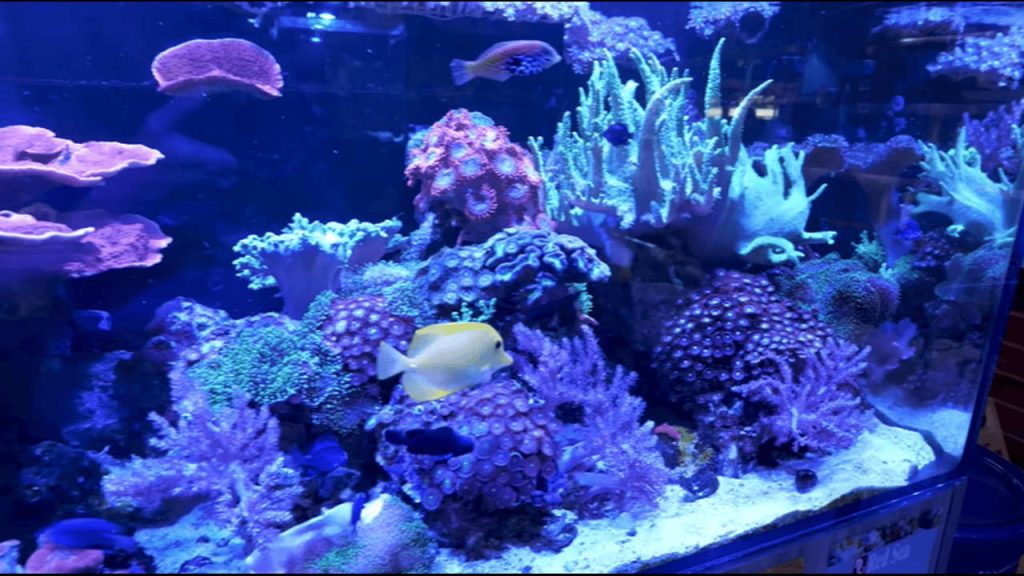
It is okay to be unable to obtain perfect figures on a daily basis. The main goal here is stability.
Fish and corals cannot endure rapid change. Thus, it is better to have the proper parameters than to constantly make rapid adjustments to meet certain requirements.
| Water Parameter | Beginner Target Range |
| Temperature | 24–28°C / 75–82°F |
| Salinity | 1.023–1.026 specific gravity |
| pH | 8.1–8.4 |
| Ammonia | 0 ppm |
| Nitrite | 0 ppm |
| Alkalinity | 8–12 dKH |
| Calcium | 380–450 ppm |
| Magnesium | 1,250–1,350 ppm |
| Nitrate | Low and stable |
| Phosphate | Low and controlled |
Conducting water testing frequently and especially during the first months of using it is crucial. Do not make any major adjustments and do not add too many substances to your water at once.
Step-by-Step Reef Aquarium Setup for Beginners
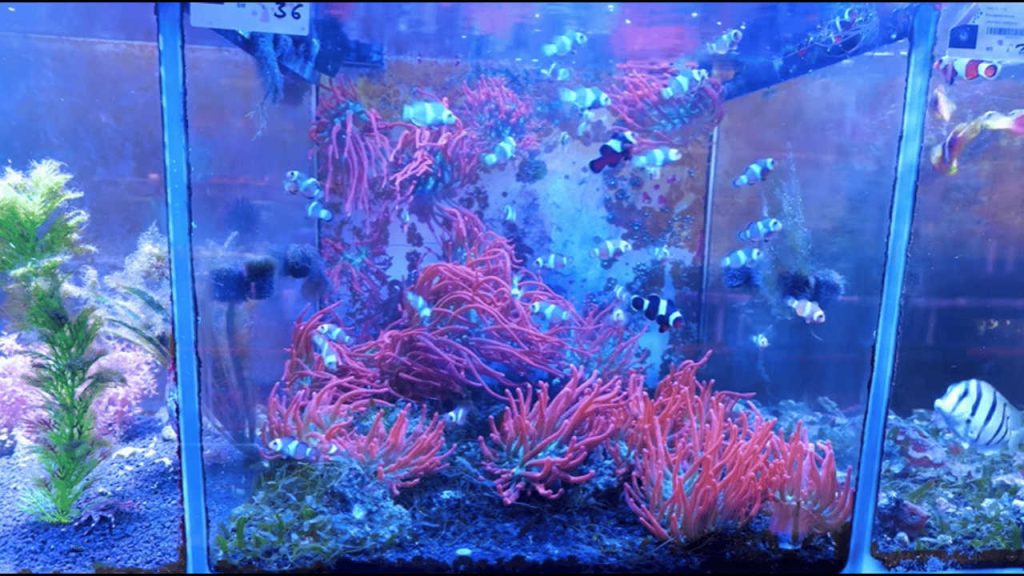
Step 1: Place the Aquarium in a Stable Location
Find an even surface that can bear the full weight of the tank, rocks, sand, and equipment inside of it, as well as water.
Try to avoid exposing your aquarium to direct sunlight. Sunlight leads to algal blooms and an increase in the temperature of your water. Also, you should not put it next to any heating devices, like air conditioners, or in places close to doors and traffic.
Such a location will help you maintain your aquarium easier.
Step 2: Add Rock and Sand
Use dry reef rock, live rock, or a combination of both types of rocks. These rocks provide your aquarium with a natural reef appearance and also form hideouts for the fish.
Arrange the rocks in such a way that water can flow freely in between the rocks. Do not arrange a rock wall along the rear panel since it can form a barrier trapping dirt and making it difficult to clean.
Strive to design caves, open areas, and ledges on which corals will eventually be positioned. Ensure that the rocks are firmly in place before adding water to the aquarium.
Step 3: Mix Saltwater Properly
Use distilled water and a quality salt mix that is designed specifically for marine aquariums. First mix the salt in a separate container.
Ensure that the salt has dissolved entirely and then measure the salinity using a refractometer or other salt test kit. Also, ensure that the temperature of the water is similar to that in the aquarium.
Never add dry salt directly into an aquarium filled with fish and corals.
Step 4: Install Filtration, Heater, Light, and Water Flow
Place the heater, filter, powerhead, and reef lights before adding fish and corals. Wait until the setup starts working properly for a couple of days.
The heater should maintain constant water temperature. The filter and powerhead must work well and stir water inside the tank, respectively.
Strong water currents should not flow straight to one place. Most corals appreciate even distribution of water circulation throughout the aquarium.
Step 5: Cycle the Reef Aquarium Before Adding Fish
Cycling is probably the most important step for a beginner who sets up a reef aquarium. It promotes the growth of beneficial bacteria inside the tank.
Bacteria decompose dangerous waste products in the water. Initially, ammonia gets produced, and bacteria transform ammonia to nitrites. Then nitrites are transformed to nitrates by another kind of bacteria.
It is better to perform a fishless cycle because fish should not be added into the toxic water.
During the cycling period:
- Add an appropriate amount of ammonia source or bacteria starter product.
- Keep testing for ammonia, nitrite, and nitrate regularly.
- Wait until ammonia levels become zero.
- Wait until nitrite becomes zero too.
- Add fish only when your water parameters prove that your tank is prepared for it.
Please, do not hurry with this phase. It might take several weeks to complete a cycling process of a reef aquarium. It is necessary to wait for this stage since it allows you to secure your future fish and corals.
Add Fish Slowly After Cycling
When your tank finishes a cycling process, start slowly adding fish. Avoid adding a large number of fish, shrimp, snails, and corals at the same time.
Begin by adding just one small and peaceful fish. Allow the aquarium to settle before you add another fish. Each fish produces waste products, which means the tank requires sufficient time to grow bacteria that will be able to handle the waste.
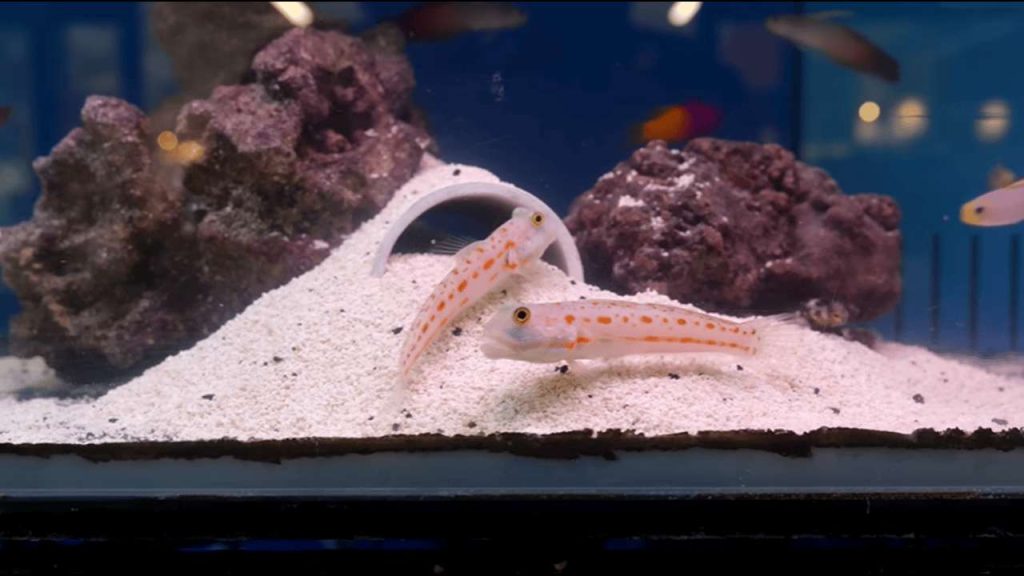
Good choices for beginners might be clownfish, gobies, firefish, and many other peaceful saltwater fish compatible with the size of your aquarium.
Before purchasing any fish, ensure that you know:
- Its adult size
- Its feeding requirements
- Its behavior
- If it is coral-safe
- If it can co-exist with your current fish
- Its space requirements
Never choose fish based on their attractiveness at the store. Some fish require huge tanks.
Choose Beginner Corals for a Saltwater Aquarium
Corals suitable for beginners should be resilient, easy to maintain, and resistant to minor fluctuations in the environment. Most soft corals are recommended for beginners who plan on setting up a coral aquarium.
Starting off with small coral frags is recommended as well. Coral frags are small pieces of corals that have the potential of growing over time. In addition, coral frags are cheaper and easier to put into your new reef tank.
Here are some recommended beginner corals.
Mushroom Corals
Mushroom corals are one of the popular beginner corals. Several species of mushroom corals survive under low light and gentle water flow.
Mushroom corals are attractive, easy to obtain, and most of the time thrive under stable conditions. However, you should be careful since mushroom corals can overgrow in time, hence providing them with enough space.
Leather Corals
Another type of beginner coral is leather coral. They can bring height and motion to your reef tank.
Toadstool-style leather corals are preferred by many reef aquarists because of their beauty and resilience. Give enough room around them since they affect other corals.
Zoanthids and Button Polyps
The Zoanthids and button polyps are colorful types of corals that are grown in clusters. They can be used to brighten up the appearance of your fish tank.
Though these types are usually easy for starters, you should be careful while handling them. When working with them, use gloves and avoid touching your eyes.
Green Star Polyps
The Green Star Polyps can give the effect of bright green colors moving in the aquarium. They are easy to breed, though they can grow at an alarming rate.
It will be better to put them on a separate rock, as they can cover the whole reef construction.
Xenia or Pulsing Soft Corals
The Xenia, or pulsing soft corals, can bring life and movement into the aquarium. Such types are good for starters, as they can grow fast in a good environment.
But fast-growing corals can easily cover the whole rock and occupy all the space.
Do Not Add a Large Clean-Up Crew Too Early
The cleaning team usually consists of snails, shrimps, crabs, and other tiny animals that feed on algae and leftover food.
This cleaning team may be handy, but for novices, it is better to use it properly by adding it gradually. A new reef aquarium cannot provide a sufficient amount of algae and natural food for a big cleaning team.
If the amount of food is insufficient, the cleaning team members may die of starvation.
So, begin with a small cleaning team and add more if needed. Do this when the aquarium is completely cycled and some algae and/or leftover food start appearing.
Simple Weekly Reef Aquarium Care Routine
Maintaining a reef aquarium is easy when you create a certain routine. This will help you to prevent future difficulties by performing simple activities.
Daily Tasks
- Check water temperature
- See if all equipment works: filter, heater, pumps, lights
- Observe fish for stress, strange behavior, diseases
- Examine corals to see if they open properly
- Add fresh purified water in place of the evaporated one
- Feed fish gently; do not leave leftovers
Weekly Tasks
- Test the salinity
- Test for ammonia, nitrite, nitrate, and phosphate
- Test the alkalinity and calcium as soon as the corals start growing
- Clean the aquarium glass
- Empty the protein skimmer, if you have one
- Test the water flow from pumps and powerheads
- Make a small water change if necessary
Monthly Tasks
- Clean the pumps and powerheads
- Check heaters, tubing, and electrical equipment
- Observe coral growth and make sure there is enough room for the corals
- Change the filter media if necessary
- Review your stocking list before purchasing new livestock
Common Reef Aquarium Mistakes Beginners Should Avoid
Adding Fish Before the Tank Is Cycled
Even if your tank seems to be clean, it may lack beneficial bacteria necessary to deal with fish waste. Putting the fish into your aquarium prematurely might result in an ammonia spike.
Always test the water before introducing any livestock.
Buying Too Many Fish at Once
All fish produce waste in the aquarium. Purchasing multiple fish at once might be too much for the filtration system.
Introduce fish into the tank one at a time.
Using Untested Tap Water
Tap water might contain some chemicals, minerals, or nutrients that could trigger algae and other water problems.
It is recommended to use purified water for your reef aquarium.
Chasing Perfect Water Numbers
Do not add lots of chemicals due to small imperfections found during testing. Fast changes could be more damaging than slightly imperfect parameters.
Make gradual changes, repeat testing, and give your aquarium time to stabilize.
Overfeeding
An excessive amount of food is converted into waste and could cause nitrate and phosphate increases, algae, and poor quality of your water.
Give only the necessary portion of food that could be consumed by fish within a short period of time.
Adding Difficult Corals Too Early
Some corals require powerful lighting, stability of water parameters, and a more difficult maintenance regime. These corals are not a good choice for your beginning reef tank.
First use hardy soft corals and later switch to difficult corals once you get some experience.
Ignoring Livestock Compatibility
Not all kinds of fish, crabs, shrimps, and corals coexist well, and some species might eat corals, attack shrimps, or become aggressive.
Do research before purchasing any animal for your reef tank.
Buying Wild-Collected Livestock Without Research
When feasible, use captive-bred fish and frags from the culture of corals. They may be more suitable for a beginner and will help avoid any harm to reef systems in the wild.
Final Beginner Reef Aquarium Checklist
Before you start to put any fish or coral into the aquarium, you need to have:
- A secure spot for the tank
- Freshly treated water and sea salt mix
- A heater and thermometer
- Effective filtration and water circulation
- Salinity meter
- Complete nitrogen cycle
- No ammonia and no nitrites
- Fish and coral stocking plan
- Coral selection for beginners
- Water test kits
- Weekly maintenance schedule
- Patience for gradual stocking
Quick answers
Frequently asked questions
Is a reef aquarium hard for a beginner to keep?
A reef aquarium demands more attention than an average freshwater aquarium, but it is still manageable for beginners to keep it alive. The main trick here is to be patient, check the parameters frequently, and not put lots of fish and corals in simultaneously.
What size reef aquarium will be good for beginners?
An aquarium ranging from 20 to 40 gallons would be great for beginners. It is not too small to have unstable water parameters and still easy enough to maintain.
How long does it take to cycle a reef aquarium?
It may take some time for a reef aquarium to cycle. You should never rely only on the number of days. Rather, test the water until both ammonia and nitrites are zero.
What are the best beginner corals in a saltwater aquarium?
Some of the best corals for beginners in a saltwater tank include mushroom corals, leather corals, zoanthids, green star polyps, and some soft corals. Use small frags for your initial setups.
Is it possible to create a coral tank without fish?
Yes, it is possible to create a coral aquarium without fish. However, even in this case, the tank needs stable water conditions, filtration, appropriate lighting, and nutrient balance to be able to keep corals alive.
Are there any specific lighting requirements for beginner corals?
Beginner corals require reef lighting, but some soft corals may survive in low-moderate light conditions. So, begin with low lighting conditions and raise them gradually, if necessary.
Do I need a protein skimmer for my beginner reef tank?
The protein skimmer may be used to remove waste from the water but is not a replacement for water changing, regular testing, and proper feeding/filtration.
How often should I do water changes in a reef aquarium?
There are plenty of hobbyists who make small water changes regularly. How often you should do that depends on a variety of factors such as the volume of your tank, number of fish, growth rate of corals, and water test results.

About the author
Ethan Cole
My name is Ethan Cole, and I have been a writer on saltwater aquariums and reef tanks for over eleven years. My work essentially deals with practical aspects of reef-keeping, such as keeping marine fish and corals; the use of live rocks, protein skimmers, and understanding filtration; analyzing water quality; and performing routine maintenance of an aquarium. I write for aquarists looking for easy-to-understand answers as well as those looking for practical advice.
Reader Fishkeeping Feedback
Comments, questions, and aquarium reviews
Share your aquarium experience, ask a fish care question, or write a helpful note about tank setup, water quality, filters, algae control, or maintenance for other readers.
No aquarium reviews yet. Be the first to share a helpful review on content or fishkeeping question, setup tip, or care experience.