
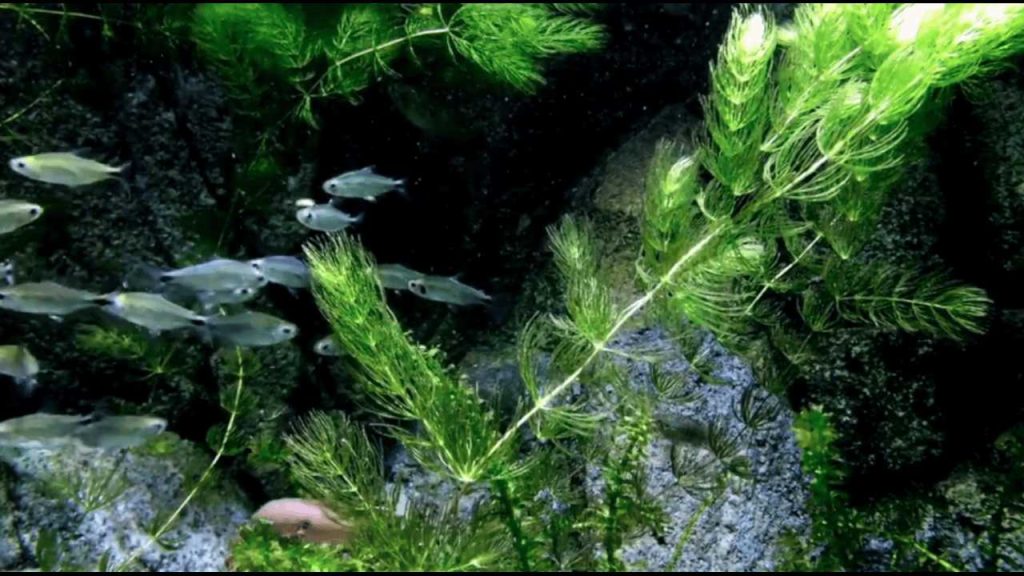
Planted Aquarium Complete Guide
A beginner’s planted aquarium is an aquarium that has live aquatic plants. Aquatic plants not only make the aquarium look more natural but may also serve as shelter for fish.
The easiest way to set up a beginner’s planted aquarium is a low-tech planted aquarium. You will require basic equipment such as a tank, a filter, light, heating if necessary, water conditioner, substrate, plants, and water test kits.
No complicated devices or expensive equipment or CO2 injection systems will be required. The point is to build a stable aquarium that is convenient for maintenance.
A planted aquarium works well due to the following three major factors:
- Clean water
- Cycled filter
- Easy-to-maintain plants suitable for your lighting conditions
Do not add fish until your aquarium is cycled. It means that helpful bacteria will have time to colonize the filter of your aquarium. They help to decompose the waste and keep the aquarium safe for fish.
Beginner Planted Aquarium at a Glance
| Area | Beginner-Friendly Choice |
| Type of tank | Aquarium with freshwater plants |
| Preferred type of setup | Low tech aquarium with freshwater plants |
| Plants | Big, easy-to-maintain plants |
| Substrate | Gravel, coarse sand, or planted soil |
| Lighting | LED light with a timer |
| CO₂ | Optional for beginners |
| Fish stock | Slowly introduce fish after cycling |
| Maintenance | Check water weekly and perform water changes |
| Goal | Keep things simple and stable |
Why a Beginner Planted Aquarium Matters
A planted aquarium is not all about making your fish tank beautiful. The plants may serve several functions and add naturalness to the habitat of the fish. The plants may provide the fish with shelter, shady areas, rest zones, and hiding places. Moreover, plants may absorb some substances from the water during their development.
Nevertheless, the plants do not replace filtration and regular water checks. Cycling, cleaning, and testing of the water are still required. The presence of beneficial bacteria contributes to the transformation of the dangerous fish wastes in a healthy aquarium. Fish produce ammonia as a result of the waste decomposition. The ammonia is dangerous for the fish. Beneficial bacteria transform the ammonia into nitrite and then into nitrate.
This process is called the nitrogen cycle.
To newcomers, the most significant advantage of having a planted tank is that it provides a natural and balanced aquarium. There is no need to decorate your aquarium with artificial decor; instead, you can fill it with live plants, wood, stones, and fish.
The Stable Start Rule
There is one golden rule for the newcomer planted aquarium:
Do not change too many things at once. For instance, you should not increase the number of fish, lighting, CO₂, and fertilizers in the same week. You should make only one change and observe the aquarium. This way, you will learn what works and what does not work. An aquarium that does not change daily is easier to control than an aquarium that changes every other day.
Equipment Needed for a Beginner Planted Aquarium
No need to have complex equipment; just have simple equipment that suits the size of your aquarium.
1. Aquarium Tank and Strong Stand
Select an aquarium that suits your space, finances, and maintenance program. THA large-sized aquarium is better for novice keepers since water conditions usually take more time to change in a large aquarium. Small aquariums may appear beautiful but require more attention since the water conditions can change quickly.
It is always advisable to set up the aquarium on a sturdy and level base. The aquarium, once filled with water, becomes very heavy and hence requires a base to bear its entire weight. Avoid setting up the aquarium near the source of light. Direct sunlight will increase water temperatures and algae development.
2. Aquarium Filter
A filter is one of the essential components of any beginner planted aquarium. The filter will help circulate water in your tank and also provide beneficial bacteria with living space. Beneficial bacteria break down the fish waste and make the water safer for your pets.
You should select the filter appropriate to your aquarium size. It is not advisable to use filters that are too small for your tank. In case you decide to clean the filter, avoid washing all filter media under tap water. It might be contaminated with chlorine or chloramine, killing beneficial bacteria. Instead, you may rinse reusable filter media gently in a bucket of old aquarium water during water changes.
3. Heater and Thermometer
Most tropical fish require warm and consistent water temperature. The heater will help to maintain the same. Use the thermometer to measure the water temperature every day. Relying on the heater dial alone is not a good idea. Before purchasing fish, read about the ideal water temperature and choose the species that can tolerate it.
4. Aquarium Light and Timer
Lighting is necessary for growing the plants. But excessive lighting can cause the growth of algae. Get an LED aquarium lighting system along with a timer. The timer will make sure that the lighting cycle remains consistent each day.
In a beginner-planted tank, initially provide around six hours of lighting each day. In case, after several weeks, the plants require more light and there is no problem of algae, then you may gradually increase the lighting duration. Do not keep the aquarium lights on for longer periods of time. Longer exposure to lighting does not necessarily mean good plant growth.
5. Water Conditioner and Test Kit
The tap water often contains chlorine or chloramines, which are harmful for the fish and good bacteria. Water conditioner is recommended whenever tap water is added to the aquarium. A water test kit is also required in order to test ammonia, nitrite, nitrate, and pH levels. Testing the water prevents any problems for the fish.
6. Substrate, Plants, and Hardscape
The substrate is the bottom layer of material in your tank. This can be either gravel, sand, planted soil, or any combination of them. Hardscape includes materials like aquarium-appropriate wood, stones, and decor. These will help to create an appropriate landscape and provide anchoring to plants. Do not try to add any random wood or stones you find out there, unless you know for sure that these are safe for aquarium use.
Beginner Planted Aquarium Substrate: Which Type Is Best?
Selecting beginner-planted aquarium substrate should not be hard for you. There are only two popular types of substrates that you can choose from: inert substrate and nutrient-rich planted substrate.
Option 1: Inert Gravel or Sand
Inert gravel or sand is the simplest substrate for beginners. It provides a minimal amount of nutrients and is relatively easy to work with. An inert substrate is good for keeping many easy plants.
If you decide to have an inert substrate, you may want to make up for additional feeding of your rooted plants later. Root tabs should be used for heavy-rooted plants. Inert gravel is easy to keep and is great for many planted tanks. Sand can also be used, but fine sand may compress over time.
Option 2: Nutrient-Rich Planted Substrate
Planted soil or nutrient-loaded substrate has nutrients that will assist in the growth of rooted plants. Such substrates are good if you wish to have a heavily planted tank. They are very important when dealing with rooted plants with extensive root systems.
But the planted soil will make the initial stages quite active. There may be a requirement of careful monitoring for a few weeks after setting up the aquarium. A beginner does not require such soil to grow good plants. There are many successfully maintained planted tanks with only simple gravel or sand.
The ideal substrate will be that substrate which can be easily understood and handled consistently.
How Deep Should Aquarium Substrate Be?
Add an adequate amount of substrate to enable the rooted plants to settle. Ensure that there is a deep level of substrate on the backside and a shallow one on the front end of the aquarium. This will provide a natural slope as well as add depth to your aquarium.
Leave some open areas on the front side for swimming by the fish and for cleaning. Do not add excessive substrate and decorations into the aquarium.
Best Plants for a Planted Aquarium Beginner
Ideal aquarium plants for a new tank owner should be robust, slowly growing, and easy to take care of. Do not try to cultivate challenging plants requiring strong lighting, fertilization daily, and even pressurized CO₂. The plants should be chosen according to their future location inside an aquarium.
Easy Plants to Attach to Wood or Rock
Some aquarium plants cannot be grown directly in the substrate. They can be attached to driftwood or rocks.
They include:
- Anubias
- Java fern
- Bucephalandra
Such plants grow from the thick part called a rhizome. Rhizomes must not be buried in the substrate. Instead, it should be kept on top of the substrate and fixed to the wood or rock with plant-friendly glue, string, or ties.
These plants are widely used by hobbyists since they are known to grow well in low-to-medium light conditions.
Easy Rooted Plants
Planted rooted plants extend their roots into the substrate.
Plants suitable for beginners are:
- Cryptocoryne
- Vallisneria
- Dwarf sagittaria
- Large Amazon sword in large tanks
Most often, the roots of these plants would require root tabs when grown in bare gravel or sand. Once planted, it is recommended to refrain from moving them around too much. Most rooted plants will require some time to adapt to the new environment.
Fast-Growing Starter Plants
Plants that grow rapidly will be beneficial in a newly established aquarium since they consume nutrients rapidly.
Suitable fast-growing plants:
- Water wisteria
- Hornwort
- Guppy grass
- Hygrophila
- Floating plants such as Salvinia
These plants can help your aquarium achieve the desired look faster. They will also reduce nutrient levels that can lead to algae.
How to Set Up a Beginner Planted Aquarium Step by Step
Step 1: Plan Your Fish Before Buying Them
Consider which fish you would like before you buy your aquarium equipment. This is important because each species of fish has its own needs concerning tank size, temperature, water, and space for swimming.
Some fish should be kept in groups while others are very aggressive and cannot be combined with certain types of fish. Do not buy fish just because they seem to be small in the pet shop. Some species grow much bigger than you think at first.
Step 2: Rinse the Tank and Prepare Equipment
Clean your aquarium and all other equipment with fresh water. Do not use any kinds of soap, washing liquids, or any cleaning products because they might leave some residues inside your tank. Place the aquarium on a stable stand. Ensure that there is no direct access to sunlight, windows, heaters, or air conditioners.
Step 3: Add Substrate and Hardscape
Fill your aquarium with substrate. Put your pieces of wood and rocks into your aquarium or use other suitable decorations.
Do not make too complex arrangements. You could use one piece of wood or stone to make your aquarium more eye-catching. Put your hardscape closer to the rear wall or side walls of the aquarium.
Step 4: Add Plants
Plant the aquarium prior to filling it with water. Plant rooted plants in the substrate. Secure the Anubias, Java fern, and other similar plants on wood or rocks.
The number of plants you should have in your tank may appear excessive. Nevertheless, an aquarium full of plants usually looks much better than a lightly planted one and is easier to maintain in balance. Fast-growing plants are especially valuable for the first weeks of your aquarium.
Step 5: Fill the Tank Slowly With Conditioned Water
Put a bowl, a plate, or a plastic bag on the substrate. Pour water slowly on it. It will help you avoid disturbance of the substrate and the displacement of plants with water.
Do not forget to use the water conditioner when filling your tank with tap water. Fill your aquarium gradually and check for any leaks.
Step 6: Start the Filter, Heater, and Light
Activate your filter and ensure the circulation of water is fine. If you intend to keep tropical fish, turn on the heater.
Adjust the light timer for six hours a day initially. Check whether the water flow is strong enough. Strong current may hurt delicate plants and disturb some types of fish.
Step 7: Cycle the Aquarium Before Adding Fish
Cycling is another critical phase in the establishment of any new planted aquarium. In the cycling phase, beneficial bacteria develop in the filter as well as other parts of the aquarium. The bacteria help convert fish waste products.
Do not place fish immediately. Allow the tank to go through the cycling process and keep testing the water. Your tank is ready to accommodate fish when ammonia and nitrite levels become zero. All tanks have different cycling times. Never rely on days only.
Step 8: Add Fish Slowly
After cycling the tank, add the fish gradually. Do not add all the fish at once. Introduce the fish in groups. Observe the behavior of the fish in the first few days. Look at their actions, feeding habits, and respiration processes. Test your water even after introducing the fish.
Do Beginners Need CO₂ in an Aquarium?
However, beginners do not need carbon dioxide in an aquarium. There are many easy aquarium plants that will thrive without pressurized CO₂. An aquarium-planted tank can succeed with simple lighting, water circulation, fertilizer application, and weekly maintenance.
Carbon dioxide can increase plant growth and assist in growing certain difficult plants faster. Yet, it also means extra care and maintenance for one more parameter that should be kept constant.
The main things to start a first planted aquarium with are as follows:
- Constant water temperature
- Complete cycling of the aquarium
- Consistent light cycle
- Easy plants
- Water testing
- Weekly maintenance
Adding carbon dioxide is something to think of after one gets used to how his/her aquarium behaves with lighting, fertilizing, plant growth, and algae.
Beginner Planted Aquarium Maintenance Routine
A newbie aquarium does not require a thorough cleaning on a daily basis. Only basic and periodic maintenance is required.
Daily
It is important to glance quickly at the aquarium. Make sure that there is no problem with the operation of the filter and the heater. Observe fish and check whether they swim normally and eat properly. There may be such things as dead leaves, cloudiness, food leftovers, or other abnormalities.
Weekly
Check the water parameters of the aquarium. Test for ammonia, nitrite, nitrate, and temperature. In a cycled aquarium, the amount of ammonia and nitrite should always be zero. Do partial water change when necessary.
Clean dead leaves, remove the light algae from the walls, and prune plants that grow excessively. Do not clean all of this at once. Your aquarium needs beneficial bacteria.
Monthly
Make sure your filter flow, heater, light timer, and tubes are functioning properly. Cleaning of filter media should only be done when they become clogged or there is reduced flow of water. Reusable filter media should be rinsed using the water from the aquarium. Replacement of filter media should not be done at one time. It removes too much beneficial bacteria and affects the aquarium cycling process.
Common Beginner Planted Aquarium Mistakes
Adding Fish Too Soon
Adding fish without cycling the aquarium is another common mistake. The clarity of water may be an illusion, as there may be a high level of ammonia and nitrite in the water. What to do: Test your water before putting fish into the aquarium. Do it when you have no ammonia and nitrite.
Using Too Much Light
It is also a common misconception among new hobbyists that lighting plants with too much intensity will promote their growth. In fact, too much light will result in algae growth in a new aquarium. What to do: Begin with lighting for six hours each day. You should increase it gradually if necessary.
Choosing Difficult Plants First
There are also species that require very strong light, CO₂, fertilizers, and careful maintenance. Such types of plants may become frustrating for beginners. What to do: begin with easier plants like Anubias, Java fern, Cryptocoryne, water wisteria, hornwort, and floaters.
Overfeeding Fish
Excess food leads to increased organic waste. The uneaten food might decompose in the tank and worsen its condition. Moreover, algae will thrive on the decomposing uneaten food. What to do: feed sparingly. Clean out uneaten food.
Burying Rhizome Plants
Anubias and Java ferns must not be planted into the substrate because their rhizomes must remain out of the gravel/sand layer. What to do: tie the plants onto driftwood or stones.
Changing Everything at Once
Problems with the aquarium are difficult to diagnose if too many changes are made simultaneously. For example, changing light bulbs, fertilizing, cleaning the filter, and adding fish and water are just too many changes at once.
What to do: change only one significant thing per day and then observe the aquarium.
Beginner Planted Aquarium Troubleshooting
| Problem | Possible Cause | Simple Solution |
| Brown algae or dusty algae | New tank, excess light, inconsistent schedule | Lower the light level and be consistent |
| Yellow or pale-colored leaves | Old leaves, deficiency in nutrients, stress on plants | Cut off the damaged leaves and check the plant’s nutrients87 |
| The Cryptocoryne melt | Plant is acclimating to the new water conditions | Don’t remove the roots and give some time to the plant |
| Cloudy water | Bacteria bloom, excess food, substrate disturbance | Test your water and feed less often |
| High levels of ammonia or nitrite | Incomplete cycle, overpopulation, filter malfunction | Don’t add any fish; test your water and change water safely |
| Slow growth of plants | Low lighting, wrong plant, nutrient deficiency | Check what your plant requires first |
Quick answers
Frequently asked questions
What should a beginner know about a beginner-planted aquarium?
Beginners need to make the system simple. Use hardy plants, a good filter, a light that you can control using a timer, treated water, and a water testing kit. First and foremost, one needs to cycle the tank before putting any fish in there.
Which substrate will be the best for a beginner planted aquarium?
Gravel or coarse sand will be the easiest substrate for a beginner planted aquarium. It is not complicated to maintain and is suitable for many types of plants. Rooted plants can later use root tabs as a fertilizer. Planted soil can also work, but it might require more effort at the start of setting up the tank.
Do beginners need CO₂ in an aquarium?
No, beginners do not need CO₂ in an aquarium. There are quite a few plants that do not require CO₂. A low-tech planted aquarium will be the best option for beginners.
How many days does a beginner-planted aquarium have to cycle before fish can be added?
This depends on each aquarium individually. The only way to be sure about it is to test the water and add fish only when the level of ammonia and nitrite increases and then returns to zero.
What are the easiest plants for a planted aquarium beginner?
The easiest plants are Anubias, Java Fern, Cryptocoryne, Water Wisteria, Hornwort, Guppy Grass, Vallisneria, and floating plants. The listed plants are recommended because they don't require additional light or CO₂.
Is algae in a new planted aquarium normal?
Yes, there will be some amount of algae in a new planted aquarium because it is still adjusting itself during the first week. It is important not to be afraid and do not apply any harsh treatment immediately.

About the author
Sofia Khan
I am Sofia Khan, an aquarium lover and author with over 11 years of experience in the field of aquariums and aquascaping. I have a particular interest in creating aquascapes that look natural while requiring little attention. My blog, Stardexa, discusses the importance of fishes and all other relevant topics for aquarists, including all types of aquarium plants, aquascapes, CO₂, light, fertilizer, substrate, and algae.
Reader Fishkeeping Feedback
Comments, questions, and aquarium reviews
Share your aquarium experience, ask a fish care question, or write a helpful note about tank setup, water quality, filters, algae control, or maintenance for other readers.
No aquarium reviews yet. Be the first to share a helpful review on content or fishkeeping question, setup tip, or care experience.