
Plants for Beginners: A Complete Setup and Care Guide
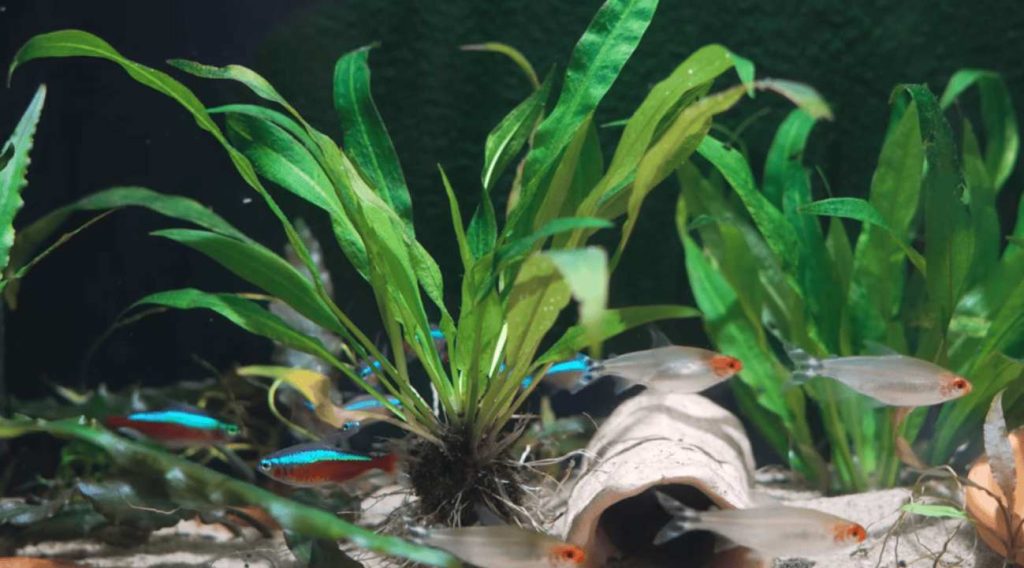
Beginner aquarium owners should consider the following plants as good options for their tanks: Anubias nana, Java fern, Cryptocoryne wendtii, Java moss, Amazon sword, and Vallisneria.
These plants are considered good options since they are easily available, quite undemanding when it comes to care, and can thrive in ordinary conditions of freshwater aquariums. Most of these plants can thrive without complicated CO₂ systems.
When you set up your first planted aquarium, avoid purchasing too many different species at once. It is better to start with two or three plant species. Choose one plant that needs to be attached to the substrate, one that will grow in the substrate, and one plant that will make your background.
Why Aquarium Plants Matter in a Beginner Aquarium
Live plants have a lot more benefits besides adding beauty to your aquarium. They help in creating a more natural habitat for your fish, shrimps, or other aquatic species.
Plants can be used by shy fish as hiding places, resting spots, or visual barriers for them. Small or young fish can hide behind the plants too.
Plants will also use nutrients in the water as they grow. It will lead to better conditions for keeping your aquarium and can help to prevent overgrowth of algae.
Still, plants cannot replace the function of filtration, water changes, correct fishkeeping, and aquarium cycling. An aquarium should be equipped properly and be maintained regularly.
Plants can be useful, yet only as a part of good aquarium maintenance.
What Makes an Aquarium Plant Beginner-Friendly?
An ideal beginner’s aquarium plant should be easy to maintain in an average freshwater tank. The plant does not need intensive lighting, carbon dioxide injection, special fertilizers, or regular pruning.
Some of the traits of ideal beginner’s plants include:
- Growth in low to medium lighting conditions.
- Ability to thrive under ordinary freshwater aquarium conditions.
- No requirement of pressurized carbon dioxide.
- No need for daily changes of fertilizers.
- Easy to place, attach, and prune.
- Availability at aquarium specialty shops.
For your first planted aquarium tank, you shouldn’t choose complex carpeting plants, delicate red plants, or plants that require strong lighting or high levels of carbon dioxide.
These may produce wonderful results but may need more experience in maintenance and better water conditions. It is easier to get started with some hardy plants, especially when you are new.
Best Aquarium Plants for Beginners
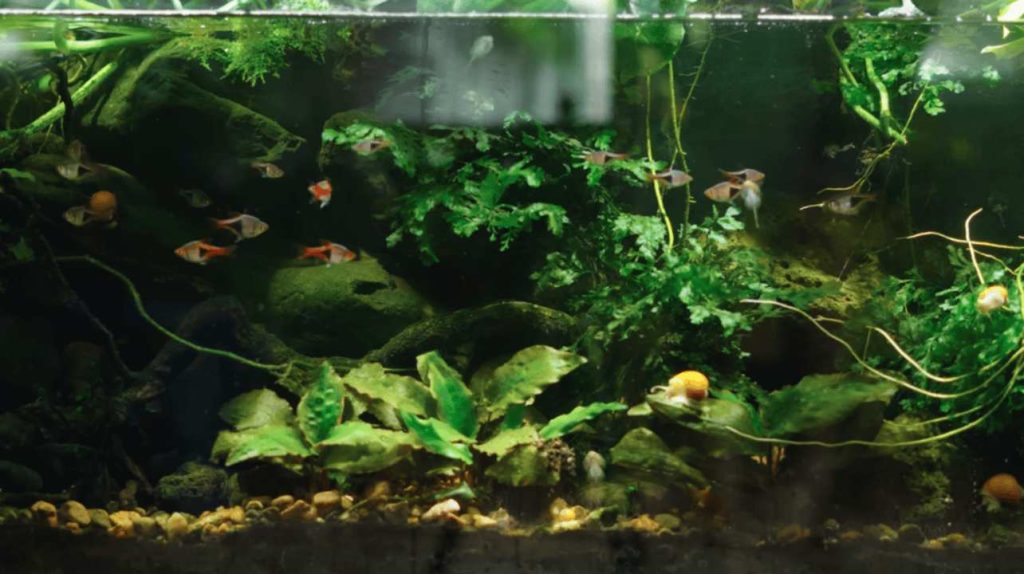
The best aquarium plants for beginners vary depending on whether the plant needs to be attached to the wood and rocks or grows in the substrate or gravel.
| Plant | Best Placement | Care Level | Important Tip |
| Anubias nana | Rock, wood, decoration | Very easy | Keep the rhizome above the substrate |
| Java fern | Rock or driftwood | Very easy | Attach it instead of burying it |
| Cryptocoryne wendtii | Foreground or midground | Easy | It may lose leaves after moving |
| Java moss | Wood, rocks, mesh | Easy | Tie it down so it stays in place |
| Amazon sword | Background or centre | Easy | Feed the roots with root tabs |
| Vallisneria | Background | Easy | It spreads and may need trimming |
Anubias Nana
Anubias Nana is a very easy plant for the beginners. It has large green leaves, grows very slowly and is beautiful in smaller and mid-sized aquariums.
Attach the Anubias Nana to the driftwood, rocks or aquarium decor using fishing lines, threads or aquarium safe glues.
Avoid putting the stem of the plant, which is called rhizome, into the substrate. The roots of the plant can grow in the substrate, but the rhizome must not be put there.
This plant is good for the aquariums with low to moderate lighting because it grows slowly and does not require any trimming.
Java Fern
The other good option for the beginner aquarist is Java fern. It has long green leaves, which can decorate the aquarium greatly.
Similarly to the previous plant, do not bury this plant in the gravel. Attach it to the driftwood, rocks, or decor.
This plant grows quite slowly, making it quite easy to handle. Moreover, Java fern doesn’t require regular pruning and will tolerate low-lighting environments.
It can be a great choice for beginners who are willing to have a planted aquarium but do not want to devote much time to maintenance.
Cryptocoryne Wendtii
This rooted plant thrives in the foreground or midground part of an aquarium. The coloration of Cryptocoryne wendtii varies from green to brown and reddish hues.
In case you place Cryptocoryne in a new aquarium, its leaves might become soft or mushy. Such a situation is usual for many cases, and it is known as “crypt melt.”
Don’t take out the plant at once. If the roots and the base remain healthy, let the plant stay in the substrate. Eventually, the plant will develop new leaves.
Cryptocoryne wendtii is great for beginner aquariums since it is both an attractive and easy-going plant.
Java Moss
Java moss is an excellent beginner’s plant to use for your tank setup since you can attach it to driftwood, rocks, meshes, or even tank decorations.
Not only will it give you a natural, soft-looking plant in the tank but also serve as a hideout for the shrimp and young fish.
It should be noted that java moss does not have root growth into the gravel bed as regular plants do. Thus, you will have to attach it to the surface.
Trimming of java moss should be done from time to time to avoid it becoming too dense since this way it will collect debris and fish waste.
Amazon Sword
The Amazon swords plants have been chosen by aquarists owing to the fact that the plants develop large, broad leaves that may be used as the focal point in an aquarium setting.
These plants will thrive when planted in medium-sized or large aquariums since they require sufficient space to develop. The full growth of an Amazon sword will render it a huge plant, thus not recommended for planting in tiny aquariums.
The Amazon swords are considered to be root-feeders; therefore, they require nutrients in the immediate vicinity of their roots. The use of root tabs or nutrient-rich substrates will facilitate the growth of these plants.
The Amazon swords should be planted at the center or rear part of the aquarium so that the developed leaves are not able to obstruct other plants growing in your aquarium.
Vallisneria
Vallisneria is an aquatic plant that grows tall and grass-like. It is excellent for use in the back of your aquarium tank.
It produces leaves that can be long enough to sway slightly with the movement of water, hence creating a natural environment in your aquarium.
Vallisneria reproduces using runners. The reproduction process results in other plants growing around the parent plant. This plant, therefore, makes a good choice for hobbyists who would like increased coverage using fewer individual plants.
Cut off any dead or old leaves that develop at the bottom of the plant but do not trim all leaves from the middle section.
Simple Equipment for a Live Plant Aquarium for Beginners
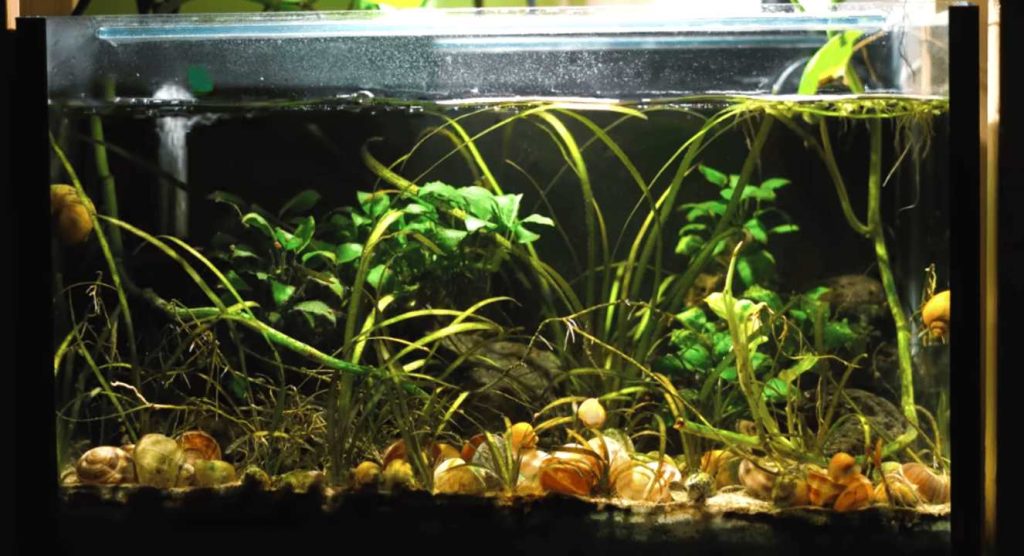
It does not necessarily take any fancy gadgets to set up a basic planted aquarium. Beginner plant species will thrive with just basic aquarium gadgets.
Essential Equipment
- Appropriate aquarium filter for your tank size
- Aquarium light along with a timer
- Aquarium water conditioner/dechlorinator
- Aquarium gravel, sand, or planted substrate
- Water test kit
- Fertilizer (liquid), if necessary
- Root tabs for plants that are root feeders
- Driftwood and rocks for Anubias and Java Ferns
- Aquarium scissors/trimmers
An aquarium light should be used in place of the ordinary room light since these lights are specially designed to provide adequate light for the plants.
The use of a timer comes in handy since it ensures consistency with the lighting every single day.
How to Set Up Aquarium Plants for Beginners Step by Step
Planting an aquarium is easy if you make the aquarium system simple. Here are some instructions that will give you an optimal chance of success.
Step 1: Choose Easy Plants Before Buying Equipment
Select your plants prior to buying additional equipment since each plant has its own needs.
For a novice aquarium, a possible easy plant selection would be:
- One Anubias nana growing on a stone
- One Java fern growing on driftwood
- Two or three Cryptocoryne wendtii plants
- One background plant (such as Vallisneria or Amazon sword)
- Optional Java moss
This provides variety in terms of the height and form of plants without being overly complicated.
Step 2: Prepare the Aquarium Before Adding Fish
Set up the filter, heater, substrate, and water conditioner for your aquarium before adding the fish.
You may also add live aquarium plants at the setup stage. But live plants don’t mean that the tank doesn’t need to be cycled anymore.
The aquarium requires good bacteria growth before it can be considered safe for fish. Test the water for ammonia, nitrite, and nitrate using the test kit while cycling your tank.
The planted tank will allow you to have a healthy ecosystem, but adding plants doesn’t make it immediately ready for fish.
Step 3: Keep Lighting Simple at the Start
Excessive light is probably the most common mistake made by beginners regarding their aquarium plants.
Many believe that excessive light means better plant growth. Actually, excessive light may cause algae growth issues even before the plants get adjusted.
Use six hours of light per day for about three weeks. After the plants start growing properly and algae doesn’t become an issue, you may gradually increase light hours.
Use a timer to ensure that you provide the same lighting schedule each day.
Step 4: Plant Each Type Correctly
Different plants require different methods for planting.
Anubias and Java fern plants should be tied to wood, stones, or decorations. Make sure that the rhizome is out of the substrate.
Cryptocoryne, Amazon sword, and Vallisneria plants should be planted in substrate with their crowns sticking out of the substrate.
Java moss should be tied to wood, stones, or mesh. Loose moss should not be placed in strong stream areas since it will float all over the tank.
It is very important to plant plants in the right manner because hardy plants can also suffer from wrong planting.
Step 5: Add Fertilizer Carefully
Fertilize the aquarium moderately at the initial stage. Go slow and see the reaction of your plants.
The Anubias and Java Ferns will get their nutrition from the surrounding water. The Amazon Sword plants and Cryptocorynes will require extra nutrients near their roots.
Use the root tabs if your plants are powerful root feeders. Apply the liquid fertilizers in compliance with the recommendations printed on the bottle label.
A slight decrease in the rate of growth doesn’t indicate problems. It’s normal for Anubias and Java Ferns to grow slowly in good aquariums.
Step 6: Watch Plant Growth During the First Month
The first month is often a time for adaptation in aquarium plants.
Some leaves can change color into yellow, melt, or fall off during the adaptation period. It’s typical for many plants.
Remove those leaves which have become completely rotten or damaged. But don’t throw the plant away after losing some of its leaves.
Check if there are healthy roots, little sprouts, or young leaves present.
Step 7: Maintain the Aquarium Consistently
Consistency is better than fancy tools.
Maintain consistency in your lighting schedule, do not overfeed your fish, prune dead leaves, and make necessary water changes.
Do not make any radical changes every couple of days. Plants need some time to adapt, and many changes will not allow you to determine what influences them positively and negatively.
The aquarium planting process takes a long time. It requires patience, which is the most important component of the process.
Common Mistakes With Aquarium Plants for Beginners
Burying the Rhizome
- It is not recommended to bury rhizomes of Anubias and Java fern.
- If the rhizome is placed in the substrate, it can start rotting.
- Use rocks, wood, or decor elements for mounting of these plants.
Using Too Much Light
- Over-lighting can lead to algae problems.
- Plants require light, but excessive light will promote growth of algae faster than your plants’ growth.
- You should start with short light hours and gradually increase light exposure if everything in the aquarium remains stable.
Choosing Difficult Plants Too Early
- Some plants require bright lighting, complex fertilizers, CO₂ injections, and trimming.
- Such plants can be very attractive but might be hard for beginners in aquarium plants.
- Begin with simple plants first; once you understand all features of your tank, you can proceed with other plants afterwards.
Ignoring Plant Size
- There are some plants that appear to be very small when purchased but might grow to huge sizes over time.
- For example, Amazon swords, Vallisneria, as well as other kinds of Java ferns may grow to enormous size and will not fit in the small tanks.
- Always know the maximal size of the plant before purchasing it.
Assuming Plants Replace Filtration
- Living plants are effective, but they will never be able to substitute an aquarium filter.
- You still need to filter your tank, do water changes, feed it properly, stock fish safely and regularly test.
- Plants are just a part of your aquarium, they cannot replace it all.
Throwing Away Cryptocoryne Too Quickly
- Cryptocoryne plants will often shed their leaves after being transplanted into a new tank.
- It doesn’t always mean that your plant has died.
- As long as the roots look healthy, don’t move the plant and let it rest; new leaves will soon grow.
How to Choose the Best Aquarium Plants for Beginners
Pick plants according to the size of your tank, light conditions and the amount of maintenance you’re ready to perform.
Choose Anubias or Java ferns if you want easily growing plants to attach to rocks and driftwood.
Choose Cryptocoryne wendtii if you need a rooted plant to put in the foreground or middle of your tank.
The Amazon sword is recommended if your aquarium is medium-sized or large and you would like to include one large plant in your aquarium setup.
Vallisneria is recommended if you would like to have some tall green plants in the background of your aquarium.
Java moss is recommended if you have shrimp, fry, or small fish that require additional coverage.
The best beginner aquarium plants are usually not necessarily those that are bright and costly. They are those which fit your aquarium size and lighting conditions.
Beginner Aquarium Plant Care Checklist
When placing aquarium plants in your tank, consider the following:
- Choose genuine freshwater aquarium plants.
- Begin with low-light or medium-light plants.
- Do not choose hard-to-grow CO₂-dependent plants for the first tank.
- Set a light timer.
- Do not bury the rhizome of Anubias or Java fern.
- Use root tabs for plants like Amazon sword.
- Remove dying or melting leaves.
- Maintain good operation of your filter.
- Test your aquarium water frequently.
- Do not overfeed your fish.
- Give time for adaptation of new plants.
Quick answers
Frequently asked questions
Are there any beginner aquarium plants that do not need CO₂?
No, some of the beginner aquarium plants will thrive even without the pressurized CO2. For example, such aquarium plants as Anubias, Java fern, Java moss, Cryptocoryne wendtii, and Vallisneria can be used to make a low-tech aquarium. Pressurized CO₂ is helpful for an advanced planted aquarium, but it is not necessary for a beginner aquarium.
Is it possible for beginners to use regular aquarium gravel for live aquarium plants?
Yes, it is possible, since some aquarium live plants do well in the regular aquarium gravel. But root-feeding plants such as Amazon swords and Cryptocoryne may prefer substrates with root tabs.
Which are the most hardy beginner aquarium plants?
The given plants are among the most hardy aquarium plants for beginners: Anubias nana, Java fern, Java moss, Cryptocoryne wendtii, Vallisneria, and Amazon swords.
Is it possible to put aquarium plants in it before putting fish in it?
Yes, it is possible to put aquarium plants in before putting fish in it. It will even make sense to use them to prepare an environment for future inhabitants. However, you will still have to cycle the aquarium and do some testing before adding the fish.
Why are my aquarium plant leaves melting?
The leaves of an aquarium plant may melt because of the process of adaptation to the new conditions of the water, lighting, temperature, or planting. Some types of Cryptocoryne plants lose their leaves after relocation. Look at their roots and wait for the appearance of new leaves before you decide to dispose of them.
How many aquarium plants should a beginner aquarist start with?
Instead of putting all kinds of plants into an aquarium, it would be better for a beginner to use only two or three types. A good choice for beginners includes one plant with wood or rocks, one rooted plant, and one background plant.
Which one is better, live or artificial plants?
The live ones make the aquarium more natural and also give protection to the fish, shrimp, and fry. Also, live plants get their nutrition directly from the water. But live plants require proper lighting, planting, and some maintenance, while the artificial ones don’t require any maintenance, but they don’t have the advantages of the live ones.
What is the easiest live plant aquarium for beginners?
The simplest aquarium for beginners with live plants is one that has freshwater and plants such as anubias, java fern, cryptocoryne wendtii, java moss, and vallisneria. All you need is a basic filter, a simple aquarium light and a timer, and the water conditioner too.

About the author
Sofia Khan
I am Sofia Khan, an aquarium lover and author with over 11 years of experience in the field of aquariums and aquascaping. I have a particular interest in creating aquascapes that look natural while requiring little attention. My blog, Stardexa, discusses the importance of fishes and all other relevant topics for aquarists, including all types of aquarium plants, aquascapes, CO₂, light, fertilizer, substrate, and algae.
Reader Fishkeeping Feedback
Comments, questions, and aquarium reviews
Share your aquarium experience, ask a fish care question, or write a helpful note about tank setup, water quality, filters, algae control, or maintenance for other readers.
No aquarium reviews yet. Be the first to share a helpful review on content or fishkeeping question, setup tip, or care experience.