
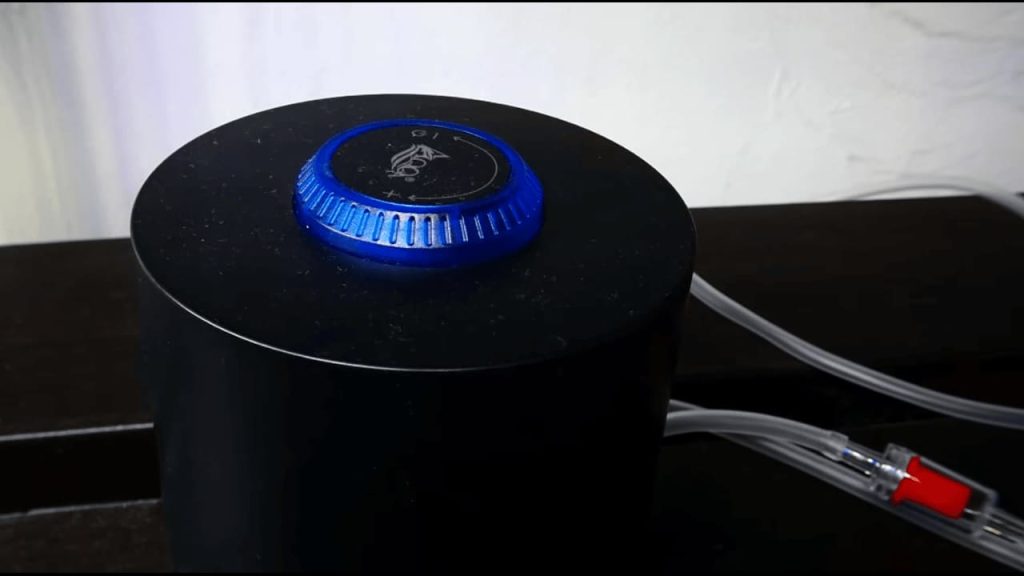
Aquarium Air Pump Guide for Better Oxygen, Flow, and Quieter Tanks
An aquarium air pump forces regular room air through flexible tubing into an aquarium and directs it to an air stone, a sponge filter, an ornament, or any other aquarium air-driven accessory. Its primary purpose is not to create fancy bubbles but to create the right flow and surface action, which enables the gas exchange.
An air pump is not the most eye-catching device in your aquarium. It is located outside the aquarium and produces a gentle hum of a machine. It definitely does not get nearly as much attention as lights, filtration, fish, and plants do. Nevertheless, a correctly sized aquarium air pump may help you circulate the water, facilitate oxygen exchange, power up filters, create flow, and prevent any dead spots in your aquarium.
The important thing is selecting the right one and using it properly. The fact is that a bigger bubble cloud does not guarantee a better condition in an aquarium, and not all aquariums require a separate pump. What matters is the right combination of such elements as depth of the aquarium, filtration system, temperature of the water, population of the fish, growing plants, length of the tubes, and the resistance caused by connected accessories.
What an Aquarium Air Pump Means and Who Needs It
An aquarium air pump is either electrical, rechargeable, or battery-powered equipment that forces air into aquarium-friendly airline tubing, from where it will enter the water via connected accessories to form bubbles, lift water, or operate filtration.
An air pump provides the air to the following:
- Air stone or bubble bar
- Sponge filter
- Undergravel filter uplift tube
- Air-driven box filter
- Moving bed filter
- Bubbling decoration/breeding tool
The air pump is never to be put into the water because it operates with the air, not water. An exception could be a completely submersible pump as indicated by the manufacturer.
The connection between bubbles and oxygen
There is a common misconception that the bubbles supply oxygen to the water of the aquarium. While some gas exchange takes place when the bubbles rise, this is definitely not the point of using the air pump.
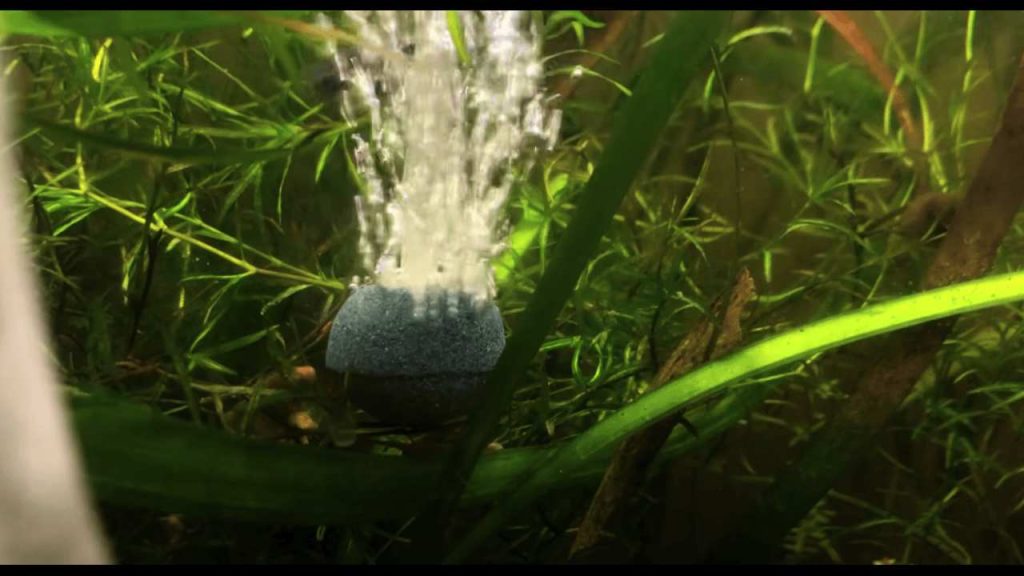
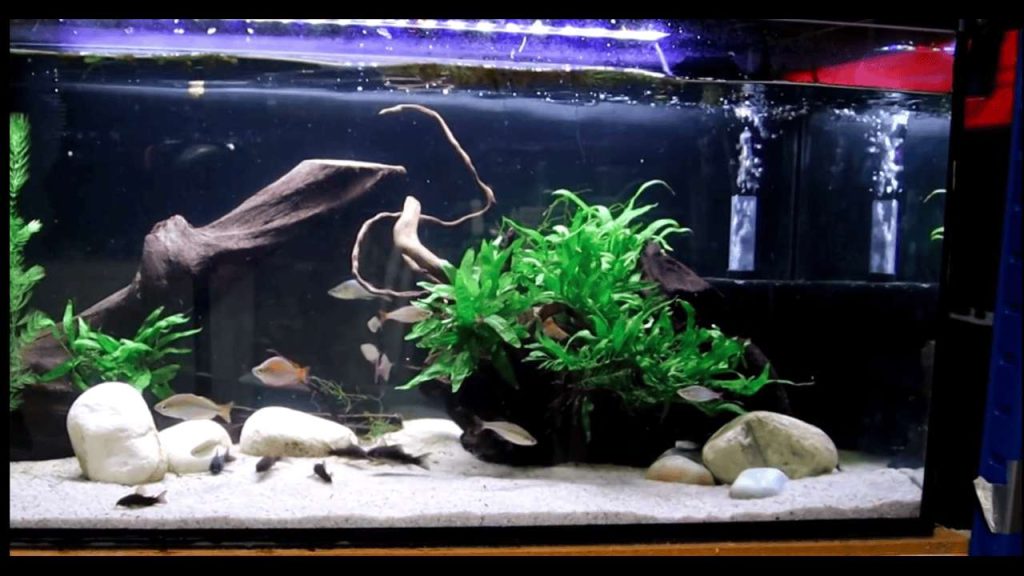
The vast majority of the oxygen supply is related to water circulation due to the rising bubbles. They bring deeper water closer to the water surface and keep it constantly moving. Thus, a larger amount of water gets exposed to the surrounding air, where oxygen gets into the water, whereas CO₂ and other gases get out. Moving water usually works better in terms of gas exchange than standing.
As for me, I like to see an air pump simply as a circulation machine. It is a very easy concept that simplifies the whole idea of setting up an aquarium. Perhaps, having a huge amount of bubbles confined to one corner is less useful than moderate airflow promoting movement on a larger area of the water surface.
Aquariums that benefit most
The air pump for aquariums would be useful when the current filter is not providing enough surface agitation or when there is an air-driven piece of equipment used for filtration purposes.
There is a greater need for an air pump for aquariums when:
- The sponge filter or undergravel filter requires an airflow in order to work properly.
- The outlet from the filter causes little or no surface agitation.
- The aquarium is deep, warm, well-stocked, or overstocked.
- Fish are being transported, quarantined, spawned, or medicated.
- The bacterial bloom or decomposition of the organic material increases the consumption of oxygen.
- There is abundant plant growth that decreases the oxygen levels at night.
- Summer high temperatures restrict the capacity of the water to absorb oxygen.
- Aeration is required in case there is an emergency, in case there is a power failure.
The warm water is capable of holding less oxygen than cold water. However, metabolism of the fish, biological filtration, decomposition of the waste, and bacteria consume oxygen. This is the explanation of the quick development of problems in a warm, overstocked, or overfed tank despite the previous good condition of the aquarium.
The term “aquarium air pump fish” is usually used by beginners seeking clarification on whether fish require bubbles to live. Fishes require adequate oxygen, but not necessarily the bubbles. Surface agitation may be provided via filter return, spray bar, waterfall outlet, or circulation pump.
Aquariums that may not require a separate pump
Consider a lightly stocked 10-gallon tank with a hang-on-back filter causing a consistent ripple on most of the water surface. An addition of an extra air pump will be of little use and might cause excessive current for long-finned betta or other slow-moving fishes.
Compare the above situation with the one where we have a 20-gallon tank with a sponge filter only. This type of filter cannot suck water in the filter medium without the presence of air. In such an aquarium, the air pump becomes an integral part of the filtering system rather than an accessory.
The efficiency of an aquarium fitted with an air pump setup can never be assessed on the basis of bubbles alone. Fish health, water parameters, filtration, adequate circulation, and regular movement of the water surface play a much more important role in determining the quality of functioning of an aquarium.
How to Choose the Right Size or Type
The safest way to decide on what aquarium air pump to buy is the consideration of the resistance that will have to be overcome by the pump itself.
Many product boxes list recommended sizes of aquariums in which the pump can be used. This figure gives some idea about the pump’s potential, but the actual efficiency of the device varies depending on the water depth, airline length, check valves, connectors, airflow control, blocked diffusers, and attached units.
Some manufacturers give both the sizes of aquariums and the measurements of airflow. In addition, they often base their ratings on the certain depth of operation of the pumps. This is important since the pump has to provide sufficient pressure for blowing the air through the tubing and the water.
A requirement-first sizing method
Prior to purchasing an air pump for your aquarium, take into consideration the following five elements.
Tank depth
If you have a high aquarium, then the pressure of water is higher in the diffuser than with a short aquarium of the same volume. A small pump can create powerful bubbles from the surface while having difficulty pumping when the air stone is placed near the bottom of a high tank.
Purchase a more powerful pump if your aquarium is very high, even though the total volume of the tank may seem to be comfortably accommodated by the recommended size in the manufacturer’s guidelines.
Number of air-driven devices
Take note of any number of sponge filters, air stones, bubble bars, breeders, ornaments, reactors, and moving bed chambers that will be fed by air. These create additional resistance and split the total output.
Two-way pumps would be much more effective than attempting to split the output of a single pump into multiple outlets. A gang valve will split and control airflow but not boost the total output of the pump.
Type of diffuser or filter
Different accessories require different levels of pressure. Ceramic diffusers can provide small and beautiful bubbles; however, they usually present more resistance compared to common air stones.
Large sponge filters, deep uplifts, and moving bed chambers may also require more pressure compared to a decorative bubbler. Choose the pump based on the accessory that demands the highest level of performance and not on the accessory that requires less pressure.
Airline length and fittings
The long airline, sharp bends, check valves, T-fittings, and control valves will affect the airflow and restrict it somehow. Extra tubing can be kinked, flattened, or stuck behind the aquarium stand.
Make the airline as short and straight as possible, considering the safety of the design. Check the whole airline when you notice weak bubbling.
Livestock and desired current
The powerful bubbling system will be a perfect choice for a goldfish aquarium, a crowded livebearers’ aquarium, or an aquarium where a few sponge filters are used. At the same time, it will disturb the floating plants, spread food for the shrimp, or tire a betta fish.
Not necessarily the most powerful pump will be the best. The best pump is the one that produces sufficient pressure and airflow for the equipment but leaves the end pressure and water flow rate acceptable for the animals.
Practical pump selection examples
| Aquarium setup | Main requirement | Sensible pump approach |
| Betta fish 5-10 gallon tank with an adequate filter ripper | As optional back-up or aeration | Micro-adjustable pump or no additional pump |
| Aquarium 10-20 gallons with one sponge filter | Consistent biological and mechanical filtration | Pump with single output port, slightly more powerful than the aquarium capacity |
| Tall 29 gallons aquarium with an air stone | Maintaining consistent pressure on a deeper level | Choosing more powerful pump model than just a gallon rating |
| Breeder 40 gallons aquarium with two sponge filters | Equal distribution of airflow between two filters | Pump with double outputs or a more powerful pump with a gang valve |
| Aquariums rack | System of several devices, long airline, and constant use | High-output multi-port pump for heavy-duty applications |
| Transport/ emergency container | Aeration without using mains electricity | Battery or rechargeable USB-powered pump |
These illustrations are practical suggestions rather than rigid principles. There are great variations between different pump types, so you can compare pressure, airflow, the maximum working depth, adjustability, number of outlets, noise reduction, warranties, and availability of spare parts.
Common aquarium air pump types
Diaphragm air pumps are conventional mains-powered devices that you will find in almost any household aquarium. They have an internal rubber diaphragm that oscillates and forces air out of the outlet. Such pumps are cheap, reliable, and durable and can be used continuously since diaphragms are replaceable.
Piezoelectric air pumps have a completely different internal design and tend to be smaller and more energy-efficient. They can be a good choice for a small aquarium and standard air stones but lack sufficient pressure to support deep tanks and sponge filters.
Battery-operated air pumps have their application during power outages, fish transportation, fishing trips, and quarantine and treatment procedures. Some models can switch on automatically in case of main power failure, thus providing additional protection during your absence.
Rechargeable or USB-operated pumps may run off a power bank or any other portable power supply. These pumps are especially useful in places where power outages are frequent. Operating time will be determined by the battery capacity, pump performance, set speed, and attached devices.
Terms like “air pump aquarium,” “air aquarium pump,” and “air pumps aquarium” all basically refer to the same type of pumps. It is not so much about the words used but rather the ability of the pump to provide enough pressure and airflow safely and without too much noise to your aquarium.
Setup, Placement, and Safety Checks
A standard installation will include an aquarium air pump, appropriate aquarium tubing, a check valve, and some air-operated device. Some installations will also require an inline air control device, gang valve, suction cups, and connectors or non-return valves.
A safe installation sequence
- Put the pump without any connection in place on a flat, dry, and stable surface.
- Cutter a piece of tubing from your aquarium air tubing.
- Assemble the check valve in the right direction of the airflow.
- Join the tube to the outlet of the pump.
- Connect the other end to the air stone, sponge filter, or other aquarium accessory.
- Install the aquarium accessory in its rightful place.
- Make sure that the electric cord is formed into the right shape of a drip loop.
- Plug in the electricity and increase the airflow slowly.
Remember that the check valve should be installed in such a way that it allows for the passage of the air flow from the pump to the aquarium but blocks the water flow in the opposite direction. There is usually an arrow indicating the right direction of the airflow in many valves.
Pump height and back-siphoning
The liquid could reverse flow and go backward via the airline, particularly if the air pump is installed below the water line of the tank. Such an operation would result in damaging the pump, an electric shock hazard, or the spillage of liquid over the floor and furniture.
Installation of a check valve minimizes such risks considerably. The alternative of locating the pump above the water line might be considered for additional safety, although the pump will have to be placed in a safe and dry position. Do not place the pump above an open aquarium, as this might result in accidental splashes of water or knocking the pump into the aquarium.
I believe that a check valve is a basic component for every permanent installation of an air pump. This component is inexpensive, installation takes a couple of minutes, and this component will keep protecting the device even if later someone installs the pump under the water line.
Electrical protection around water
Make sure that the cable is hanging under the wall socket before going up to the plug. Such configuration will form a drip loop, which will direct the water droplets to the lowest part of the cable rather than into the electrical socket.
Always ensure that electrical plugs, extensions, adapters, and power strips are far from the possibility of splashing and leaking. Disconnect electrical equipment used in the aquarium before putting your hands in the water and maintaining any accessory in the tank.
Make sure to use electrical equipment, which matches the voltage in the area and follows electrical regulations for your location. An RCD in the UK and a GFCI in North America can also help to cut the electricity supply in case of any malfunction.
Never continue to use pumps if you notice any damages to the cable, housing, or plug; a smell of burning; or excessive heat or water inside the housing.
Airflow adjustment without harmful restriction
Some aquarium pumps have a built-in airflow regulation system, while others need an inline valve or gang valve to regulate their output flow.
Do not regulate the airflow by squishing the tubing, tying knots in it, or blocking all outlets in case you have a too large pump. Excessive restriction generates back pressure on the pump’s internal diaphragm. As a result, over time, the pressure may lead to noise and decreased efficiency, a decreased lifetime of the components, and ultimately pump malfunctioning.
In case your pump outputs more airflow than needed for your tank, regulate its flow with a proper valve or leave one gang-valve outlet partially opened to relieve excessive pressure. Do not forget to read the manufacturer’s instructions because different pumps are differently tolerant to restriction.
What you need is not agitation but good water circulation. Start from creating controlled surface rippling and observe your fish.
- The fish should be able to swim, eat, and rest without struggling against the current.
- Plants floating on the surface should not be continuously submerged.
- Sand, gravel, and light-weighted decorations should remain in place.
- Food should be available for long enough for the fish to consume it.
- The surface should ripple without being totally motionless.
Balancing Oxygen, Water Flow, Plants, and CO2
People tend to oversimplify the interaction between aeration in an aquarium and carbon dioxide. They think that oxygen and carbon dioxide cannot coexist in the aquarium because an increase in one leads to a decrease in another, yet life in the aquarium requires a different approach toward gas exchange.
Ripples facilitate the exchange of gases between the water in the aquarium and the atmosphere. Oxygen enters the aquarium faster, while surplus carbon dioxide is easily eliminated from the water. In a non-injected low-tech aquarium, some aeration may be beneficial for better oxygen supply, nutrient distribution, etc.
Plants produce oxygen through the process of photosynthesis provided they get sufficient light and nutrition. Nevertheless, they also breathe out through respiration all through the day and night, meaning that even after the light source in the aquarium goes off, they will continue using up oxygen.
With an aquarium that uses injected carbon dioxide, very vigorous surface agitation may lead to more escape of the gas before it is used by the plants. This does not necessarily mean that the surface must be sealed, without any movement or circulation. The fish, shrimps, snails, useful bacteria, and plant roots need an adequate supply of oxygen.
These measures would make a good balance:
- Ensure there is steady yet gentle movement of the surface.
- Use injected CO₂ only during the expected lighting time.
- Monitor the behaviour of the livestock instead of trying to have a perfectly still surface.
- Boost the aeration in case of high temperature, medication, crowding, or oxygen depletion.
- Think about aeration at night in case of densely planted aquariums.
Surface fish, fast breathers, or those near the filter outlet could suffer from lack of oxygen, but this behavior might also be caused by some other factors. High temperature; high levels of ammonia, nitrite, or gill disease; parasites; bad water conditions; or an excess amount of CO₂ injected into the aquarium water may lead to the same behavior. Fish should be provided with more oxygen instantly; nevertheless, one should investigate the problem and conduct water tests.
Maintenance, Troubleshooting, and Lifespan
A pump can work day after day for several months or even years, and the changes in its performance can be so minor that one fails to notice them. Lack of bubbling does not necessarily mean that the air pump has become useless; the reason might lie in clogged stone, twisted airline, bad valve, polluted filter, loose connections, or other accessories.
The following sequence of troubleshooting is what I recommend: first, one should try to figure out the problem with the accessory; then check the airline; next, check the valve; and only then look at the pump itself.
Routine maintenance
Make part of the regular care routine the inspection of your air system rather than dealing with problems when there is no bubbling at all.
- Inspect the airline for any signs of bending, breaking, hardening, growing algae, containing water, or loose fitting.
- Ensure that the check valve continues to let the air flow in the right direction.
- Eliminate any debris from the ornaments, uplifting tubes, and filters.
- Clean or replace any clogged air stones or diffusers.
- Dust off the pump casing and air intake from any dust.
- Check that the rubber feet are not loose, dirty, or unevenly placed.
- Listen for any new rattles, pitch change, irregular vibrations, or interrupted airflow.
Do not immerse your pump into water, pour water on it, or wash the electrical housing under running tap water.
As time passes, air stones become clogged due to mineral deposits, algae, biofilm, or small pieces of dust. As the air passageways become clogged, fewer bubbles are produced, and the pump has to struggle against increasing resistance. Inexpensive wooden, ceramic, or mineral air stones might be better off being replaced rather than cleaned.
Inspection of the airline and related equipment ensures that there is no additional strain on the pump. A damaged, hardened, or weakened diaphragm could also be responsible for decreased efficiency, irregular bubbling, or total absence of airflow.
Quieting an aquarium air pump
The majority of undesirable aquarium air pump noise problems occur due to vibrations against the furniture, non-level surfaces of the mounting, worn inner parts of the device, and/or resistance in the airline system.
The following list of steps is useful in silencing aquarium air pumps.
Stabilize the base
Position the pump on a smooth, stable, and flat surface. Ensure that all rubber feet rest on the surface correctly. A light cabinet or hollow shelf may amplify any normal vibration and convert a gentle humming sound into a distracting buzzing.
Moving the pump by a little bit can silence it right away. An additional vibration-absorbing pad may prove useful as well, but only if it will not block air intake or cause overheating.
Do not cover the running pump with towels, blankets, foam, or clothing. Even if these soft objects will make a noise quieter initially, they may prevent proper ventilation and lead to overheating of the device.
Prevent contact with hard objects
An airline under tension will push the pump against the aquarium cabinet, wall, lid, cable, or any other hardware. The slightest touch will transfer vibrations and increase noise levels of the pump.
Make sure there is enough slack in the tubing to insulate the pump from all surrounding items without creating extra loops that might tangle or kink.
Clear restrictions
Temporarily disconnect the airline from the pump to see if it gets quieter without it attached. If yes, some resistance in the air system probably causes noise.
Check the integrity of the check valve, tubing, air stone, sponge filter, gang valve, connecting pieces, and decorations. Do not assume that the pump is broken until all other parts are checked and replaced if needed.
Inspect the diaphragm
A rubber diaphragm of the standard air pump dries, stretches, and tears up with time. While getting old, it allows less air passing through but creates more vibration and buzzing.
If a pump has a repair kit available, it can be fixed easily using it to replace the diaphragm, internal valves, and filter pad. Repairable pumps might cost more initially but will be worth buying compared to cheaper but non-repairable units.
Choose a correctly sized pump
An extremely small pump, which is run at full load, can generate higher amounts of noise and wear compared to a bigger pump, whose performance is adjusted in accordance with its normal range.
Nevertheless, using a pump with much greater power than needed can lead to another issue. Most of its output will be limited by closed valves and generate unnecessary backpressure. The ideal arrangement will have sufficient reserve capacity without any need for limiting.
Symptom-based troubleshooting
| Symptom | Likely causes | Corrective action |
| No bubbles | Power failure, reversed check valve, tubing disconnection, diffuser blockage, or damaged diaphragm | Test the pump outlet first, then look for other faults in the sequence listed above |
| Weak bubbles | Too much depth, clogged air stone, kinked tubing, leaky connection, or undersized pump | Shorten the tubing, clean the accessories, fix leaks, or use a more powerful pump |
| Loud humming | Pump vibrations on a hard surface, faulty feet, restricted airflow, or worn-out diaphragm | Relocate the pump, dampen the vibrations, clear the blockage, or replace the faulty diaphragm |
| Uneven dual outlets | Different lengths of the airline, different accessories, or unequal resistance | Equalize the tubing lengths and regulate each output individually |
| Water inside tubing | Damaged, reversed, missing, or faulty check valve and pump located below water line | Disconnect the power source safely, dry the damage or replace the equipment, and install a new check valve |
| Pump feels unusually hot | Intake blockage, excessive restrictions, inadequate ventilation, or electrical problem | Disconnect the power source, remove the blockage, and replace the unsafe equipment |
| Bubbles stop after cleaning | Incorrectly assembled check valve, water accumulation, loose connection, or kinked tubing | Check the valve orientation and reconnect everything correctly |
In order to find out where the restriction is causing poor air flow, disconnect the tubing from the pump outlet. Good air flow straight from the outlet indicates that the restriction is further down the line. Poor air flow from the naked outlet indicates that there is something wrong with one of the valves, diaphragms, motors, or power supplies internally.
Realistic pump lifespan
There is no single life expectancy for all air pumps for aquariums. Life expectancy varies according to the quality of manufacture, temperature, ventilation, dust exposure, diaphragm material, backpressure, maintenance, and daily operating hours.
A pump maintained in good condition could be working without any problems for many years, whereas another pump will require a replacement diaphragm much earlier. Sound, air flow, temperature, and the level of reliability can give you a lot more useful information than simply replacing the pump by some arbitrary date.
A repairable air pump with diaphragms and valves easy to find can be a better solution than a sealed air pump at a budget price. Have an additional pump or at least an emergency aerator at hand in case your pump is driving your only biological filter of your aquarium.
Buying Tips, Alternatives, and Practical Next Steps
If you are going to buy an air pump for your aquarium, then don’t look at the tank capacity printed on the packaging of the pump.
You should look for the following qualities in the air pump:
- Published information about the air flow or pressure
- Maximum operating depth of the air pump
- Adjustable air flow
- At least one outlet, which could work independently
- Replaceable diaphragms, valves, and filters
- Rubber feet or vibration reduction system
- Required voltage and plug
- Clear warranty and customer service policy
- Airline tubing, check valve, and diffuser included
- Battery-powered variant or even USB version
Also, noise levels should be taken into account. Different manufacturers could make measurements of sound levels from various distances, on different surfaces, and under various operating loads. An air pump that shows a low noise level in a lab environment may show a higher noise level if installed on a hollow wooden tank cabinet or in combination with a clogged-up air stone.
The search term “aPUMP aquarium air pump” usually stands for a specific aPUMP line of pumps developed by the Collar or AquaLighter company and does not apply to general aquarium pumps. It consists of various models of both mains-powered and USB-powered air pumps, so one needs to check the specifics of a particular model’s airflow, capacity, pressure, etc.
Alternatives to a separate air pump
An additional air pump is just one of the ways to increase circulation/surface movement. Depending on aquarium design and filtration set-up, there might be other methods available.
Possible options include:
- Increasing/decreasing filter outlet to surface distance
- Mounting spray bar
- Decreasing water level if using HOB return
- Installing a circulation pump or power head
- Adding a venturi to an internal filter
- Choosing a filter with strong enough surface agitation capability
This type of equipment can help with increasing the rate of water movement without the creation of any bubble stream. Yet, it is not able to run such devices as sponge filters, undergravel uplift tubes, moving bed chambers, or any other device that requires using compressed air.
When preparing for emergencies, a battery-operated or USB-powered air pump has a great advantage since it will continue working when the main filter gets power out. When the power is out for a long time, reduce feeding, keep filter biological material moistened, do not disturb fish, and make aeration your first priority.
A Practical Final Recommendation
The first thing you should determine is what exactly you want the air pump to do. The requirements for decorating a tank, a deep display aquarium, two large sponge filters, and emergency transport are all very different for one air pump.
Start from the size recommendations made by the manufacturer for the aquarium size and add some more for the depth, additional accessories, tubing, restrictive diffuser, and future enlargement. Put a check valve in place, create a good drip loop, prevent excess back pressure, and adjust the flow of air according to livestock requirements, not bubbling show.
The most effective aquarium air pump is usually the one that goes unnoticed. It provides stable air flow, makes circulation, works safe and silent, and allows the fish and all aquarium inhabitants to live naturally.
Quick answers
Frequently asked questions
What are some important things about an aquarium air pump for beginners?
An aquarium air pump does not go inside the tank; instead, it pumps the air into the tube leading to the air stone, sponge filter, or some other device working with air flow. The main purpose of the air pump is achieved via circulation and gas exchange at the water surface and not due to air bubbles.
What are some things that beginners should understand about air pumps for fish?
The fish require a sufficient amount of dissolved oxygen; however, they do not necessarily require the bubble streams. The existing filter system may already be providing sufficient water surface agitation. Extra aeration will be required in cases where the aquarium water is warm, crowded, inadequately aerated, treated, or shows any signs of respiration problems. Quick breathing will require testing of ammonia, nitrite, temperature, disease, gills, and CO₂ levels.
What should beginners know about an aquarium air pump?
Choosing an aquarium air pump depends on the tank depth, pressure, airflow, number of equipment that will be connected to it, sound, adjustment possibilities, and possibility to replace parts. Choosing just based on the aquarium size will not guarantee proper performance when extra load is applied to it.
What should beginners understand about an aquarium air pump?
Mount the air pump to a dry, solid, and well-ventilated place outside the tank. Place a check valve into the tube if the air pump is mounted under the water level. Avoid wetting the electrical connections, make a drip loop for the electrical cord, and disconnect the equipment before maintenance.
What should beginners understand about an air aquarium pump?
"Air aquarium pump" is just another designation for the aquarium air pump. It moves the air, not the water. Make sure that the purchased air pump is meant for a single air stone, sponge filter, set of different equipment, deep tank, or emergencies because there are some devices that are too small for powerful equipment.

About the author
Grace Morgan
I am Grace Morgan, an expert in all the equipment used in aquariums and a knowledgeable writer, which has helped me gather over 14 years of experience on the proper equipment that will make fish-keeping easier, safer, and enjoyable. I work at Stardexa, creating different guides about filters, heaters, aerators, lights, thermometers, and protein skimmers, concentrating on helping aquarists find the equipment according to the size of the tank, type of livestock, and aquarium configuration.
Reader Fishkeeping Feedback
Comments, questions, and aquarium reviews
Share your aquarium experience, ask a fish care question, or write a helpful note about tank setup, water quality, filters, algae control, or maintenance for other readers.
No aquarium reviews yet. Be the first to share a helpful review on content or fishkeeping question, setup tip, or care experience.